Oct 20, 2026
Six-millimetre mild steel, 3,000 mm long, 250 pieces a month. Those three numbers decide more about which hydraulic bending machine you need than any brochure: the thickness sets the tonnage, the bend length sets the beam, and the batch size decides whether a mechanical torsion bar or a closed-loop servo valve is worth paying for.
The short answer is that plain hydraulic, torsion-synchronised CNC and electro-hydraulic servo machines are not better or worse than each other — they are aimed at different work. Thick plate in long runs suits a simple hydraulic press brake with a mechanical depth stop. Thin sheet in short runs with tight angle tolerances is where servo synchronisation earns its price in setup time alone. The torsion-bar CNC sits in the middle and is the machine most job shops actually buy. The rest of this article is about confirming that split against your own parts.
Content
A press brake is a press with an unusually precise depth stop. Two side frames carry a fixed lower bed holding the die; two hydraulic cylinders in the upper part of the frame drive the ram, which carries the punch. A pump delivers oil through a valve block, the ram travels down to a programmed position, and the bend angle comes from how far the punch enters the die. There is no fixed "angle setting" anywhere in the machine — only depth, and the material's response to it.
Three things decide whether the bend repeats a thousand times: how parallel the ram stays as it descends, how accurately the depth is measured, and whether the bed is compensated for the deflection that bending force causes. System pressure on machines of this type usually sits somewhere in the 200–300 bar range, but pressure is not what controls quality — position is.
Parallelism is where the three machine families separate. A plain hydraulic machine keeps the ram level through a mechanical linkage and fixed stops; a torsion-synchronised machine ties the two cylinders together with a torsion shaft and uses a CNC axis for depth; an electro-hydraulic servo machine gives each cylinder its own proportional valve and linear scale, so the two sides are corrected independently several times a second.
That difference shows up as setup time and as tolerance on thin sheet. On a torsion machine, a change of material or angle means new depth values and a trial bend; on a servo machine those values live in the program and Y1/Y2 are closed-loop, which matters when you run 30 different parts a week in 1.5 mm sheet.
| Feature | WC67Y plain hydraulic | WC67K torsion-synchronised CNC | WE67K electro-hydraulic servo CNC |
|---|---|---|---|
| Ram synchronisation | Mechanical linkage | Torsion shaft plus mechanical stops | Servo valve plus linear scales per cylinder |
| Depth control | Handwheel or simple NC | CNC Y axis, motorised | CNC with closed-loop Y1/Y2 |
| New-part setup | Longest, set by trial bends | Moderate, angles stored in the program | Shortest, repeatable values |
| Best fit | Thick plate, simple profiles, low volume | Mixed batches in a general job shop | Thin sheet, tight angles, repeat work |
| Relative cost | Lowest | Middle | Highest |
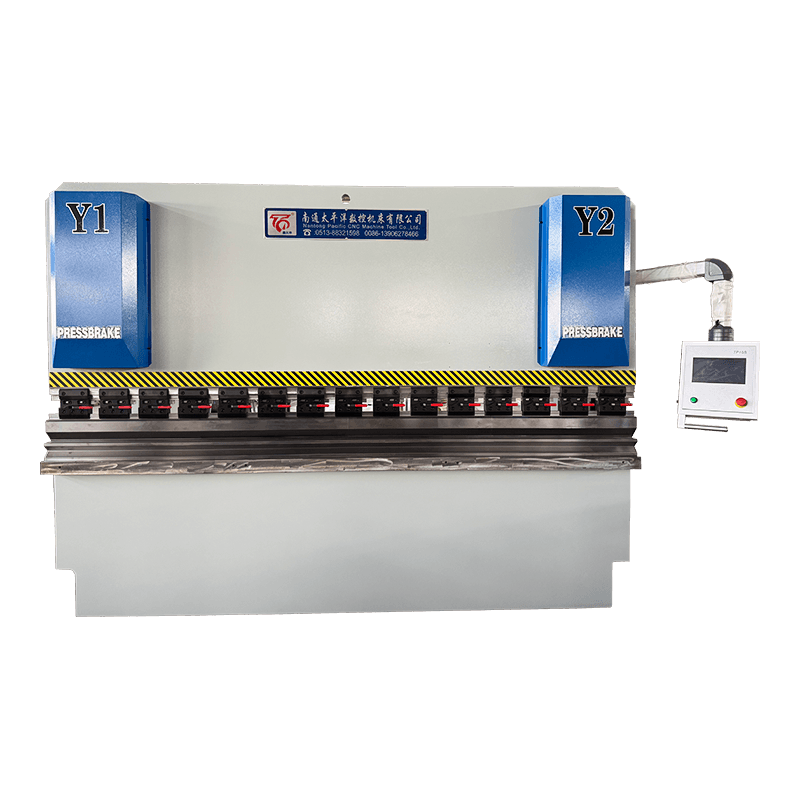
Where the middle ground is enough, the torsion-axis machine is usually the sensible purchase: it handles a wide mix of mild steel and stainless work, keeps angle settings in a program, and does not carry the price of a servo system.
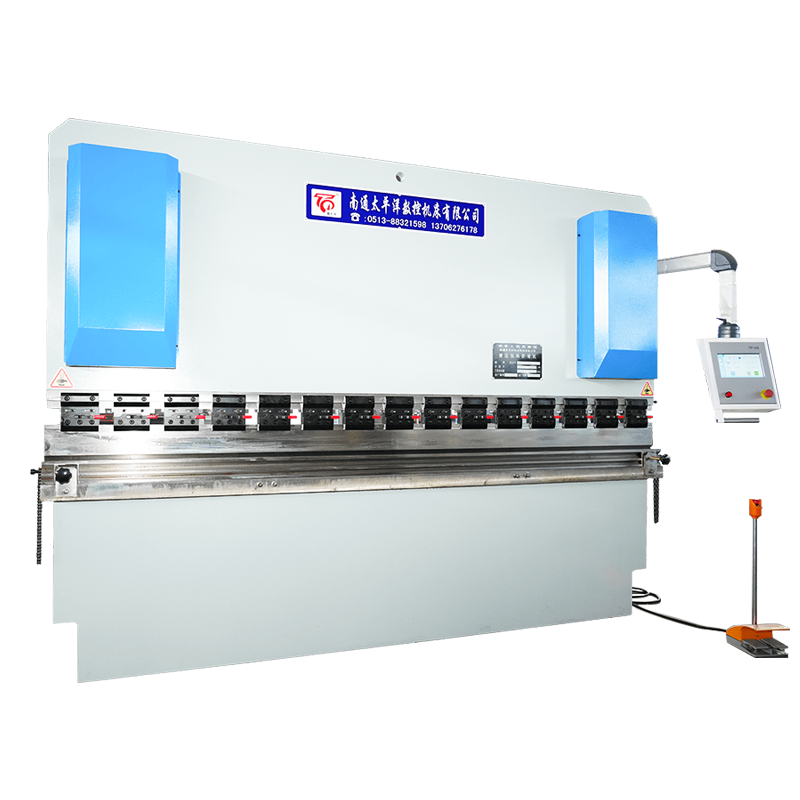 WC67K Torsion Axis Synchronous CNC Hydraulic Press BrakeA mid-range CNC press brake for mixed mild steel and stainless work, with stored angle programs and servo-controlled back gauge and stroke.View Product →
Tonnage is not a matter of taste. For air bending in mild steel, a workable shop formula is P (tonnes per metre) ≈ 65 × t² / V, where t is plate thickness and V is the die opening. The usual starting point is V = 8 × t. A 6 mm plate therefore runs on a 48 mm die and needs roughly 49 t/m; across a 3,000 mm bend that is about 146 t, so a 160–200 t machine covers the job with a working margin.
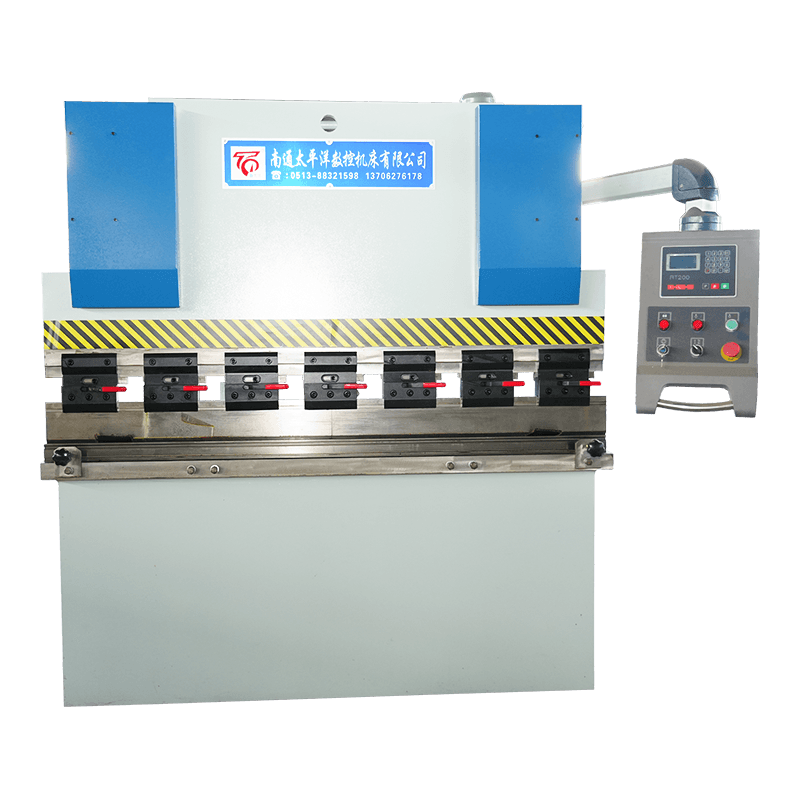
For shops that bend mostly heavier plate in simple profiles, a conventional hydraulic machine with a motorised back gauge covers the work without paying for servo synchronisation.
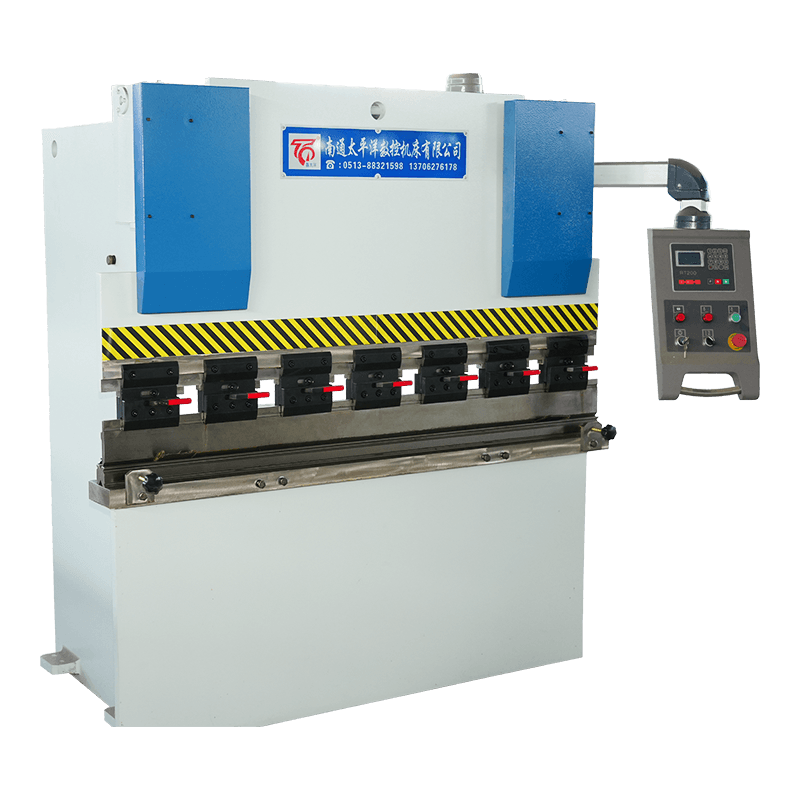 WC67Y Series NC Hydraulic Sheet Metal Press BrakeCost-effective NC hydraulic press brake for heavier plate and simple profiles, with E21 or RT200 program storage and optional manual compensation.View Product →
Most angle complaints trace back to four causes, and only one of them is the machine's control system. The first is deflection: under load, the ram bows upward in the middle and the bed bows downward, so a full-length bend comes out deeper in the centre than at the ends. Crowning — a set of wedges or hydraulic compensation in the bed — is the standard fix, and it should be on your specification list if you routinely bend near full capacity.
The second is material variation. Sheet thickness tolerances mean two sheets from different coils can bend differently at the same ram depth, which is why air bending always needs a test piece at the start of a batch. The third is springback, which rises with tensile strength — stainless and high-strength low-alloy grades spring back noticeably more than mild steel and need either overbending or angle correction. The fourth is oil temperature: a machine that runs cold in the morning and hot by afternoon can drift if the depth value is not compensated in the control. On a servo-synchronised machine that drift is corrected continuously; on a torsion machine it is not.
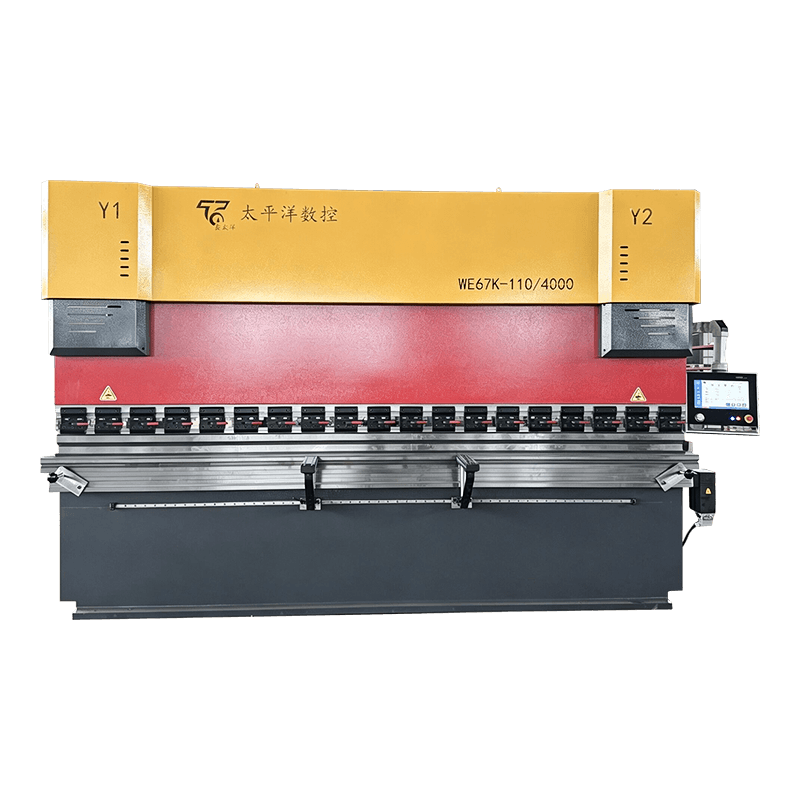 WE67K Electro-Hydraulic Servo CNC Press BrakeHigh-precision servo-synchronised press brake with multi-axis back gauge and continuous correction for consistent bending accuracy across the working length.View Product →
Hydraulic press brakes fail in predictable places, and nearly all of the expensive failures start as cheap ones. The hydraulic circuit, the synchronisation and the back gauge account for the majority of unplanned stops, and a short weekly routine catches most of them before they become a production shutdown. Our hydraulic bending machine maintenance guide covers the full schedule; these are the five items worth doing first.
Two machines with the same tonnage and bend length can be very different purchases, because the headline number says nothing about the control, the crowning or the acceptance test. Put the following on paper before you compare prices.
| Item | What to state | Why it matters |
|---|---|---|
| Rated force | Tonnage at a stated die opening and material strength | Prevents overload when you later fit a narrower die |
| Bend length | Full length and off-centre bending positions | Frame deflection is worst at the ends |
| Angle repeatability | Number of test bends and the tolerance accepted | The only check that reflects real production |
| Safety | Light curtain, two-hand control, relief valve protection | Legal requirement and operator protection |
| Documentation | Hydraulic schematic, wiring diagram, parameter backup | Cuts troubleshooting time in half |
| Spare parts | Seal kits, filter elements, back-gauge components | Downtime depends on what is already on your shelf |
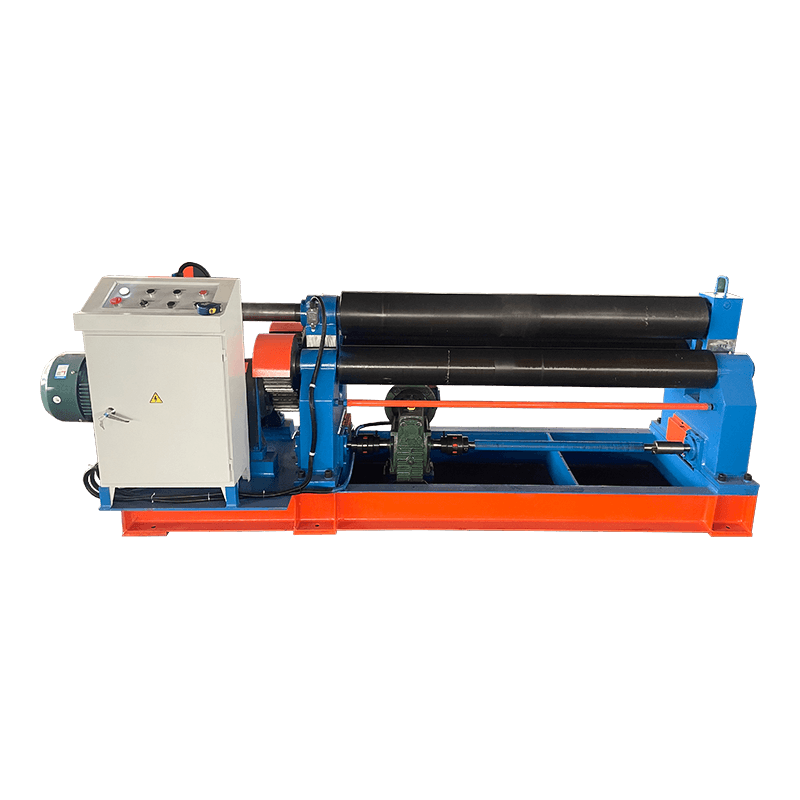
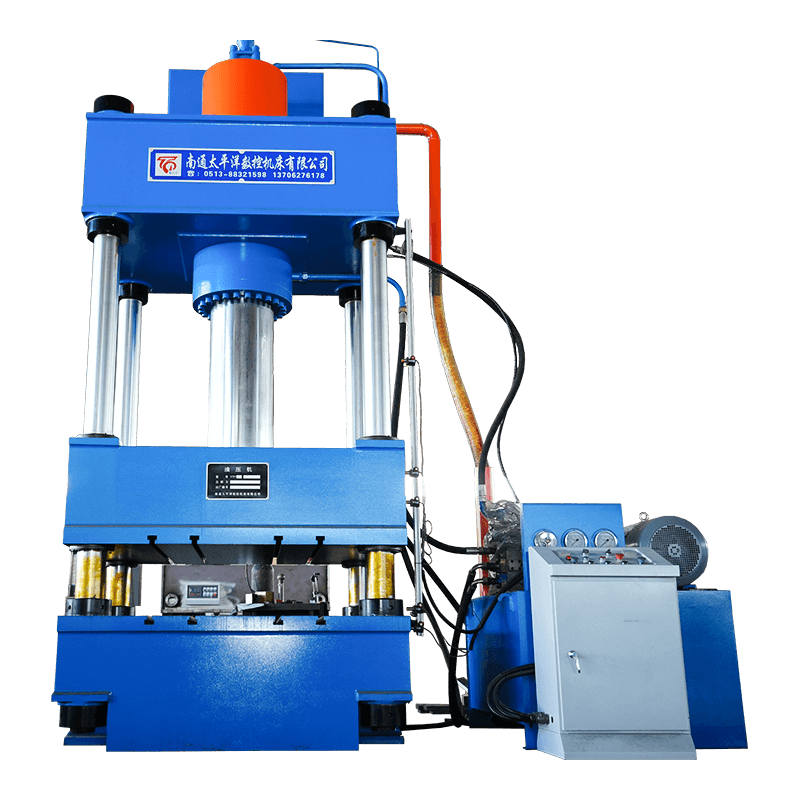
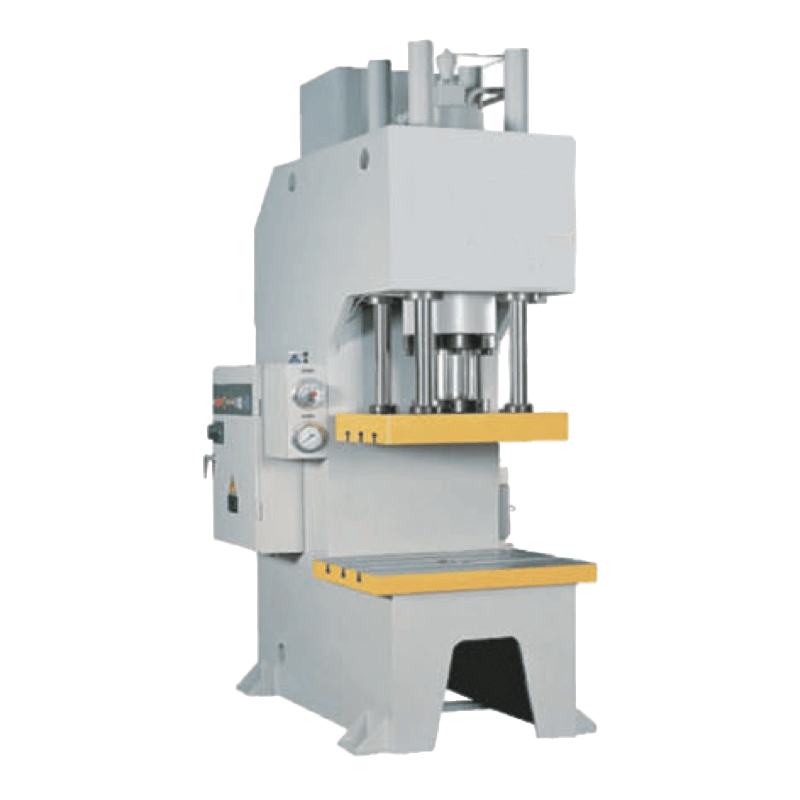
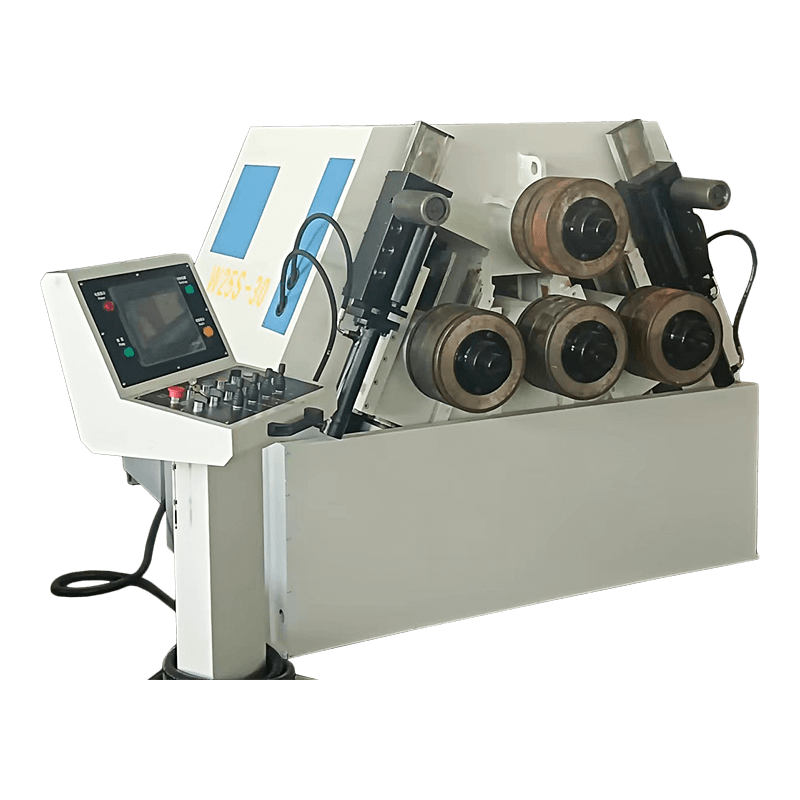
For reference, Nantong Pacific CNC Machine Tool builds all three architectures — plain hydraulic, torsion-synchronised and electro-hydraulic servo — in Haian, Jiangsu, and exports to Southeast Asia, Europe, the US and the Middle East. You can review the full press brake range alongside shears, rolling machines and presses, which helps when a single supplier has to cover a whole fabrication line rather than one machine.
The hydraulic part describes the drive: oil pressure moves the ram. CNC describes the control that sets ram depth, back gauge position and sometimes crowning. Most modern hydraulic press brakes are CNC in some form, so the two terms overlap rather than compete.
Use P (t/m) ≈ 65 × t² / V for mild steel, with V = 8 × t. A 6 mm plate on a 48 mm die needs about 49 t/m, so a 3,000 mm bend needs roughly 146 t — a 160 to 200 t machine covers it with margin.
Price moves with tonnage, bend length, number of CNC axes, crowning and tooling. Two machines of the same size can land far apart once servo synchronisation and a 3+1 or 4+1 axis control are added, so ask for a quote against your own part drawings.
Follow the manufacturer's interval and take an oil sample at least once a year. Heat, dust and water are the usual causes of early degradation, and filter elements normally need replacing more often than the oil itself.
Yes, but stainless and high-strength grades need more force and more springback compensation than mild steel. Size the machine for the hardest material in your foreseeable workload rather than for today's mild steel job.
Light curtains or laser guards at the tooling gap, two-hand control, a relief valve protecting the hydraulic circuit against overload, and mechanical stops on the ram. Confirm the machine carries the certification required in your market before it ships.
Related Products

Contact us
Factory Address
Xichang industrial Park, Chengdong Town, HaianCity, Nantong City, Jiangsu Province, China
Phone
+86-13906278466
products
QR CODE

 English
 русский
 عربى