Oct 19, 2026
A fabricator reviewing three quotes for a 3 m guard panel usually starts with the control: 2-axis, 4-axis, or electrohydraulic servo. That is the wrong end of the decision. The machine has to suit the part envelope first: thickness, bend length, material springback, and the smallest inside radius the tooling can produce. CNC then repeats a capable process; it does not create one.
The same logic applies to shearing, rolling, pressing, and profile bending. Match the machine family to the operation, then use the control specification to judge repeatability and changeover. A CNC metal processing equipment purchase is successful when the first production run is boring: same bend angle, same cut length, same rolled diameter, and no surprise rework.
Content
The term is often used loosely. In a fabrication shop, it usually means the machines that cut and form sheet, plate, and profiles, not milling centers. The purchase decision splits into five families, and each family has a different “first question” that decides whether the machine will earn its floor space.
| Machine family | Primary job | What CNC adds | Selection focus |
|---|---|---|---|
| Press brake | Bends sheet into angles and profiles | Backgauge positioning, ram depth, angle data storage | Tonnage per meter, bend length, tooling, crowning |
| Guillotine shear | Cuts sheet and plate to length | Backgauge, stroke control, blade gap settings | Thickness, cut length, hold-down, distortion control |
| Plate roller | Forms cylinders, arcs, and shells | Roll position, prebend sequence, repeat recipes | Roll count, prebend, diameter, thickness, flat ends |
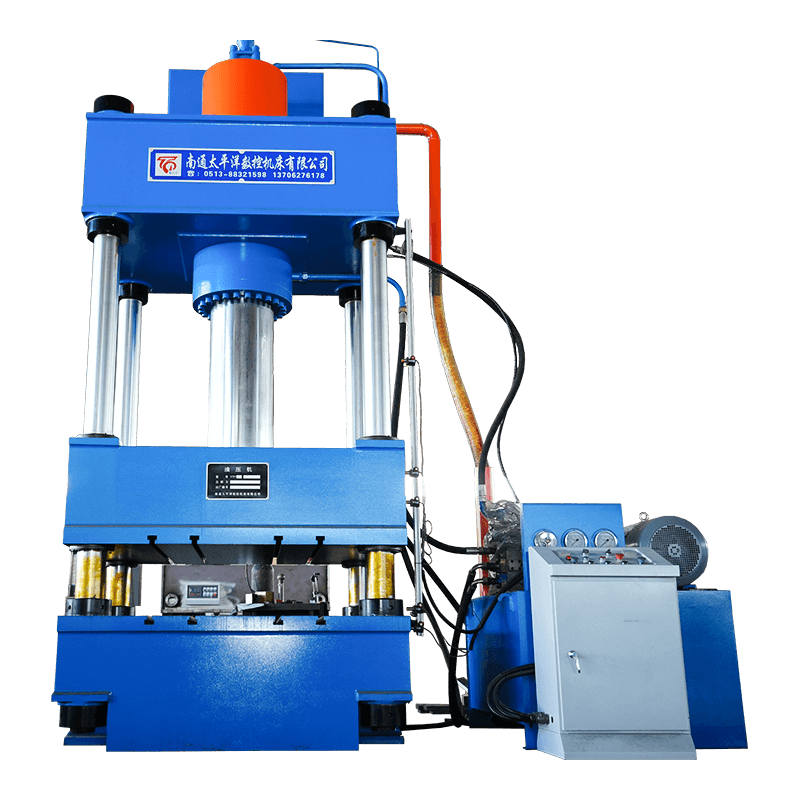
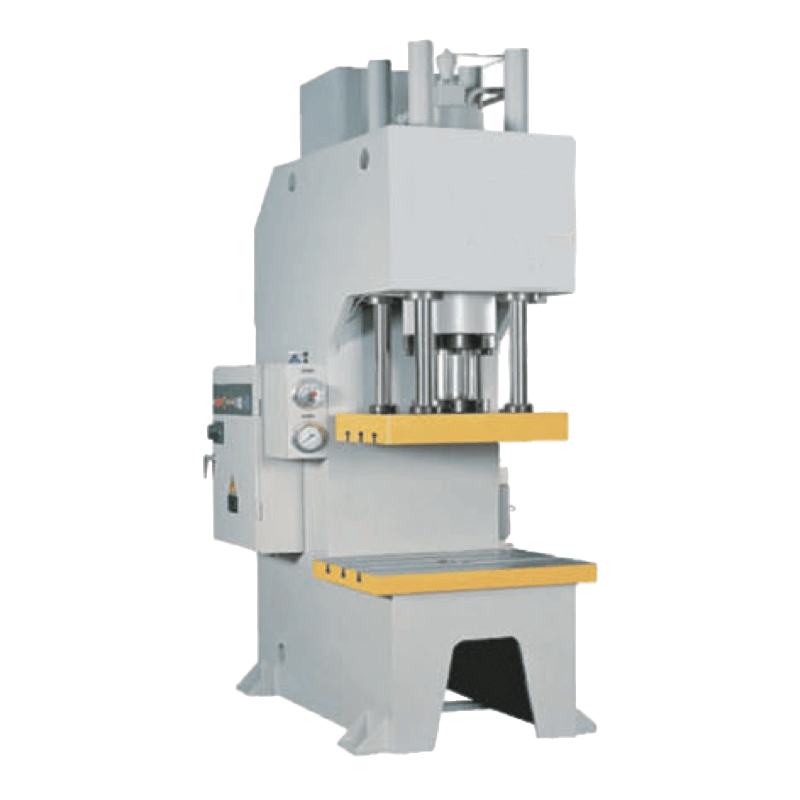
| Hydraulic press | Forms, stamps, straightens, and assemblies | Pressure and stroke control, recipe storage | Tonnage, bed size, daylight, speed, guarding |
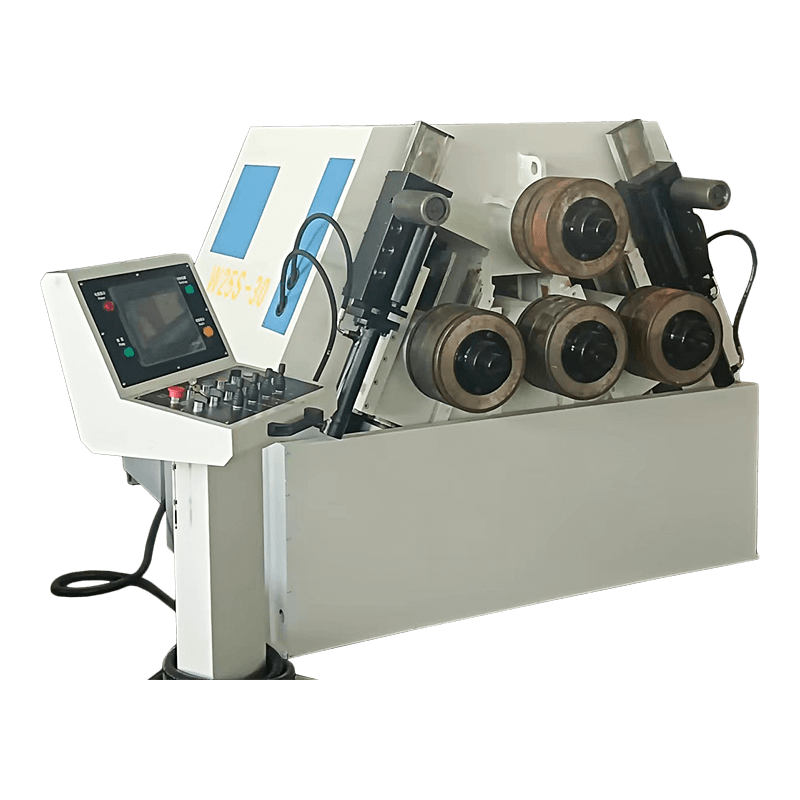
| Profile bender | Curves angles, channels, tubes, and sections | Roll positioning and repeatable bend sequences | Profile size, radius, tooling, springback |
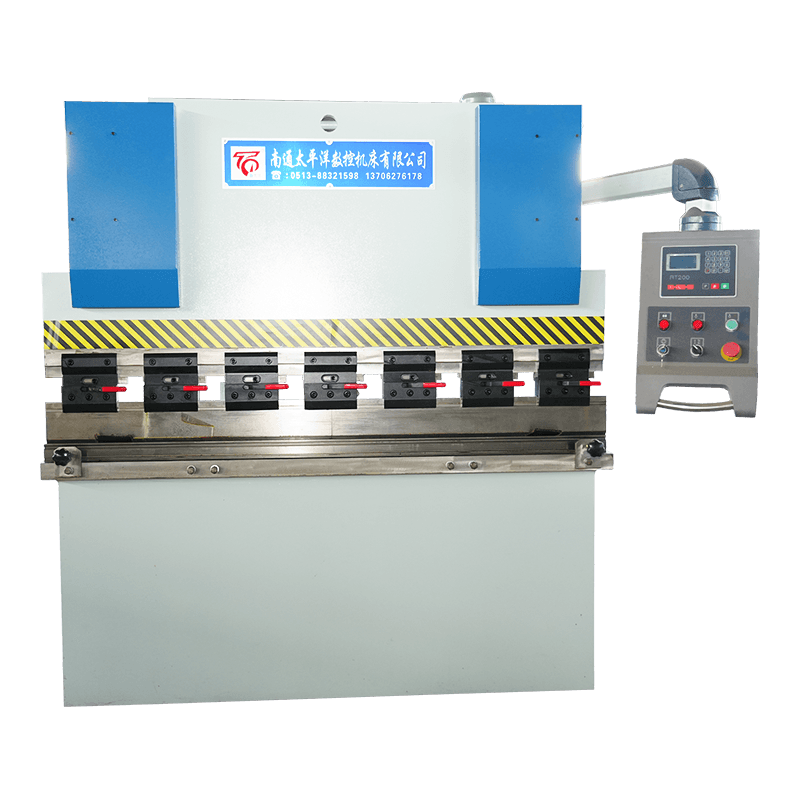
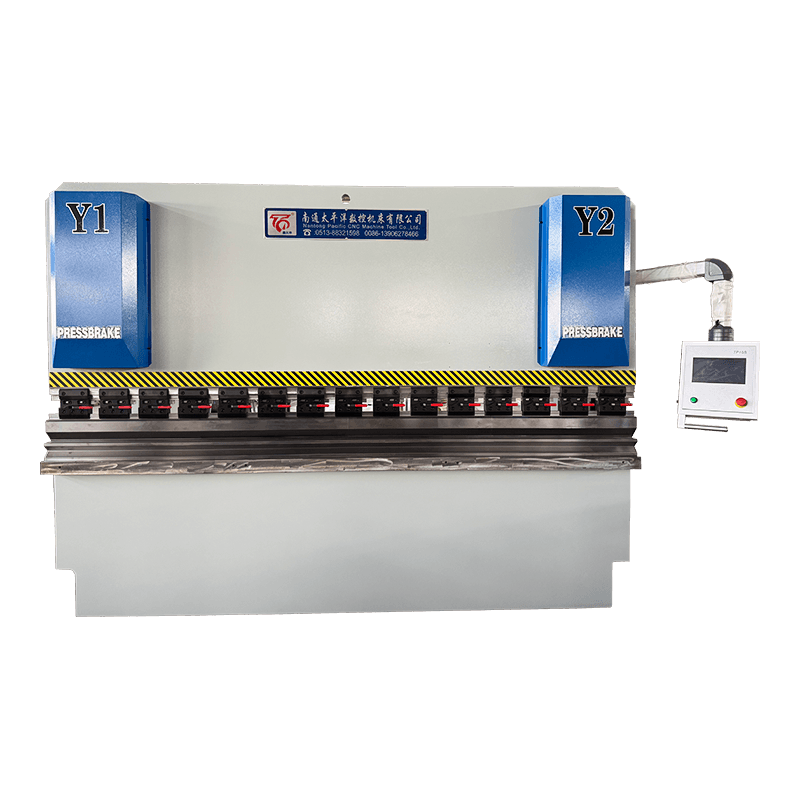
A press brake is sized by the load it can carry at the bottom of the stroke, not by the number on the control. For a given material and thickness, required tonnage rises with bend length and falls with a wider V-die opening. The machine builder’s tonnage chart is the reliable source. Two other points cause most early problems: whether the bed and ram can support the full-length load without deflection, and whether the tooling can produce the required inside radius without marking the surface.
Control architecture matters after that. A conventional hydraulic press brake can be right for simple, low-mix work. A torsion-axis synchronous CNC machine adds controlled depth and backgauge positioning. An electrohydraulic servo CNC machine is chosen when angle consistency and changeover matter across a wider mix. In the listed product structure, the WE67K series is an electrohydraulic servo CNC hydraulic sheet metal bending machine; the WC67K is torsion-axis synchronous; the WC67Y is a hydraulic machine without CNC in the model name.
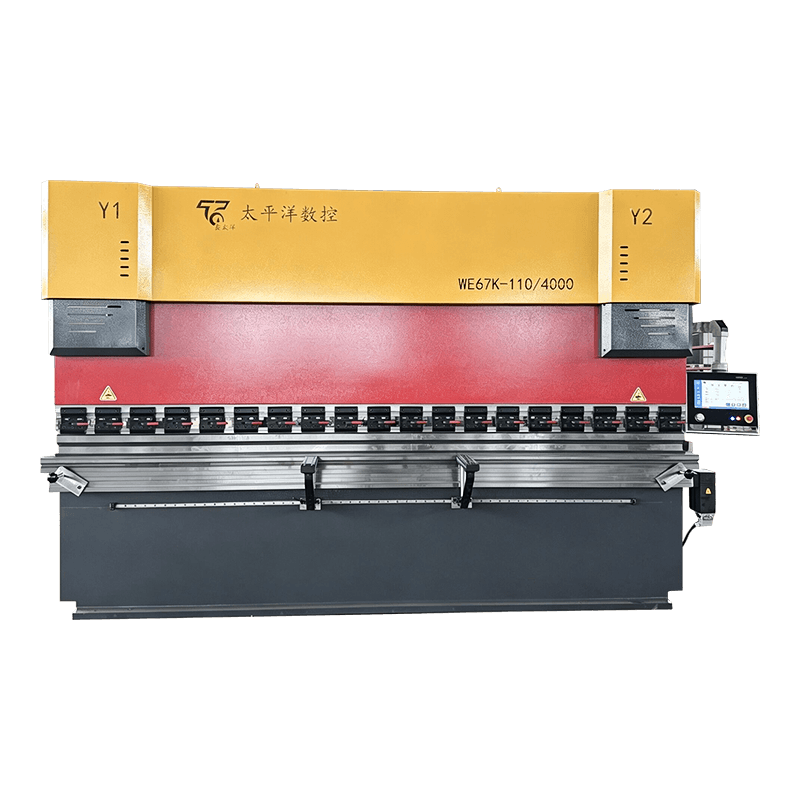 WE67K series electro-hydraulic servo CNC hydraulic sheet metal bending machineThe WE67K series electro-hydraulic servo CNC hydraulic press brake is a high-end precision bending solution developed by Nantong Pacific CNC Machine Tool Co., Ltd. It ...View Product →
For a deeper buying sequence, see this guide to choosing a CNC plate bending machine. The useful order is part envelope, tooling, tonnage, control axes, then acceptance test. Reversing that order is how shops end up with a well-equipped machine that cannot run the job that justified it.
Simplified isometric view. Proportions are illustrative, not a machine drawing.
Guillotine and swing-beam shears both make straight cuts, but they manage rake and blade travel differently. A hydraulic guillotine with a CNC backgauge is common for plate and long blanks; a swing-beam machine can suit lighter sheet and mixed work. The purchase check is not the stroke rate alone. Confirm maximum thickness and length, blade gap adjustment, hold-down force, backgauge repeatability, and whether narrow strips will curl.
The QC11Y/K series is a CNC hydraulic guillotine; the QC12Y/K is a CNC hydraulic swing beam. Both are series-level selections, not a promise that any thickness will cut cleanly. Blade condition, material strength, and operator technique still decide the edge quality.
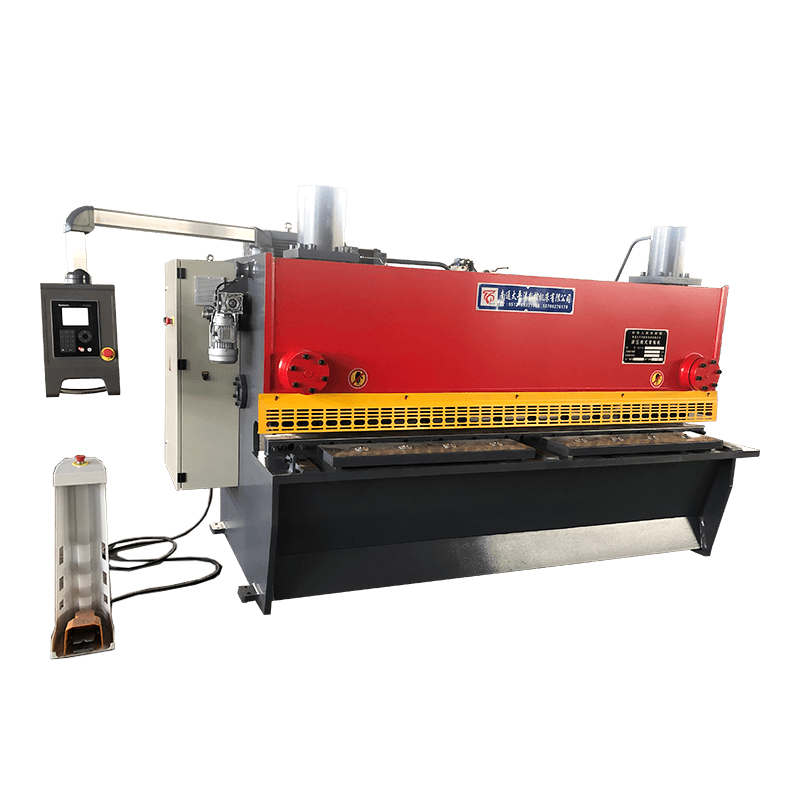 QC11Y/K CNC Hydraulic Guillotine Shearing MachineReview this hydraulic guillotine option when comparing shear series; it covers 6–25 mm plate thickness and motorized blade-clearance adjustment for accurate cutting.View Product →
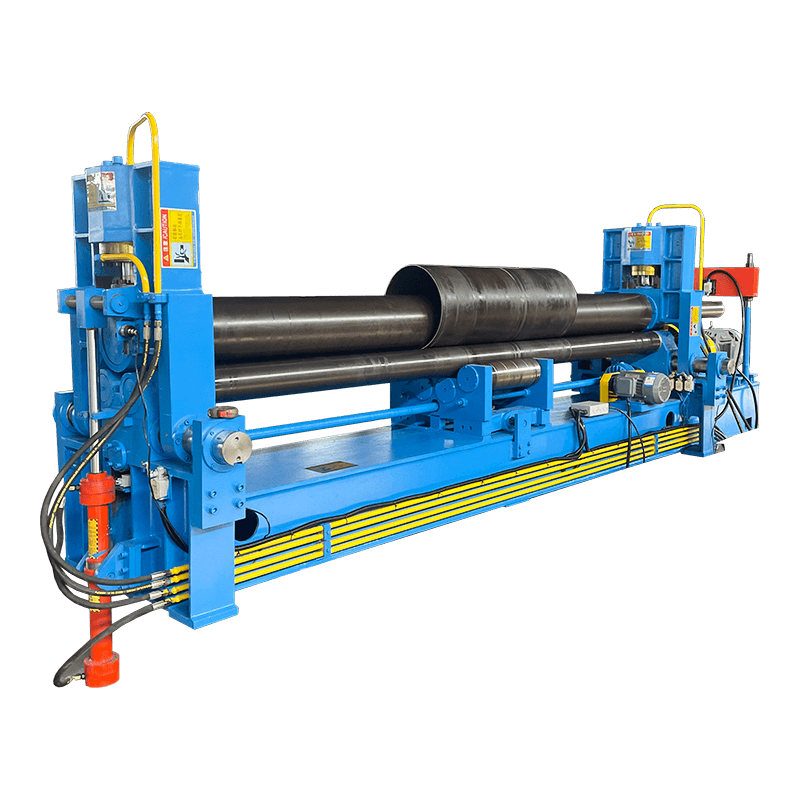
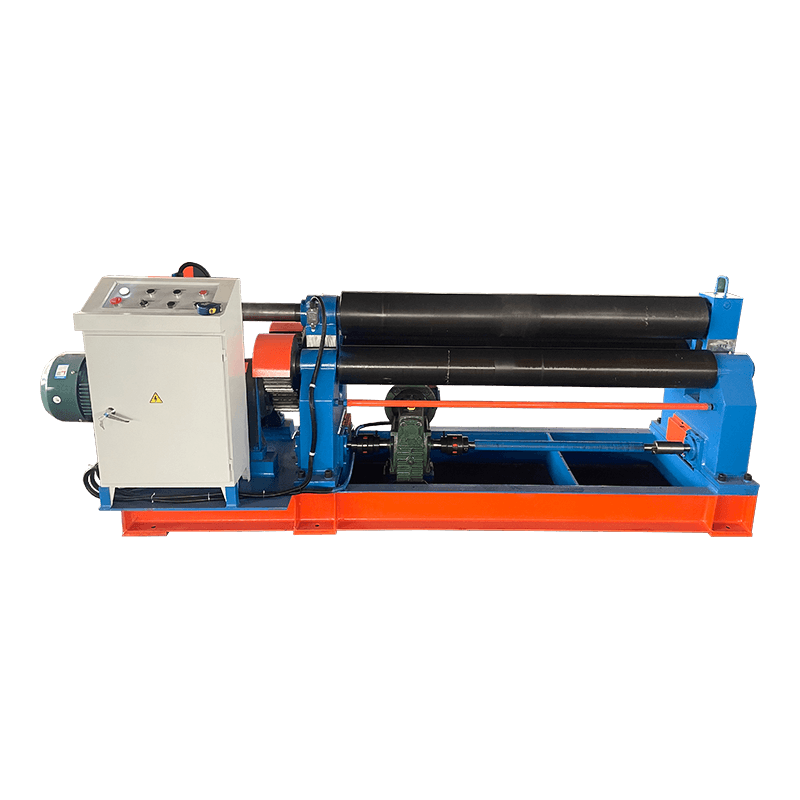
Rolling looks simple until the first cylinder has flat ends. Three-roll symmetrical machines are the baseline. Three-roll universal hydraulic machines add the ability to position rolls for prebending; four-roll machines reduce handling and can prebend both ends more conveniently. The W11, W11S, and W12 series in the product line follow that progression. For a vessel shell, the key data are plate thickness, yield strength, finished diameter, shell length, and the permissible flat length.
A machine that can roll the diameter but cannot prebend the thickness will need extra handling or secondary work. Ask for a trial that includes the actual material grade and the worst end condition, not just a mild-steel demonstration.
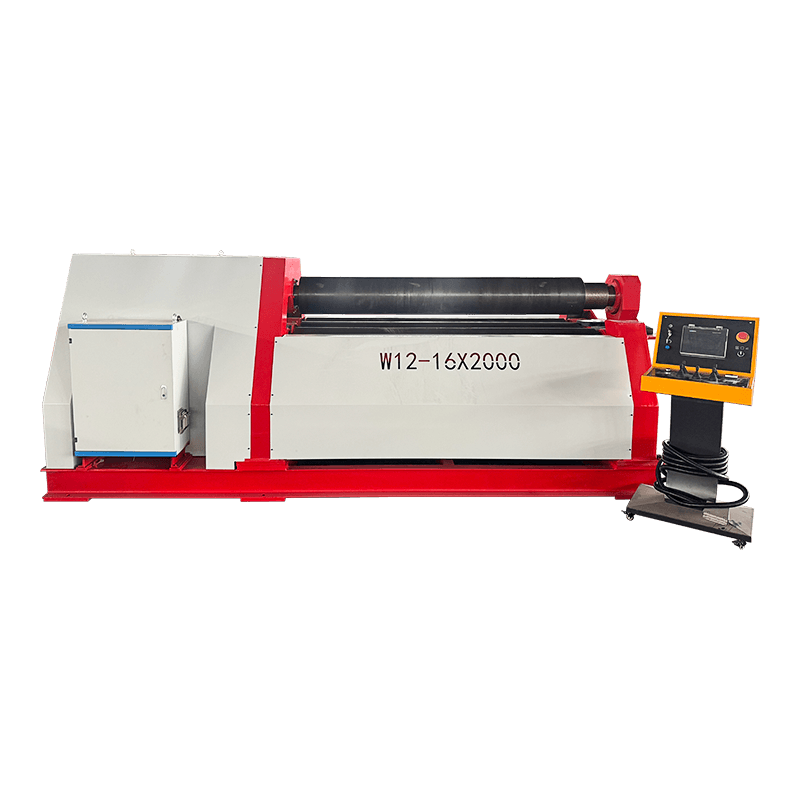 W12 Series Four-Roller Hydraulic Plate Rolling MachineConsider this four-roller series for one-setup prebending and forming; check model capacity against actual material grade and worst-end conditions before selection.View Product →
Four-column and single-column presses solve different access problems. A four-column press gives a stiff frame and uniform guidance for forming, stamping, and straightening; a single-column press opens the front and side for long or awkward parts. On the specification sheet, compare tonnage, bed size, daylight, stroke, approach speed, and whether the control can store recipes. For profiles, a hydraulic section rolling machine such as the W24S handles angles, channels, and tubes, but the tooling set and springback compensation decide the result. Buy the tooling package with the machine, not after the first job.
Nantong Pacific CNC Machine Tool, based in Haian Economic and Technological Development Zone, lists more than 20,000 square meters of production space and a product range covering bending, shearing, rolling, hydraulic press, and profile bending machines. The company states it builds standard series and non-standard equipment and exports to Southeast Asia, Europe, the US, and the Middle East. Those facts matter at the shortlist stage, but they do not replace a process audit.
Ask for the machine’s load chart, tooling drawing, electrical and hydraulic schematics, spare-parts list, and a handover checklist. Ask who supports installation and what response time is offered in your region. The product structure is broad, but the final choice still comes down to the part and the acceptance test.
Source: Nantong Pacific CNC Machine Tool product structure. Counts show listed series, not production capacity.
Do not let the control label decide the purchase. Write the part envelope, material, tolerance, and batch size on one page. Use that page to size the press brake, shear, roller, press, or profile bender. Then compare how each supplier proves the machine on your part. If the trial part is right, the installation conversation becomes predictable. If it is not, no control specification will rescue the project.
It covers machines that cut and form metal, such as CNC press brakes, guillotine shears, plate rollers, hydraulic presses, and profile benders. The control handles repeatable positioning and process settings; the machine frame and tooling do the forming.
Price depends on machine type, size, control axes, tooling, and acceptance requirements. A small hydraulic press brake and a large electrohydraulic servo model sit in very different brackets. Ask for a breakdown of machine, tooling, installation, training, and spares.
A hydraulic bending machine uses hydraulic force to move the ram. A CNC bending machine adds controlled positioning of the ram and backgauge, often with angle and tooling data stored in a program. Some machines are both hydraulic and CNC.
Start with the thickest material, maximum bend length, smallest inside radius, and expected batch mix. Then check tonnage per meter, bed and ram deflection, tooling, backgauge axes, and safety devices. Run a sample part before accepting the machine.
Check maximum thickness and width, minimum rolling diameter, prebending capability, roll positioning, and the flat length left at each end. For heavy plate, confirm the yield strength the machine is rated for, not just mild steel capacity.
Yes, if tonnage, bed size, daylight, stroke, and speed suit the tool. Custom work also needs a die set, pressure control, and guarding. Review the load chart and run a trial with the intended material before the press is installed.
Related Products

Contact us
Factory Address
Xichang industrial Park, Chengdong Town, HaianCity, Nantong City, Jiangsu Province, China
Phone
+86-13906278466
products
QR CODE

 English
 русский
 عربى