Mar 26, 2026
Yes, an Electro-Hydraulic Bending Machine is well suited for mass production. Its combination of servo-driven hydraulic precision, CNC programmability, and consistent repeatability makes it one of the most capable sheet metal forming solutions for high-volume manufacturing environments. When configured correctly, a CNC Electro Hydraulic Bending Machine for sheet metal can sustain throughput rates and dimensional accuracy levels that pure mechanical or manual hydraulic presses cannot reliably match across large batch runs.
Content
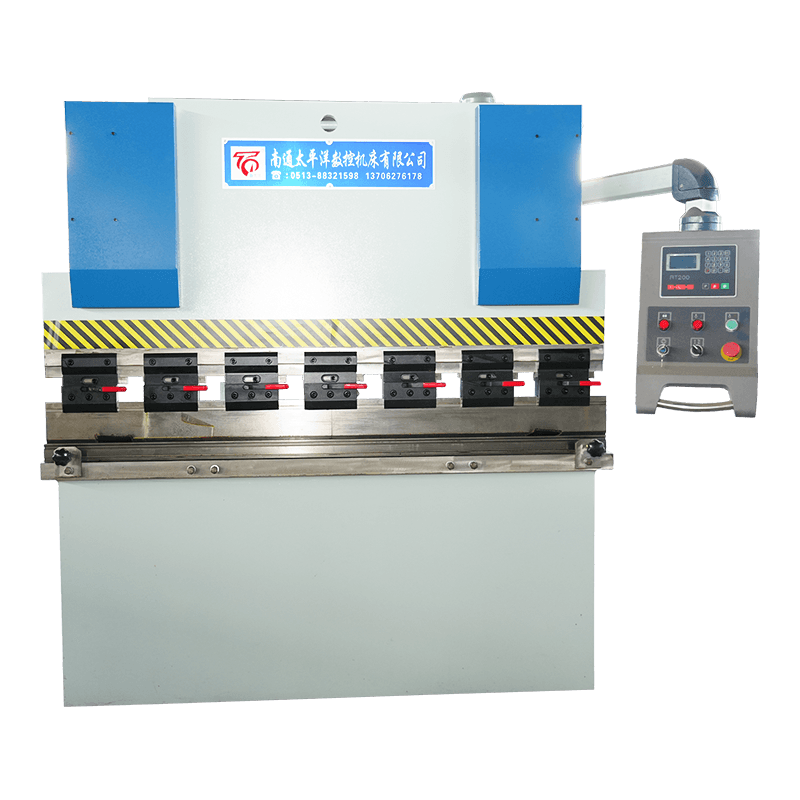
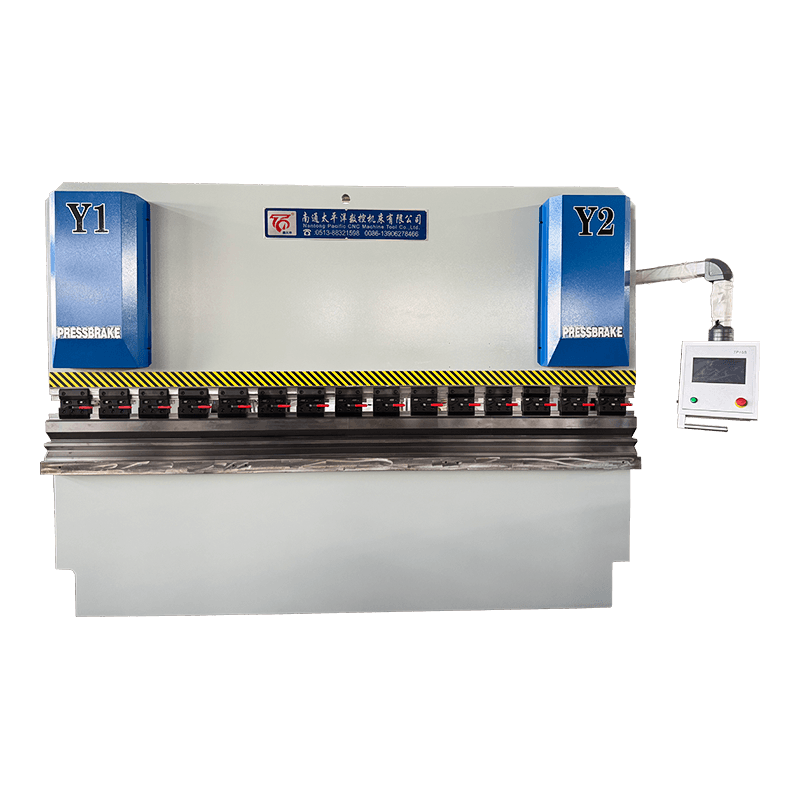
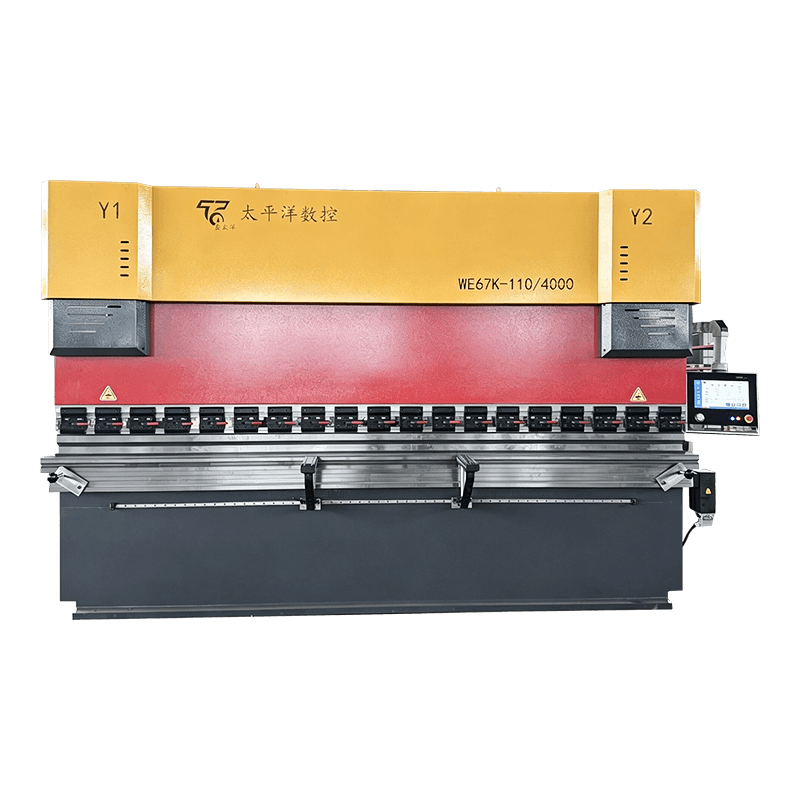
An Electro-Hydraulic Bending Machine is a press brake system in which hydraulic ram movement is governed by servo electric motors and a CNC controller, rather than traditional fixed-displacement hydraulic pumps. This architecture gives the machine real-time control over ram position, speed, and applied force throughout every phase of the bend cycle.
Key structural components include:
This electro-hydraulic architecture distinguishes these machines from all-electric press brakes (which use no hydraulic fluid) and conventional hydraulic press brakes (which lack servo precision), placing them in a performance tier that addresses the core demands of production-scale sheet metal work.
Several technical features of the Electro-Hydraulic Bending Machine directly translate into production-floor advantages when running high volumes.
Servo-hydraulic closed-loop control delivers ram positioning repeatability of plus or minus 0.01 mm across consecutive cycles. In a production run of 1,000 identical brackets, this means the angular variance between the first part and the last part is negligible, eliminating manual inspection after every bend and reducing scrap rates to well below 1% for stable materials.
A CNC Electro Hydraulic Bending Machine for sheet metal can store hundreds of bending programs in its controller memory. Switching between part families requires only program recall and a tooling change, reducing setup time from the 60-90 minutes typical of manually set hydraulic brakes to under 15 minutes in well-organized shops. This dramatically improves machine utilization across multi-SKU production schedules.
Electro-Hydraulic Bending Machines are available in capacities ranging from 40 tons to over 1,000 tons, covering thin-gauge stainless steel, aluminum alloy, mild steel, and high-strength steel up to approximately 12 mm thickness in standard configurations. This range makes a single machine capable of handling multiple product lines without investment in separate equipment.
On longer bending lengths (over 2,000 mm), beam deflection under load causes mid-section angle error. Electro-hydraulic machines with active hydraulic crowning automatically compensate by applying upward counter-pressure along the bottom beam, ensuring consistent bend angles across the full part width without manual shimming or operator intervention.
Cycle time and output consistency are the two most important metrics for any mass production press brake. The table below compares the Electro-Hydraulic Bending Machine against conventional alternatives across these dimensions.
| Machine Type | Positioning Repeatability | Avg. Cycle Time (simple bend) | Setup Time (job change) | Mass Production Suitability |
|---|---|---|---|---|
| Electro-Hydraulic (CNC) | +/- 0.01 mm | 4-8 seconds | 10-15 minutes | Excellent |
| Conventional Hydraulic (CNC) | +/- 0.05 mm | 6-12 seconds | 20-40 minutes | Good |
| All-Electric Press Brake | +/- 0.005 mm | 3-6 seconds | 10-15 minutes | Excellent (limited tonnage) |
| Manual Hydraulic Brake | +/- 0.2-0.5 mm | 15-30 seconds | 45-90 minutes | Limited |
Average job changeover setup time (minutes) by machine type
Estimated cumulative parts produced in an 8-hour shift (single operator, simple bends)
The Electro-Hydraulic Bending Machine is deployed across several manufacturing sectors where consistent quality and high output are both required simultaneously.
Ductwork panels, electrical enclosures, and server rack chassis are produced in batch sizes of thousands per week. CNC programs enable operators to produce complex multi-bend profiles repeatedly without manual measurement. A single CNC Electro Hydraulic Bending Machine for sheet metal can replace two or three manually adjusted hydraulic brakes in this environment while improving first-part accuracy.
Structural brackets, mounting plates, and body reinforcements require tight angular tolerances, often within plus or minus 0.5 degrees. Servo-hydraulic precision ensures these tolerances are held across production runs of 5,000 to 50,000 parts without tool recalibration.
Steel lintel profiles, angle brackets, and purlin sections are formed in large volumes. High-tonnage Electro-Hydraulic Bending Machines handle 6 to 10 mm mild steel over bending lengths of 3,000 to 6,000 mm, with crowning compensation ensuring uniform angles across the full part length, which is critical for fit-up accuracy on site.
Thin-gauge stainless steel and aluminum panels for kitchen appliances, display frames, and lighting fixtures demand smooth surface finishes and precise flange dimensions. The controlled approach speed and adaptive pressure profiling of electro-hydraulic systems reduce surface marking on cosmetic panels, lowering rejection rates.
The Electro-Hydraulic Bending Machine's CNC architecture makes it inherently compatible with upstream and downstream automation, which is the key enabler for truly lights-out or semi-automated mass production.
While well suited for mass production, the Electro-Hydraulic Bending Machine does have operational boundaries that production planners should account for.
Selecting the right Electro-Hydraulic Bending Machine for a specific mass production application requires matching machine specifications to part requirements. The following parameters are the most decision-critical.
| Specification | Typical Range | Production Impact |
|---|---|---|
| Bending Force (tonnage) | 40 - 1,000+ tons | Determines max sheet thickness and length |
| Ram Repeatability | +/- 0.01 mm | Controls angular consistency across batch |
| Back Gauge Axes | 2 to 6 axes | Enables complex multi-bend part programs |
| Bending Length | 1,000 - 6,000 mm | Sets maximum part size per cycle |
| Program Storage | 500 - 10,000+ programs | Supports multi-SKU production scheduling |
| Approach Speed | 100 - 200 mm/s | Directly affects cycle time and hourly output |
Related Products

Contact us
Factory Address
Xichang industrial Park, Chengdong Town, HaianCity, Nantong City, Jiangsu Province, China
Phone
+86-13906278466
products
QR CODE

 English
 русский
 عربى
عربى