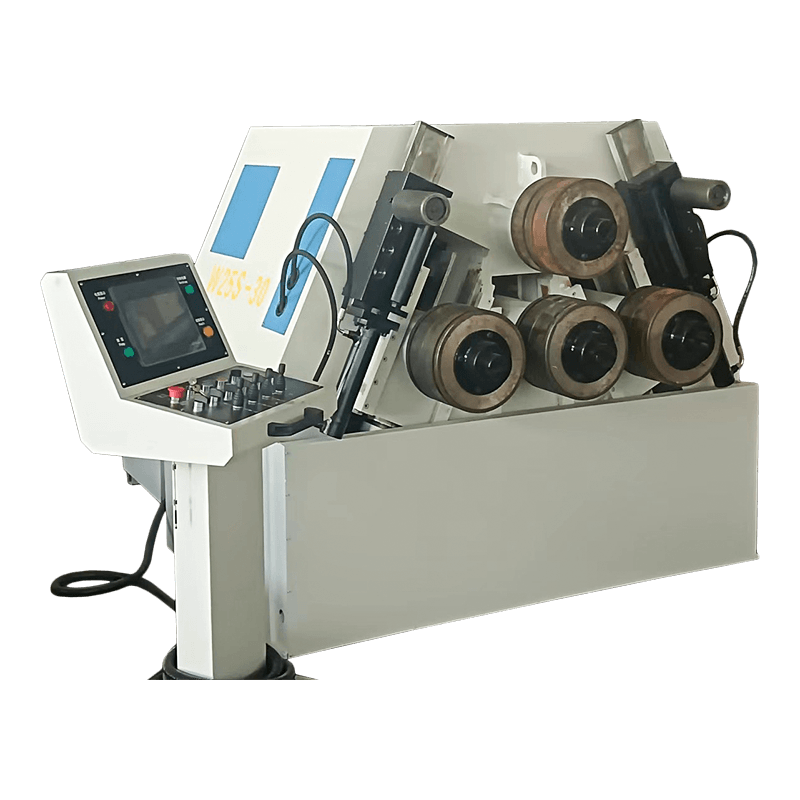
Home / News / Industry News / What are the advantages of hydraulic bending machines in automated production?
What are the advantages of hydraulic bending machines in automated production?
Mar 19, 2026
The core advantage of a Hydraulic Bending Machine in automated production is its combination of high force output, precise repeatability, and programmable flexibility — enabling manufacturers to achieve bending tolerances within ±0.1mm across continuous production runs while significantly reducing labor dependency. In modern sheet metal fabrication, hydraulic bending machines have become the backbone of automated lines, outperforming mechanical alternatives in force consistency, safety margin, and adaptability to complex multi-bend programs.
Automated production lines demand consistency above all else. A single variance in bend angle across a batch of structural components can cause cascading assembly failures downstream. Hydraulic systems deliver force through incompressible fluid, which means the ram velocity and tonnage remain stable across the full stroke length — a physical property that mechanical eccentric-drive presses cannot replicate.
Global sheet metal fabrication market data shows that hydraulic press brakes account for over 58% of all bending machine installations in automated manufacturing environments as of 2025. Their dominance reflects not just force capacity, but their compatibility with CNC control systems, robotic loading, and Industry 4.0 data integration — requirements that now define modern production line specifications.
Fig. 1 — Bending machine type share (%) in automated production installations, 2025
Key Technical Advantages in Automated Production
Consistent Force Delivery Across the Full Stroke
A Hydraulic Bending Machine generates full rated tonnage at any point along its ram travel — not just at the bottom of the stroke as mechanical machines do. This means operators can bend thick plate at mid-stroke without sacrificing force, enabling complex part geometries that would otherwise require multiple setups. In high-mix production environments, this flexibility directly reduces changeover time by 30–45% compared to mechanical systems.
Programmable Precision with CNC Integration
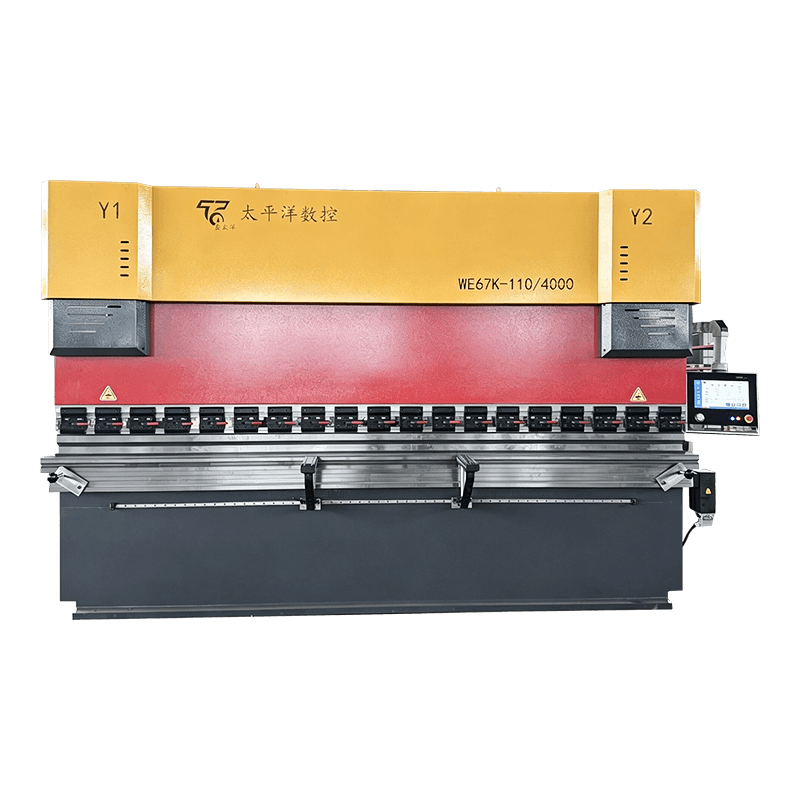
The CNC Hydraulic Bending Machine combines hydraulic force with closed-loop numerical control, allowing operators to program multi-step bend sequences, back-gauge positions, and ram depth profiles with sub-millimeter accuracy. Modern CNC controllers store thousands of bend programs, enabling instant job changeover with zero manual adjustment. In automotive component manufacturing, this capability supports lot sizes as small as a single part with the same repeatability as mass production runs.
Overload Protection and Safety Architecture
Hydraulic systems are inherently self-limiting: when resistance exceeds the system's pressure setting, the relief valve opens automatically, preventing tooling damage and machine overload. Mechanical machines have no equivalent passive protection. In automated lines running unattended shifts, this safety characteristic is a critical operational requirement — uncontrolled overload events in mechanical presses have caused tooling failures costing $15,000–$80,000 per incident in tooling and downtime.
Compatibility with Robotic Loading and Industry 4.0
CNC hydraulic press brakes are the standard integration point for robotic bending cells. The machine's stroke speed, dwell time, and positioning can all be synchronized with robot arm movements via standard communication protocols (EtherCAT, PROFIBUS, OPC-UA). Real-time data output — bend force, angle feedback, cycle count, oil temperature — feeds directly into production monitoring dashboards, supporting predictive maintenance and OEE (Overall Equipment Effectiveness) tracking.
CNC Hydraulic Bending Machine vs. Conventional Hydraulic Press: A Direct Comparison
While all CNC hydraulic bending machines are hydraulic, the addition of CNC control delivers a measurable performance gap in automated production contexts. The table below clarifies the key differences.
Parameter
Conventional Hydraulic Press Brake
CNC Hydraulic Bending Machine
Angle Repeatability
±0.5° – ±1°
±0.1° – ±0.2°
Back-Gauge Positioning
Manual adjustment
Auto-positioning (±0.02mm)
Program Storage
None / manual settings
1,000 – 10,000+ programs
Robot Integration
Limited / custom
Standard (OPC-UA / EtherCAT)
Changeover Time
15 – 45 min
Under 5 min (program recall)
Data Output
None
Real-time via fieldbus / cloud
Performance comparison: Conventional hydraulic press brake vs. CNC Hydraulic Bending Machine in automated production
Energy-Saving Hydraulic Press Brake: Reducing Operating Costs at Scale
Traditional hydraulic press brakes run a fixed-displacement pump at full speed continuously — consuming full motor power even during the idle portions of the cycle. In a typical press brake cycle, the actual bending action accounts for only 20–35% of total cycle time; the remainder is idle dwell, back-gauge movement, and part handling.
The Energy-Saving Hydraulic Press Brake addresses this through servo-hydraulic drive technology: a variable-speed servo motor drives the hydraulic pump, delivering flow only when and at the rate the machine actually requires. The measurable results are significant:
Energy consumption reduced by 30–70% versus fixed-pump systems, depending on duty cycle.
Hydraulic oil temperature rise reduced by up to 40°C per shift, extending oil life and reducing cooling system load.
Noise levels during idle drop to under 65 dB, improving operator working conditions.
Servo motor starting eliminates the inrush current spike of direct motor starts, reducing electrical infrastructure demand.
For a facility operating 2 shifts daily, energy savings typically translate to $8,000–$25,000 per machine per year in reduced electricity costs.
Fig. 2 — Annual energy consumption (kWh × 1000) comparison: fixed-pump vs. energy-saving hydraulic press brake at 2-shift operation
Productivity and Quality Metrics in Real Production Environments
The productivity gains from integrating a CNC hydraulic bending machine into an automated production line are measurable across multiple KPIs. The following figures are drawn from documented manufacturing case studies across automotive, HVAC, and structural steel fabrication sectors:
KPI
Before CNC Hydraulic Integration
After CNC Hydraulic Integration
Improvement
Parts per hour
38
62
+63%
Scrap rate
4.2%
0.8%
-81%
Setup time per job
28 min
4 min
-86%
Operators required
2 per machine
1 per 2 machines
-75%
OEE (Overall Equipment Effectiveness)
51%
78%
+53%
Production KPI comparison before and after CNC Hydraulic Bending Machine integration — composite data from fabrication industry case studies
Application Sectors Where Hydraulic Bending Machines Deliver the Most Value
Hydraulic bending machines are not sector-neutral — their advantages compound most strongly in production environments that require high force, tight tolerances, or frequent job changeover. The following industries represent the highest-value application contexts:
Automotive and EV manufacturing: Structural body panels, battery housing frames, and chassis components require bend angles held to ±0.2° across production lots of thousands of parts.
HVAC and ductwork: High-mix, lower-volume sheet metal duct sections benefit from rapid CNC program recall and back-gauge automation, reducing per-part labor time by up to 55%.
Structural steel and construction hardware: Plate thicknesses of 8mm–25mm require the sustained full-stroke tonnage that only hydraulic systems can reliably deliver.
Electronics enclosures and server racks: Thin-gauge stainless and aluminum enclosures demand the fine-resolution CNC ram control available in modern servo-hydraulic machines.
Aerospace component pre-forming: Low-volume, high-complexity titanium and aluminum alloy forming benefits from programmable multi-step bend sequences with intermediate springback compensation.
Maintenance Considerations That Protect Long-Term Performance
A hydraulic bending machine operated under a structured preventive maintenance program will typically deliver 15–25 years of productive service life. The leading causes of unplanned downtime and performance degradation are all preventable:
Hydraulic oil contamination: Particle contamination above ISO 4406 Class 18/16/13 degrades valve response and causes seal wear. Oil should be analyzed every 500–1,000 operating hours and changed when contamination thresholds are exceeded.
Seal and cylinder maintenance: Ram cylinder seals are the most frequent wear item. Visual inspection every 250 hours and proactive replacement at the first sign of weeping prevents ram positioning drift.
Back-gauge ball screw lubrication: CNC back-gauge axes require scheduled lubrication per the manufacturer's interval — typically every 200–400 hours — to maintain positioning accuracy.
Tooling alignment verification: Upper and lower tooling should be checked for parallelism monthly. A 0.05mm misalignment across a 3-meter bed produces measurable angle variation at part edges.
CNC parameter backup: Machine parameters, tool libraries, and bend programs should be backed up externally at least monthly to prevent data loss from control unit failures.
Frequently Asked Questions
A hydraulic bending machine uses pressurized fluid to drive the ram, delivering high tonnage across the full stroke with robust overload protection. A servo-electric press brake uses a direct-drive electric motor and ball screw — offering faster response and lower energy use at moderate tonnage, but typically limited to under 150 tons and lacking the force consistency of hydraulics at heavy plate thicknesses. For automated production requiring 80T or more, or materials above 6mm, hydraulic systems remain the standard choice.
Modern CNC controllers incorporate material springback compensation algorithms and angle measurement feedback (via laser or contact sensors). The machine calculates the required overbend depth based on material type, thickness, and tooling geometry, then confirms the actual achieved angle and adjusts automatically. This capability typically brings first-part accuracy to within ±0.2° without manual trial bending, eliminating the 2–4 test pieces traditionally required when setting up a new program on a conventional machine.
Hydraulic press brakes are suitable for mild steel, stainless steel, aluminum, galvanized sheet, copper, brass, and — with appropriate tooling — titanium alloys. The key variable is material yield strength combined with thickness, which determines the required tonnage per meter of bend length. CNC controllers include material libraries that calculate this automatically. Machines are available from 40 tons to over 2,000 tons, covering everything from 0.5mm aluminum sheet to 25mm structural plate.
An Energy-Saving Hydraulic Press Brake with servo-hydraulic drive typically reduces energy consumption by 30–70% versus a fixed-pump model of equivalent tonnage, depending on the production duty cycle. At lighter duty cycles (frequent idle periods), savings are at the higher end of that range. For a 110T machine operating two shifts, this commonly represents 15,000–25,000 kWh saved annually. The servo motor also eliminates continuous pump noise during idle, reducing ambient noise levels by 8–12 dB.
Yes. CNC hydraulic bending machines are the standard platform for robotic bending cell integration. The machine communicates with the robot controller via fieldbus protocols (EtherCAT, PROFIBUS, DeviceNet, or OPC-UA over Ethernet), synchronizing ram movement, back-gauge positioning, and clamp release with robot arm trajectories. Most major CNC controller platforms include dedicated robotic interface modules. A fully integrated robotic bending cell can operate unattended across night shifts, with typical cycle times of 12–18 seconds per bend for standard structural parts.


 English
 русский
 عربى
عربى