Home / News / Industry News / What should a novice hydraulic press operator pay attention to?
What should a novice hydraulic press operator pay attention to?
Mar 12, 2026
A novice hydraulic press machine operator must prioritize four things above all else: understanding the machine's rated capacity, never bypassing safety interlocks, maintaining hydraulic fluid and seal integrity, and keeping hands and body clear of the work zone during every press cycle. These fundamentals prevent the majority of accidents and equipment damage that occur during the first months of operating a hydraulic press machine.
This guide covers every critical area a beginner needs to understand — from reading machine specifications and identifying hydraulic press machine parts, to daily maintenance routines, common operating errors, and safe tonnage selection for different materials. Each section is practical and directly applicable on the shop floor.
Understand the Machine Specifications Before You Touch Any Control
Every hydraulic press machine has a data plate that lists its operating limits. A novice operator must read and understand this plate before starting work. The three most important values are the rated tonnage, the maximum stroke length, and the working pressure range.
Rated tonnage is the maximum force the press can deliver safely. Common shop-floor hydraulic press machines range from 10 tons for light assembly work up to 500 tons or more for heavy forging and deep drawing. Operating a press at or above its rated capacity — even briefly — risks cylinder seal failure, frame cracking, and loss of directional control.
Stroke length determines how far the ram travels. Setting a stroke limit that is too long can cause the ram to bottom out against the bed, creating a hydraulic lock condition that overpressurizes the entire system. On most machines, stroke limits are set using adjustable limit switches or mechanical stops — confirm these are correctly positioned for your tooling height before every job setup.
Working pressure is shown in bar or PSI. The system relief valve should be set no higher than the manufacturer's specified maximum — typically 200–350 bar (2,900–5,000 PSI) for industrial hydraulic press machines. Never adjust the relief valve above this value to "get more force." Doing so bypasses the primary overpressure protection.
Know Every Key Hydraulic Press Machine Part and Its Function
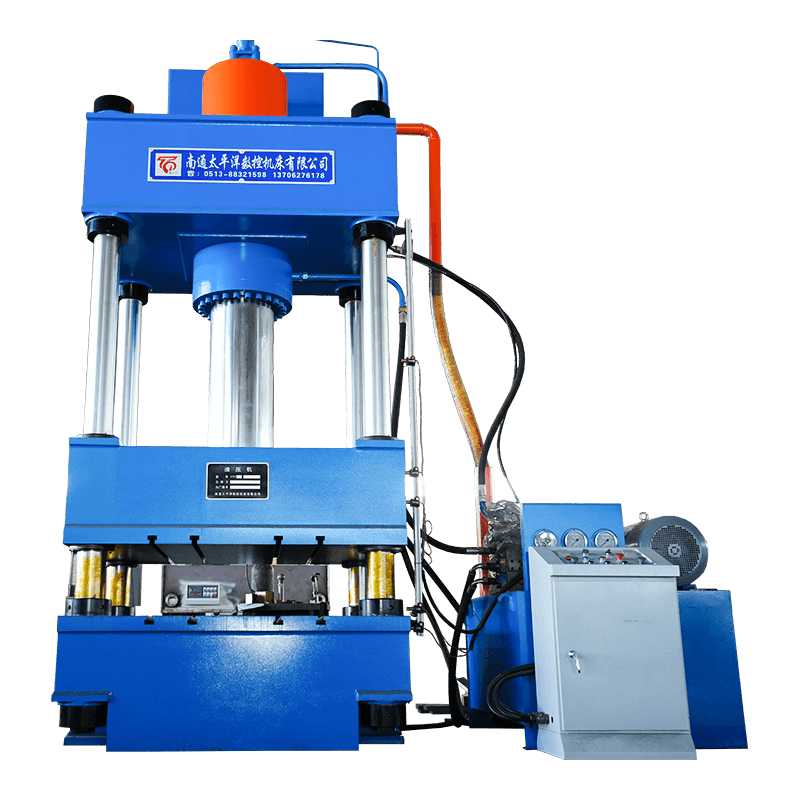
A novice who cannot identify the main hydraulic press machine parts cannot diagnose problems, perform pre-shift checks, or respond correctly when something goes wrong. The table below identifies the core components and what each one does.
Table 1: Key Hydraulic Press Machine Parts and Their Operating Functions
Component
Function
Novice Check Point
Hydraulic Cylinder / Ram
Converts hydraulic pressure into linear pressing force
Check for oil seepage around the piston rod seal daily
Hydraulic Pump
Generates flow and pressure from the oil reservoir
Listen for cavitation noise (whining) — indicates low oil level
Directional Control Valve
Routes oil flow to extend or retract the ram
Slow or inconsistent ram movement may indicate valve wear
Pressure Relief Valve
Limits maximum system pressure to protect components
Never adjust above manufacturer's rated maximum pressure
Oil Reservoir / Tank
Stores, cools, and deaerates hydraulic fluid
Check fluid level and condition at the start of every shift
Press Frame / Bed Plate
Supports the tooling and absorbs press reaction forces
Inspect for cracks, especially around weld joints, monthly
Stroke Limit Switches
Stop ram travel at preset upper and lower positions
Verify correct position before each new tooling setup
Pressure Gauge
Displays live system pressure during operation
Watch for pressure spikes above set point — stop and investigate
Pre-Operation Safety Checklist Every Shift
Industrial accident data consistently shows that over 60% of hydraulic press injuries occur during setup or the first production run of the day — before the operator has confirmed the machine is functioning correctly. A structured pre-shift check takes less than five minutes and eliminates the conditions that cause most incidents.
Complete the following checks in order before starting any production:
Hydraulic fluid level: Check the sight glass or dipstick. Fluid should be at or above the minimum mark. Low fluid causes pump cavitation and erratic ram behavior.
Fluid condition: Clean hydraulic oil is light amber and transparent. Milky or dark oil indicates water contamination or thermal degradation — do not operate until fluid is changed.
Hose and fitting inspection: Walk around the machine and visually inspect all visible hydraulic hoses for bulging, cracking, or abrasion damage. A high-pressure hose failure can inject fluid at 3,000+ PSI — sufficient to penetrate skin and cause injection injuries.
Cylinder seal check: Wipe the piston rod clean and run one slow cycle. Any oil film appearing on the rod indicates a worn rod seal that must be replaced.
Emergency stop function test: Press the E-stop button and confirm the ram halts immediately. If the ram continues to move after E-stop activation, do not operate the machine.
Safety guard and light curtain position: Confirm all fixed guards are in place and any light curtains or two-hand control devices are functioning before starting cycle production.
Tooling security: Verify that upper and lower tooling is correctly seated and clamped. Loose tooling can shift under load, causing misalignment and machine damage or injury.
Selecting the Correct Tonnage for Your Material and Operation
Using too little tonnage produces incomplete parts; using too much risks tooling fracture, workpiece ejection, and frame overload. Novice operators frequently err by selecting maximum available force on the assumption that "more is safer." It is not — overshooting the required force is a leading cause of tooling damage and workpiece ejection incidents.
As a practical starting reference, the table below shows approximate tonnage requirements for common operations on mild steel. Actual requirements depend on material grade, thickness, die geometry, and lubrication.
Table 2: Approximate Hydraulic Press Tonnage Requirements for Common Operations (Mild Steel Reference)
Blank holder force adds 30–40% to draw force requirement
Bending (V-die)
2–5 mm
15–80 tons
Air bending requires less force than bottoming or coining
Cold forging / coining
3–10 mm
100–500+ tons
Highest force requirement; confirm frame rating before proceeding
Straightening / assembly
Various
5–50 tons
Increase force gradually; monitor part response
The practical rule for novice operators: start at 60–70% of the calculated required force and step up in 10% increments, observing the result after each press cycle. This protects tooling and ensures the operator understands how the material responds before applying full force.
Personal Protective Equipment and Work Zone Rules
No amount of machine quality — whether operating an affordable hydraulic press machine or a high-specification production unit — substitutes for correct personal protective equipment and disciplined work zone habits. The following PPE and zone rules are non-negotiable for hydraulic press operation.
Safety glasses or face shield: Mandatory at all times. Metal chips, scale, and hydraulic fluid mist are present during operation.
Cut-resistant gloves: Required when handling sharp-edged blanks or formed parts. Remove gloves before operating press controls — gloves can catch on controls and prevent quick release.
Steel-capped safety footwear: Required to protect against dropped tooling or workpieces. A 10 kg die block falling from 1 meter delivers approximately 98 joules of impact energy.
No loose clothing or jewelry: Loose sleeves, rings, and watches can be caught by moving tooling or the ram. Wear close-fitting clothing and remove all jewelry before operating.
Work zone boundary: Mark a minimum 1-meter exclusion zone around the press during production cycling. No personnel other than the operator should be within this zone while the machine is running.
Two-hand control discipline: If the machine is equipped with two-hand controls, both hands must remain on the controls for the full press cycle. Never reach into the die area during a cycle under any circumstances.
Common Novice Operating Errors and How to Avoid Them
Most hydraulic press machine incidents involving new operators trace back to a small set of repeated mistakes. Understanding these errors in advance allows a novice to recognize and avoid them before they cause damage or injury.
Running the Press Without Confirming Workpiece Positioning
A workpiece that is not correctly positioned in the die will be struck off-center, generating a side load on the ram. Repeated side loading accelerates cylinder seal wear and can cause the ram to drift laterally, damaging the guide columns. Always confirm workpiece position visually before initiating a press cycle.
Allowing the Ram to Bottom Out on the Bed
When the ram reaches the bottom of its stroke and contacts the press bed with no workpiece or tooling gap remaining, the hydraulic system is instantly pressurized to the relief valve setting. This is called a "hard bottom" condition. Even a single hard bottom event can damage cylinder end seals. Stroke limit switches must be set so that a minimum clearance of 5–10 mm remains between the tooling faces at the bottom of the stroke.
Operating With Contaminated or Low Hydraulic Fluid
Contaminated hydraulic fluid is responsible for approximately 70–80% of hydraulic component failures across all hydraulic press machine types. Particles as small as 10–25 microns can score valve seats and pump gears, leading to internal leakage and pressure loss. Fluid should be changed according to the manufacturer's schedule — typically every 2,000–4,000 operating hours — and a return line filter with a 10-micron rating should be confirmed in place and not bypassed.
Ignoring Unusual Sounds or Pressure Fluctuations
A hydraulic press machine in good condition operates with a consistent, low-frequency hum from the pump motor and a smooth, controlled ram movement. Banging, whining, or chattering sounds — and pressure gauge needle oscillation — are early warning signs of air in the system, pump cavitation, or valve malfunction. The correct response is to stop the machine, lock out the energy source, and investigate before resuming production.
Figure 1: Leading Causes of Hydraulic Press Machine Incidents Involving Novice Operators (%)
Incorrect workpiece positioning31%
Skipped pre-shift safety checks24%
Excessive or incorrect tonnage setting18%
Hydraulic fluid contamination / low level14%
Bypassed or inoperative safety guards8%
Other / tooling or maintenance related5%
Source: Compiled from industrial machinery safety incident reports; illustrative distribution for training reference
Daily and Weekly Maintenance Responsibilities for New Operators
On many shop floors, the press operator is the first line of preventive maintenance. Consistent daily and weekly care is what separates a hydraulic press machine that runs reliably for 20 years from one that requires major component replacement within three. This applies equally whether working with an affordable hydraulic press machine in a small workshop or a production machine in a large facility.
Daily Maintenance Tasks
Check hydraulic fluid level and top up with the correct grade if below the minimum mark
Wipe down the piston rod and inspect for seal leakage after the first few cycles
Clear all metal chips, scale, and debris from the press bed and around the die area
Confirm the pressure gauge reads within the set working range during operation
Log any unusual sounds, pressure fluctuations, or slow ram response in the machine log
Weekly Maintenance Tasks
Inspect all visible hydraulic hoses for abrasion, cracking, or bulging and report any that need replacement
Check all hydraulic fittings and connection points for weeping oil — tighten or flag for seal replacement
Lubricate guide columns and slide surfaces per the manufacturer's lubrication schedule
Inspect the return line filter indicator — if the filter is in bypass, schedule replacement immediately
Verify all limit switch positions have not shifted from vibration and that E-stop function is confirmed
Figure 2: Effect of Preventive Maintenance Compliance on Annual Unplanned Downtime Hours
High unplanned downtime (poor maintenance)
Low unplanned downtime (consistent maintenance)
Higher maintenance compliance consistently reduces hydraulic press machine unplanned downtime hours per year
Understanding Lockout/Tagout (LOTO) for Hydraulic Press Machines
Lockout/Tagout (LOTO) is the procedure for isolating stored energy in a hydraulic press machine before any maintenance, tooling change, or jam clearance is performed. A hydraulic press that appears to be off still contains stored energy in the form of pressurized fluid in the accumulator or cylinder. Never reach into the die area of any hydraulic press until LOTO is completed.
The correct LOTO sequence for a hydraulic press machine is:
Notify all affected personnel that the machine is being locked out
Bring the ram to its fully retracted (up) position and stop the machine using normal controls
Turn the main electrical disconnect to the OFF position
Apply your personal padlock to the disconnect lockout hasp — do not use a shared lock
Attach a lockout tag with your name and the date and time of lockout
Bleed residual hydraulic pressure by operating the directional control valve manually (where provided) or by slowly loosening a designated test port fitting
Confirm zero energy by attempting to start the machine — it must not respond
Only then proceed with tooling changes, cleaning, or maintenance work in the die zone
60%+
Press incidents occur at setup or first run of shift
70–80%
Hydraulic failures caused by fluid contamination
10 micron
Minimum recommended return-line filter rating
350 bar
Typical maximum working pressure — never exceed
Frequently Asked Questions for New Hydraulic Press Operators
The hydraulic fluid level and condition. Low or contaminated fluid is the most common source of immediate pump damage and erratic machine behavior. Check the sight glass or dipstick before powering on, and confirm the fluid is clean, at the correct level, and free of water contamination. Then confirm the emergency stop is functional before any production begins.
Signs of excessive tonnage include: tooling cracking or chipping, workpiece distortion beyond the intended shape, the ram bottoming out hard against the press bed, or the pressure gauge spiking to the relief valve setting on every cycle. Start at 60–70% of your calculated required force and increase in controlled steps. If the pressure gauge is regularly reaching the relief valve set point, the process force requirement may exceed the machine's practical capacity for that operation.
The four most common causes are: low hydraulic fluid level causing pump cavitation; a worn or bypassing directional control valve that allows internal leakage; worn cylinder seals that allow fluid to bypass the piston; or a clogged return line filter that restricts flow. Check fluid level first. If fluid level is correct, measure the pressure at the cylinder port during a loaded stroke — if pressure is significantly below the set point, internal valve or seal leakage is likely the cause.
Yes. Before installing new tooling, confirm the tooling dimensions and closed height match the press setup. Set the lower stroke limit switch so that a minimum 5–10 mm gap remains between tool faces at the bottom of the stroke, preventing a hard bottom condition. Then run the press slowly through one complete no-load cycle to verify stroke limits are correctly positioned before applying any load. Increase force gradually on the first production cycles while monitoring workpiece results.
Most hydraulic press machine manufacturers recommend a fluid change every 2,000–4,000 operating hours under normal conditions, or annually — whichever comes first. However, fluid should be changed immediately if it becomes milky (water contamination), dark brown or black (thermal degradation), or if a particle count test shows contamination exceeding the ISO cleanliness code specified in your machine manual. Using the correct fluid grade and keeping the reservoir sealed against moisture ingress significantly extends service intervals.
No — under no circumstances. Any jam clearance or manual intervention in the die area requires a complete Lockout/Tagout procedure first: power off, lock the disconnect, bleed residual hydraulic pressure, and confirm zero energy before inserting any part of your body into the work zone. Even with the press appearing to be stationary, pressurized hydraulic fluid in the cylinder or accumulator can cause unexpected ram movement. Use appropriate push tools or ejector pins rated for the machine's force to remove stuck workpieces after lockout is completed.


 English
 русский
 عربى
عربى