Jun 23, 2026
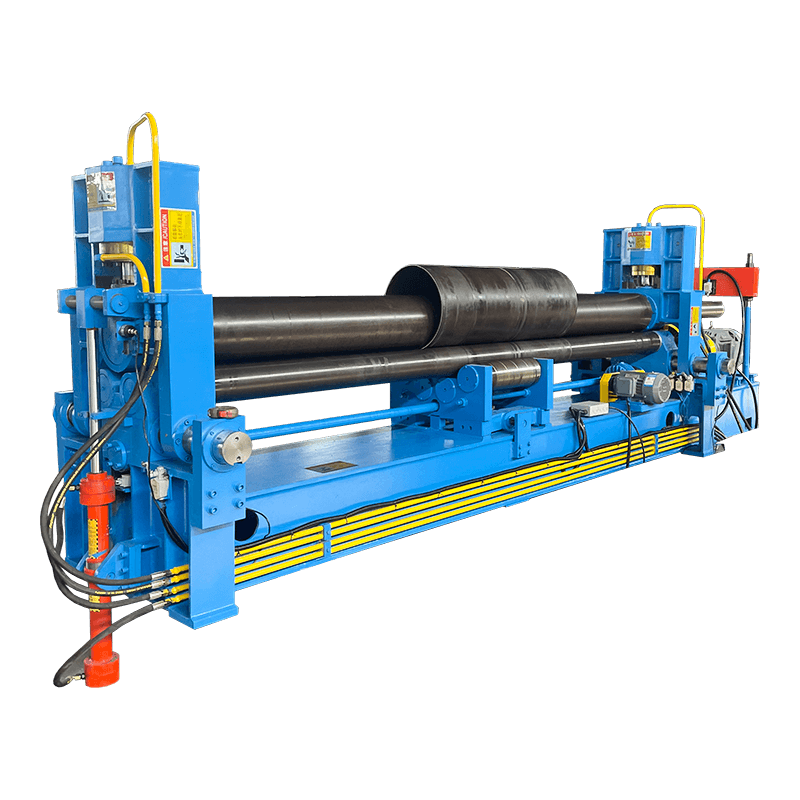
Quick Answer: Plate bending machines — also called plate rolling machines — are industrial metal forming tools that curve flat steel, aluminum, or other metal sheets into cylindrical, conical, or curved shapes by feeding the material through a set of rotating rolls under controlled pressure. The three main types are 3-roll plate bending machines, 4-roll plate bending machines, and CNC plate bending machines. For most industrial and shipbuilding applications involving thick steel plate, a CNC hydraulic plate bending machine with 4-roll configuration delivers the best combination of precision, speed, and springback compensation.
This guide walks through each machine type in plain terms — how they work, where they perform best, how CNC control changes the process, and what to consider when selecting a machine for your specific application. Whether you are new to metal fabrication or evaluating equipment for a production upgrade, this article provides the technical grounding you need.
Content
A plate bending machine works on the principle of three-point bending. A flat metal plate is fed between a set of cylindrical rolls, and as the rolls rotate and apply controlled pressure, the plate is progressively deformed beyond its elastic limit into a permanent curve. The radius of curvature is determined by the position of the rolls relative to each other — bringing the rolls closer together decreases the bending radius, while moving them apart produces a larger, gentler curve.
The key variables in any plate rolling operation are: material thickness, material yield strength (measured in MPa), the required bend radius, and the width of the plate being processed. A machine rated for 50mm mild steel may only handle 30–35mm of higher-yield structural steel at the same radius, because the increased material strength requires proportionally more force to achieve permanent deformation. Understanding this relationship between material properties and machine capacity is foundational to selecting the right equipment.
Modern CNC plate bending machines add a programmable control layer over the mechanical rolling process. Servo-controlled roll positioning, real-time pressure feedback, and stored bending programs allow operators to reproduce complex shapes consistently across large production runs — a capability that manual or hydraulic-only machines cannot match when tight dimensional tolerances are required.
The diagram above illustrates the five sequential stages in a plate bending operation. Each stage is interdependent — incorrect roll positioning in stage two will compound into dimensional error in the final part, which is why CNC-controlled machines that automate roll positioning from stored programs are so valuable in production environments. The springback correction step (stage four) is particularly significant for high-yield materials like structural steel and stainless, where the elastic recovery after bending can be 2–8° or more, requiring the operator or CNC system to overbend slightly to achieve the target geometry after the material relaxes.
The distinction between 3-roll and 4-roll plate bending machines is one of the first questions any buyer encounters. The number of rolls determines how the plate is gripped, how flat ends are handled, and how many passes are required to complete a cylinder.
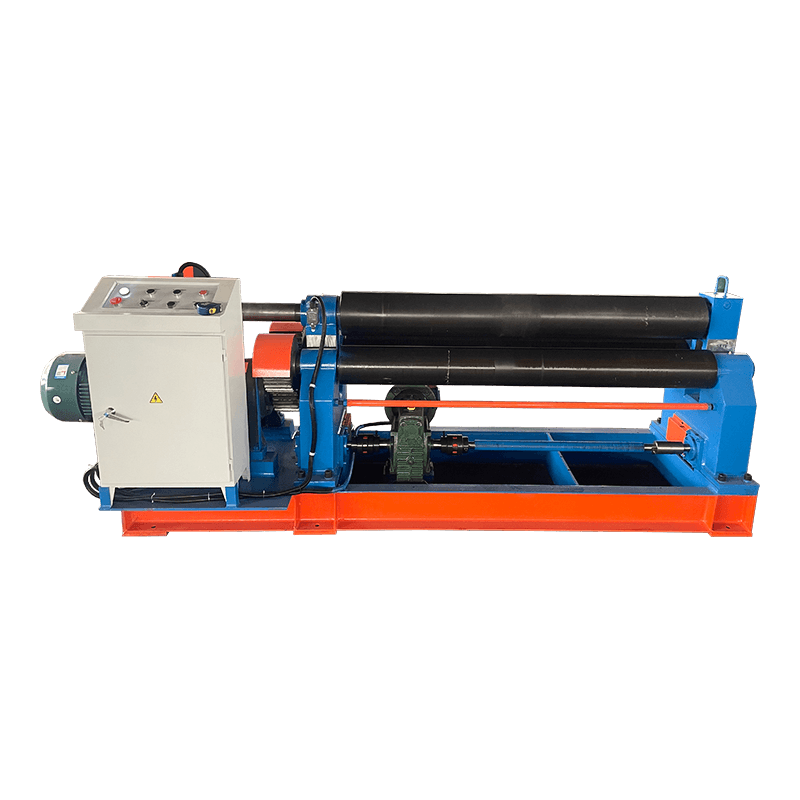
A 3-roll plate bending machine uses two lower rolls and one upper roll (or one bottom and two side rolls in a pyramid configuration). The fundamental limitation of a 3-roll design is that the portion of plate between the edge of the material and the first contact point of the roll cannot be bent during the initial pass — producing flat "dead zones" of typically 1.5× the plate thickness at each end of the workpiece. These flat ends must be pre-bent in a press brake before rolling or trimmed after, adding process steps and labor.
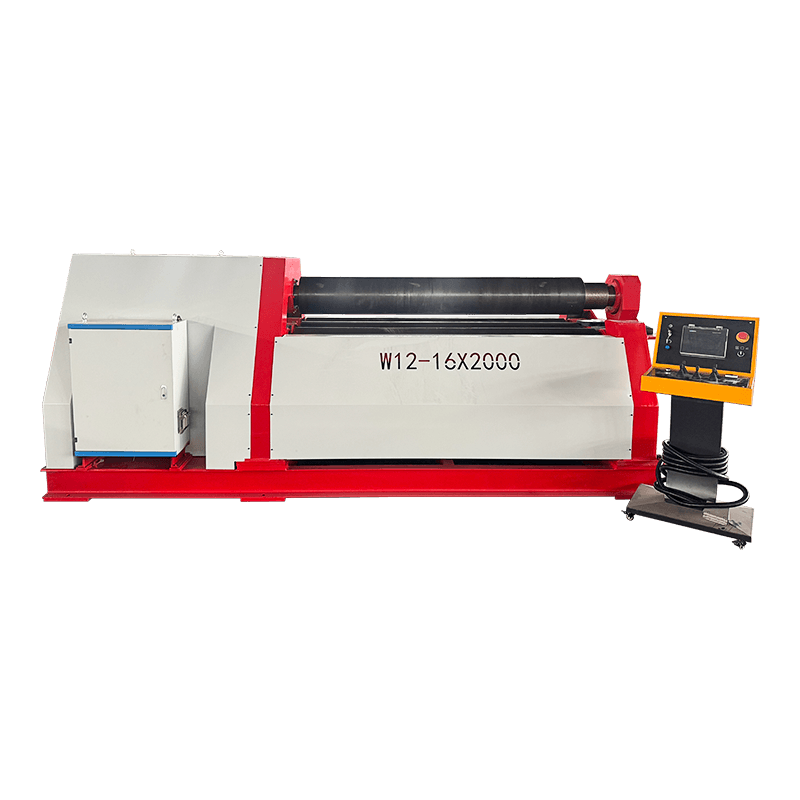
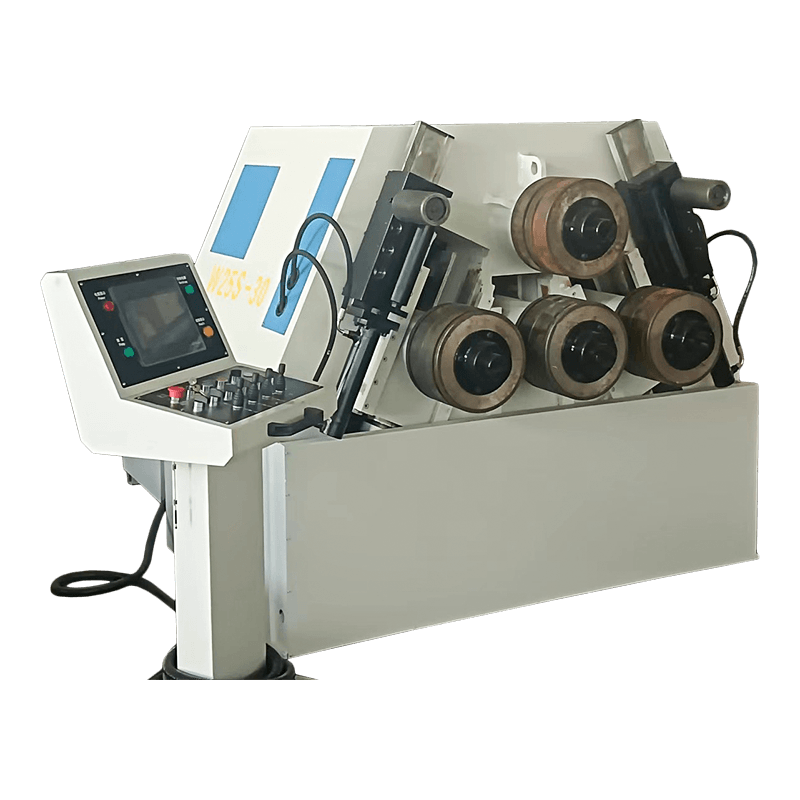
A 4-roll plate bending machine adds a fourth roll that clamps the plate firmly between the top and bottom rolls during bending. This clamping action eliminates dead zones at the leading edge, allowing the machine to bend plate edge-to-edge in a single setup. For production shops rolling cylindrical vessels, tanks, pipes, or pressure vessels where seam quality and edge accuracy matter, the 4-roll configuration represents a meaningful efficiency advantage — reducing or eliminating the pre-bending step and improving dimensional repeatability.
| Feature | 3-Roll Machine | 4-Roll Machine |
|---|---|---|
| Dead Zone at Plate Edge | Yes (~1.5× thickness) | Minimal to none |
| Pre-Bending Required | Often yes | No |
| Plate Grip During Bending | Friction-dependent | Positively clamped |
| Dimensional Repeatability | Moderate | High |
| Passes to Complete Cylinder | Multiple | Single setup possible |
| Machine Complexity | Lower | Higher |
| Best For | Light gauge, lower volume | Thick plate, high-precision production |
The horizontal bar chart above scores both machine configurations across four production-critical parameters. The 4-roll machine leads in every category, with the most significant advantage visible in edge accuracy and seam quality — two attributes that directly affect downstream welding and assembly operations. For applications like pressure vessel fabrication, tank manufacturing, or shipbuilding where dimensional tolerance on the rolled seam must meet certified standards, this difference is not marginal. The 3-roll machine remains a practical and cost-appropriate choice for lighter gauge work, prototype bending, or facilities where pre-bending operations are already part of the workflow.
The CNC plate bending machine working principle builds a programmable intelligence layer on top of the hydraulic or electro-mechanical roll drive. At its core, the machine remains a roll-bending device — but roll positions, bending pressure, feed rate, and the number of passes are all controlled by a CNC system rather than manual adjustment. The operator selects or enters a bending program that specifies the target radius, material type, thickness, and width, and the CNC controller calculates the required roll geometry and drives the axes accordingly.
Modern CNC plate rolling machines use closed-loop servo positioning for the side rolls and top roll, typically achieving positioning accuracy of ±0.1mm per axis. Combined with real-time pressure monitoring, the system can detect material variations mid-cycle — such as a plate that is slightly thicker at one edge than another — and compensate roll position dynamically to maintain consistent bend radius across the full width of the workpiece.
From a production standpoint, CNC control provides three critical advantages over manual or semi-automatic machines. First, program repeatability — the same part geometry can be reproduced to tolerance across thousands of cycles without operator skill variation. Second, multi-radius programming — the machine can execute complex shapes with varying radii along the workpiece length, such as tapered cones or elliptical sections, without manual repositioning. Third, integrated springback compensation — the CNC system stores material-specific springback coefficients and automatically overbends to the correct final geometry, which is the single most important capability when working with high-strength or stainless steel plate.
This line graph illustrates a well-documented phenomenon in production plate bending: manual machine deviation accumulates over production cycles due to operator fatigue, tooling wear, and ambient temperature variation affecting hydraulic pressure, while CNC-controlled systems maintain consistent dimensional deviation throughout the run. For low-cycle prototype work, the difference may be acceptable; but in production environments where hundreds of identical shells are rolled per shift, the CNC advantage in cumulative dimensional accuracy directly translates to fewer rejected parts, less rework, and more consistent downstream welding fit-up. This is why CNC plate rolling machines have become standard equipment in professional shipbuilding, pressure vessel, and industrial tank fabrication facilities.
Springback is the most significant technical challenge in plate bending and the root cause of most dimensional nonconformance in rolled parts. When a metal plate is bent, the outer surface is in tension and the inner surface is in compression. The material's elastic component — the portion of deformation that is not permanent — recovers when the bending force is released, causing the workpiece to partially straighten back toward its original flat state. The amount of recovery depends primarily on the material's yield strength relative to its elastic modulus, which is expressed as the ratio E/σy.
For mild steel (yield strength ~250 MPa), springback is moderate and predictable — typically 2–4° per bend on standard plate thicknesses. For high-strength structural steels (yield strength 450–690 MPa), springback increases significantly — 5–10° or more. For austenitic stainless steel, which combines high yield strength with a high work-hardening rate, springback can be particularly difficult to predict without material-specific testing, as the effective yield strength increases progressively during the rolling process itself.
The practical plate springback solution in a CNC plate rolling machine is overbending with a stored compensation coefficient. The CNC system references a material database and applies a springback factor automatically — the operator enters the desired finished radius, and the machine calculates and executes a tighter rolling radius that will relax to the target after the plate is released. In manual machines, operators develop this knowledge experientially, which introduces cycle-to-cycle variability that CNC eliminates.
This column chart shows how springback angle varies significantly across common materials used in industrial plate bending. High-strength structural steel exhibits the largest springback — nearly three times that of mild steel — which is why experienced operators and CNC systems must maintain material-specific compensation tables rather than applying a single universal correction factor. Stainless steel 304 shows high springback not only because of its yield strength but because of its work-hardening behavior during rolling, which can cause the effective springback to vary between the first and last passes on the same workpiece. Understanding these material-specific characteristics is fundamental to achieving target radii in steel plate bending machine operations for shipbuilding and pressure vessel applications.
Shipbuilding represents one of the most technically demanding applications for plate rolling equipment. Hull panels, bulkheads, deck plates, and structural frames are fabricated from plates that may range from 6mm light structural panels to 80mm or thicker hull sections in heavy naval or offshore vessel construction. The plate widths involved — often 2.5 to 4 meters — and the compound curvature required for hull forms push plate rolling machines to the limits of their design specifications.
Shipbuilding steel is typically classified to international standards such as ABS, DNV, LR, or BV — and these high-yield marine grades exhibit springback behavior that is more pronounced and less predictable than standard structural steel. The consequence of a dimensional error in a hull plate is significant: a section that does not conform to the lofted curve requires heat straightening or flame forming to correct, adding substantial time and cost to the build.
For shipbuilding plate rolling, the recommended configuration is a heavy-duty 4-roll CNC hydraulic plate bending machine with a working width of at least 3,000mm, a maximum capacity of 60–100mm in mild steel equivalent, and a CNC system capable of multi-axis compound curvature programming. The hydraulic system must maintain consistent pressure across the full roll width to prevent barrel deflection — a condition where the center of the roll bends slightly under load, producing a curved surface rather than a true cylinder.
The radar chart maps CNC plate rolling machine suitability across six major industry sectors. Shipbuilding and pressure vessel fabrication are at the top of the chart because these sectors combine the most demanding plate thicknesses, the tightest dimensional tolerances, and the highest regulatory compliance requirements — all areas where CNC hydraulic plate bending machines deliver the most significant advantages over manual alternatives. Light industry and general construction rank lower not because CNC machines are unsuitable, but because those applications often do not require the full capability that CNC systems provide, making simpler machines a reasonable choice for lower-complexity work.
The drive system of a plate bending machine — hydraulic versus mechanical (electromechanical) — significantly affects how the machine behaves under load, how roll position is controlled, and how maintenance demands accumulate over time. Most industrial plate rolling machines for medium to heavy plate (above 20mm) use hydraulic systems because hydraulic actuators can generate very high clamping and bending forces within a compact cylinder, and hydraulic pressure is inherently programmable — making it the natural partner for CNC control systems.
A hydraulic plate bending machine applies bending force through hydraulic cylinders driving the roll bearings. The pressure in each cylinder is independently controllable, which allows the machine to compensate for roll deflection under load by applying slightly more pressure at the center of a wide plate than at the edges — a feature called crowning compensation that is critical for maintaining consistent bend radius across wide workpieces. Without crowning compensation, a 3,000mm-wide plate will be rolled to a tighter radius at the edges than at the center, producing a conical shape rather than a true cylinder.
Electromechanical drives using servo motors and ball screws offer slightly higher positioning precision at lower forces, and they eliminate hydraulic fluid management entirely. They are well-suited for CNC plate rolling machines in the light-to-medium plate range (typically up to 20–25mm) where the servo drive's dynamic positioning capability supports complex multi-radius programs with frequent direction changes. For heavy industrial applications, hydraulic drive remains the dominant choice due to its superior force output and proven reliability in demanding production environments.
The attribute comparison above highlights how each drive type excels in different areas. Hydraulic systems lead in maximum force output and heavy plate suitability — the characteristics that matter most for industrial applications rolling plates above 25mm thickness. Electromechanical drives return better scores for positioning precision and long-term maintenance load because servo-motor systems eliminate hydraulic fluid, seals, and the associated periodic maintenance. In practice, many modern CNC plate bending machines for medium plate applications use hybrid approaches: servo-driven positioning for accuracy with hydraulic assist for clamping force, combining the advantages of both systems.
Nantong Pacific CNC Machine Tool Co., Ltd is a key enterprise of the national machinery industry, located in the Haian Economic and Technological Development Zone — an area with strong industrial infrastructure and convenient logistics connections that support rapid communication and delivery to customers worldwide. The company specializes in the production of shearing machines, bending machines, rolling machines, hydraulic presses, punching machines, and related equipment, serving customers across light industry, aviation, shipbuilding, metallurgy, instrumentation, electrical appliances, stainless steel products, construction, and decoration sectors.
As a professional China CNC plate bending machine manufacturer and CNC press brake supplier, Nantong Pacific has developed the capability to design, develop, and manufacture both standard series products and non-standard custom equipment. The company covers more than 20,000 square meters of production and office space, employs a professional team of engineers and technicians with deep domain expertise, and maintains complete production and testing equipment. Products are sold throughout China and exported in large volume to Southeast Asia, Europe, the United States, and the Middle East.
The company has established service branches in Beijing, Tianjin, Shenyang, Shandong, Zhejiang, Guangzhou, Shanghai, Hangzhou, Chengdu, Xi'an, and Jiangsu — providing integrated pre-sale, in-sale, and after-sales support to domestic customers, while maintaining international logistics and technical service capabilities for overseas clients. Customers seeking CNC plate rolling machines, hydraulic plate bending equipment, or custom industrial metal rolling machines are welcome to inquire and visit.
Q1: How does a CNC plate bending machine work?
A CNC plate bending machine feeds flat metal plate through a set of rotating rolls, using servo-controlled positioning to set roll geometry according to a stored program. The operator enters the target radius, material type, and thickness, and the CNC system calculates roll positions, controls bending pressure, and automatically applies springback compensation. Closed-loop feedback maintains ±0.1mm positioning accuracy throughout the production run.
Q2: What is the difference between CNC plate rolling and press brake bending?
A plate rolling machine produces curved or cylindrical shapes by progressively deforming the plate through rotating rolls over multiple passes. A press brake creates a single straight-line bend angle at a fixed location using a punch and die. Rolling is used for cylinders, cones, and curved forms; press brakes are used for angular bends and box shapes. For compound curvature and cylindrical vessels, plate rolling is the appropriate process.
Q3: What is a 3-roll plate bending machine and when should I use one?
A 3-roll plate bending machine uses three rolls in a pyramid or pinch configuration to roll flat plate into curves or cylinders. It is suitable for light gauge material, lower production volumes, or applications where pre-bending the plate edges is acceptable or already part of the workflow. A 4-roll machine is preferable when edge-to-edge bending without pre-bending is required, or when high dimensional repeatability across many cycles is critical.
Q4: Which plate rolling machine is better for thick steel in shipbuilding?
For thick steel shipbuilding plate (typically 20–80mm), a heavy-duty 4-roll CNC hydraulic plate bending machine is the recommended choice. The 4-roll configuration eliminates dead zones at the plate edge, the hydraulic system generates sufficient clamping and bending force, and CNC control handles the complex springback compensation that marine-grade steels require. Working width should be specified to match the widest hull panel in the build program.
Q5: How is springback handled in CNC plate rolling?
CNC plate rolling machines handle springback through a stored material compensation database. The operator selects the material grade, and the CNC system automatically calculates an overbend angle or tighter radius that will relax to the target dimension after the plate is released. For new materials, a test-bend calibration is run and the springback coefficient is measured and stored. This eliminates the trial-and-error process required on manual machines.
Q6: What industries use industrial metal rolling machines most widely?
Industrial metal rolling machines are used most widely in shipbuilding, pressure vessel and boiler manufacturing, storage tank fabrication, structural steel fabrication, pipe and tube production, HVAC ductwork, and aerospace component forming. Light industrial applications include signage, architectural cladding, and decorative metalwork. The machine specifications — roll diameter, working width, and capacity — vary significantly between these sectors, so selecting a machine configured for your specific application is important.
Related Products

Contact us
Factory Address
Xichang industrial Park, Chengdong Town, HaianCity, Nantong City, Jiangsu Province, China
Phone
+86-13906278466
products
QR CODE

 English
 русский
 عربى
عربى