May 20, 2026
Quick Answer
To safely operate a steel plate rolling machine, always complete a pre-operation safety inspection, set the correct roller gap for your material thickness, feed the plate squarely between the rollers, apply gradual pressure in multiple passes, and never exceed the machine's rated capacity. Whether using a hydraulic plate rolling machine, a CNC steel plate rolling machine, or a manual 3-roller unit, proper setup and operator awareness are the two factors that most directly prevent accidents and ensure consistent bend quality.
Content
Before operating any plate rolling machine, it is essential to understand what type you are working with. The configuration of the rollers determines operating procedure, achievable bend radius, and the safety precautions required. Each machine type has distinct advantages depending on material thickness, production volume, and the required precision.
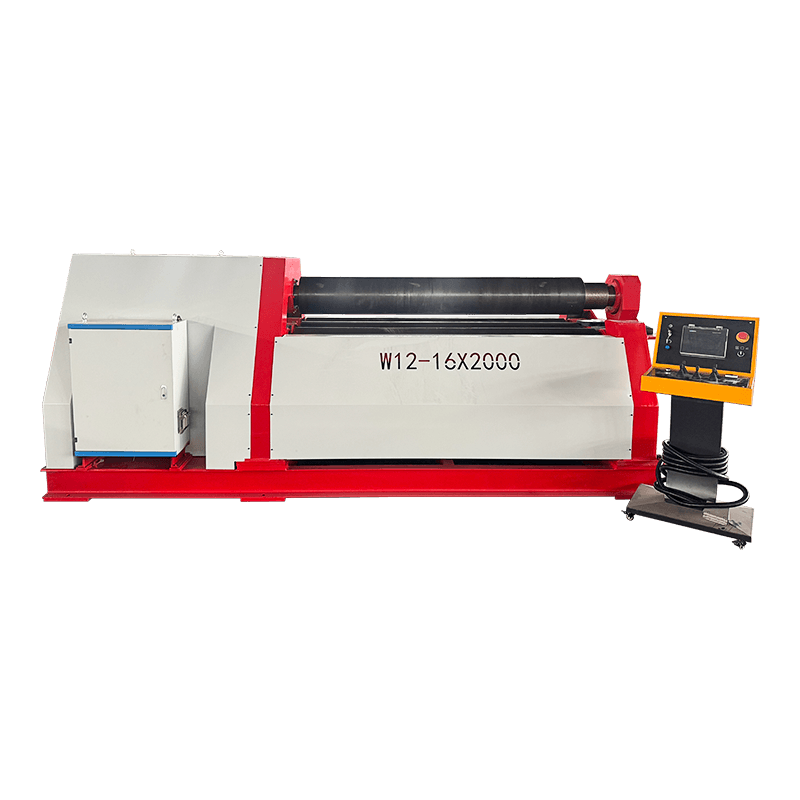
Four-roller machines offer the highest precision and pre-bending capability. The two side rollers grip the plate while the top and bottom rollers form the curve, eliminating the flat unbent end that 3-roller designs produce. Ideal for heavy duty steel plate roller applications in shipbuilding and pressure vessel fabrication.
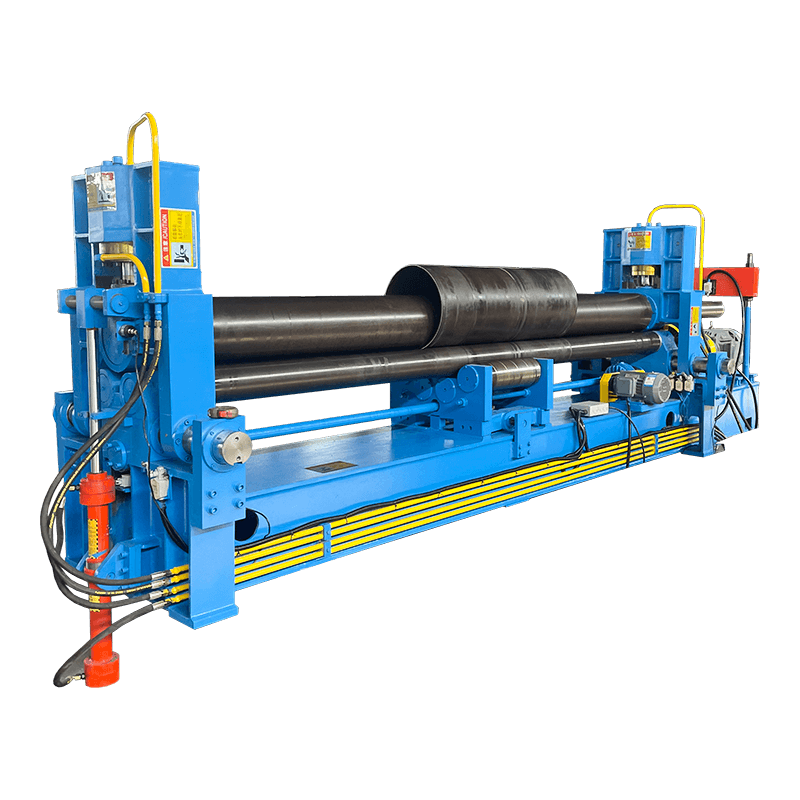
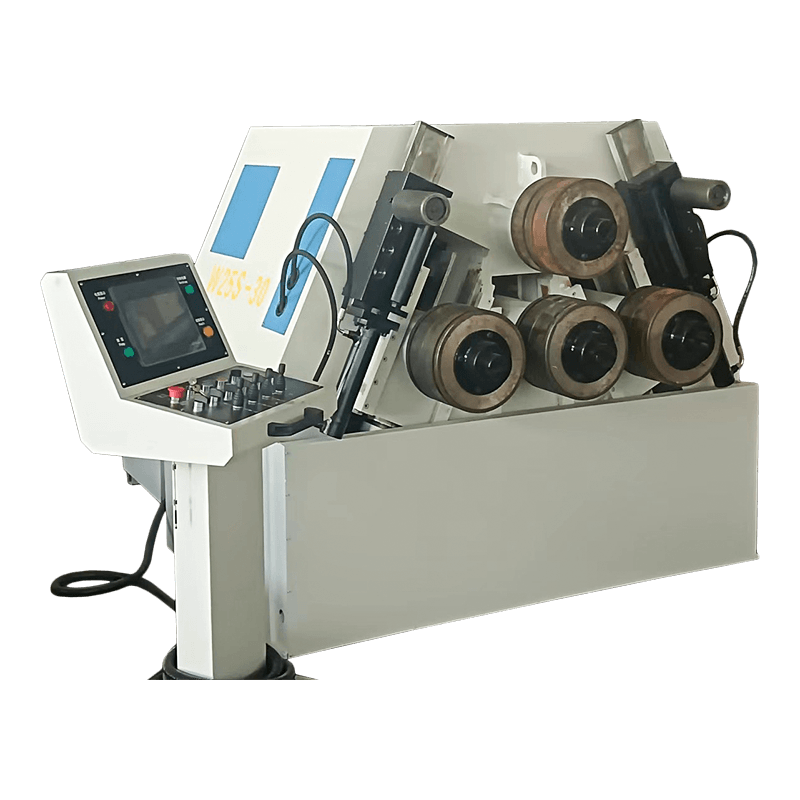
The hydraulic plate rolling machine in the W11S series uses a tilting upper roller to allow removal of rolled cones and cylinders without disassembling the workpiece. The hydraulic system provides consistent pressure output and accommodates variable steel thicknesses with minimal manual adjustment.
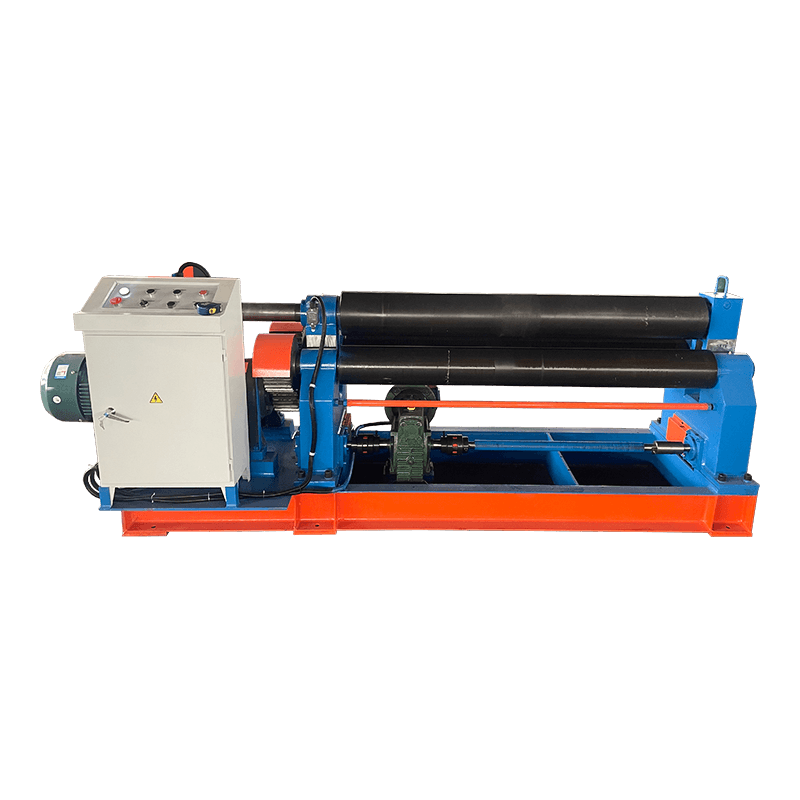
A symmetrical 3-roller mechanical machine is the most widely used configuration for standard cylinder rolling. The two bottom rollers are fixed; the top roller adjusts vertically. This design is reliable, cost-effective, and well-suited for medium-thickness plate in general fabrication environments.
| Feature | W11 (3-Roller Mech.) | W11S (3-Roller Hyd.) | W12 (4-Roller) |
|---|---|---|---|
| Pre-bending Ability | Limited | Moderate | Full pre-bending |
| Cone Rolling | No | Yes (tilting roller) | Yes |
| CNC Integration | Rare | Optional | Standard on most |
| Flat End (Unbent) | ~1.5× plate thickness | ~0.5× plate thickness | Minimal/None |
| Best Application | General fabrication | Cylinders & cones | Precision / heavy plate |
According to industrial safety data, approximately 68% of plate rolling machine incidents occur during setup or the initial feed pass — not during steady-state operation. A structured pre-operation check takes under 10 minutes and eliminates the majority of preventable accidents.
Plate Rolling Machine Incident Root Causes — Industry Data (%)
The following procedure applies broadly to all industrial metal plate roller types. Steps specific to hydraulic or CNC models are noted where applicable. Always refer to your machine's official operator manual for model-specific parameters.
Switch on the main power isolator and allow the hydraulic system to reach operating pressure (typically 10–15 seconds). On a CNC steel plate rolling machine, wait for the control panel to complete its boot sequence and home all roller axes. Verify that no fault codes are displayed before proceeding.
Adjust the top (or side) roller to create a gap slightly larger than your plate's thickness. For a hydraulic steel plate roller, this is done via the hydraulic cylinder control. For mechanical models, use the handwheel adjuster. A starting gap of plate thickness + 10–15% prevents the plate from being pinched or deflected on the first pass.
Example: For 12mm mild steel plate, set the initial gap to approximately 13–14mm before the first pass.
Place the plate on the infeed side and align its leading edge parallel to the roller axis using the machine's side guide or a straight-edge reference. Misalignment of more than 2–3mm at the feed point results in a conical rather than cylindrical roll.
Advance the plate slowly until it contacts both bottom rollers fully across its width. Do not stand directly in the feed path — stand to the side of the machine during plate entry.
On a 4-roller machine, engage the clamping rollers to grip the plate and lower the front side roller to pre-bend the leading edge to the target radius before the full rolling pass begins. This eliminates the flat section (chord) at the plate end. On a W11S hydraulic model, tilt the upper roller forward and apply pre-bend pressure manually. For W11 mechanical models, a flat end of approximately 1–1.5 times the plate thickness is unavoidable and must be trimmed post-rolling.
Never attempt to achieve the final radius in a single pass for plate thicker than 6mm. Apply incrementally increasing roller pressure across successive passes. A typical approach for heavy plate:
Stop the plate feed before the trailing edge exits the roller nip. Reverse the roll direction and apply the same pre-bend procedure used for the leading edge. This ensures both ends of the plate share the same radius, producing a clean closed cylinder when the seam is welded.
On 3-roller hydraulic models (W11S), tilt the upper roller back to its open position to allow the formed cylinder to be lifted out without disassembly. On 4-roller machines, open the top roller and tilt the machine's side support frame outward if equipped. Always use lifting equipment (hoist, crane, or roller stand) for workpieces exceeding 25kg — manual lifting of formed plate shells presents a serious crush hazard.
Keep hands and fingers away from the roller nip zone during workpiece removal, even with the machine stopped. Spring-back in thick plate means a formed shell can suddenly shift.
Return all rollers to their rest (open) position. Wipe roller surfaces clean of any mill scale, oil residue, or debris. On hydraulic models, check the hydraulic fluid temperature — extended high-duty cycle operations can raise fluid temperature above 60°C, which degrades seal life. Switch off the main power isolator and log any irregularities in the machine maintenance record for the next operator's awareness.
Exceeding a machine's rated rolling capacity is the single most common cause of roller shaft deflection and permanent damage. The rated capacity published on a steel plate rolling machine data sheet is always based on mild steel (yield strength ~250 MPa). For stainless steel (yield ~310 MPa) and high-strength steel (yield 350–700 MPa), the effective rolling capacity must be reduced proportionally.
Effective Rolling Capacity vs. Material Yield Strength (Relative to Mild Steel = 100%)
For most steel plates, the minimum achievable inside bend radius on a rolling machine is approximately 1.5 to 2 times the top roller diameter. For an automatic steel plate rolling machine with a 250mm top roller, the minimum cylinder inner diameter is roughly 500–750mm for mild steel plate. Attempting a tighter radius fractures the outer plate surface in tension.
Always account for spring-back — the elastic recovery that partially opens the radius after roller pressure is released. For mild steel, spring-back typically adds 5–15% to the rolled radius. The operator must over-roll slightly beyond the target and allow spring-back to achieve the final dimension.
The choice between a CNC steel plate rolling machine and a manually operated hydraulic plate rolling machine comes down to production volume, required dimensional tolerances, and operator skill availability. Neither is universally superior — each excels in specific fabrication environments.
CNC vs. Manual Hydraulic Rolling Machine — Capability Comparison
Even experienced operators occasionally fall into these patterns — most result in premature roller wear, shaft deflection, or workpiece defects that require rework. Recognizing them early is key to sustained machine performance.
Attempting to reach the final radius in one pass on thick plate concentrates all bending stress in one zone, causing roller deflection and inconsistent radius across the plate width.
Running a plate with tack welds, notch cuts, or holes directly under the roller nip creates localized stress concentrations that can crack the plate or mark the roller surface.
Rollers that are not parallel to each other by even 0.1mm over their length will produce a tapered (conical) cylinder that is difficult to correct after rolling is complete.
Unlubricated bearings on a heavy duty steel plate roller running under full load can seize within a single shift, requiring expensive roller shaft replacement.
A plate fed more than 3–5mm off-square produces a spiral distortion in the rolled shell. Always use the side backstop guide or check square alignment before activating the drive.
Rolling hardened tool steel or wear plate beyond the machine's rated strength capacity risks catastrophic roller fracture — a major safety event. Always verify material yield strength before programming roller force.
Well-maintained plate rolling machines reliably achieve service lives exceeding 20 years. Neglected machines — particularly those with contaminated hydraulic fluid or dry bearing housings — commonly fail within 5–7 years. The following schedule applies to standard duty-cycle operations (single-shift, 250 days/year).
Machine Condition Index Over Years — Maintained vs. Neglected
| Task | Daily | Weekly | Monthly | Annually |
|---|---|---|---|---|
| Wipe roller surfaces clean | yes | — | — | — |
| Check hydraulic fluid level | yes | — | — | — |
| Grease all bearing housings | — | yes | — | — |
| Inspect hydraulic hoses & seals | — | — | yes | — |
| Verify roller parallelism | — | — | yes | — |
| Full hydraulic fluid replacement | — | — | — | yes |
Nantong Pacific CNC Machine Tool Co., Ltd is a key enterprise of the national machinery industry, located in Haian Economic and Technological Development Zone — a strategic location that enables efficient communication and rapid service delivery to customers worldwide. As a professional China Steel Plate Rolling Machine supplier and Hydraulic plate rolling machine factory, the company specializes in the full-range production of shearing machines, bending machines, rolling machines, hydraulic presses, and punching machines, serving industries from light manufacturing and instrumentation to aviation, shipbuilding, metallurgy, stainless steel processing, and construction.
Pacific CNC Machine Tool has the capability to design, develop, and manufacture both standard series products and non-standard custom equipment. Products are sold across China and exported in large volumes to Southeast Asia, Europe, the United States, and the Middle East. The company occupies more than 20,000 square meters of production space and is supported by a team of engineers and technicians with deep expertise in forging machine tool research and innovation.
To ensure the best customer experience, Pacific has established service branches in Beijing, Tianjin, Shenyang, Shandong, Zhejiang, Guangzhou, Shanghai, Hangzhou, Chengdu, Xi'an, and Jiangsu — providing comprehensive pre-sale, in-sale, and after-sales support nationwide. The company's product range includes the W12 Series 4-Roller Rolling Machine, the W11S Series 3-Roller Universal Hydraulic Rolling Machine, and the W11 Series 3-Roller Symmetrical Mechanical Rolling Machine, covering the full spectrum of steel plate forming requirements.
Related Products

Contact us
Factory Address
Xichang industrial Park, Chengdong Town, HaianCity, Nantong City, Jiangsu Province, China
Phone
+86-13906278466
products
QR CODE

 English
 русский
 عربى
عربى