Nov 18, 2026
A shop quoting 1,800 mm diameter tanks in 6 mm plate usually feels the cost of re-clamping before it feels the cost of the machine. On a conventional three-roll layout, each cylinder may need extra handling to pre-bend both edges, and the flat ends left after rolling become trim scrap. A 4 roll plate rolling machine is the practical answer when that handling time, weld fit-up and repeatability matter more than the lowest initial price.
The conclusion first: choose a four-roll machine when you roll cylinders and arcs in batches and want both edges pre-bent without taking the plate out. Choose a three-roll machine when the work is mixed, volumes are low and capital cost matters more than handling time.
Content
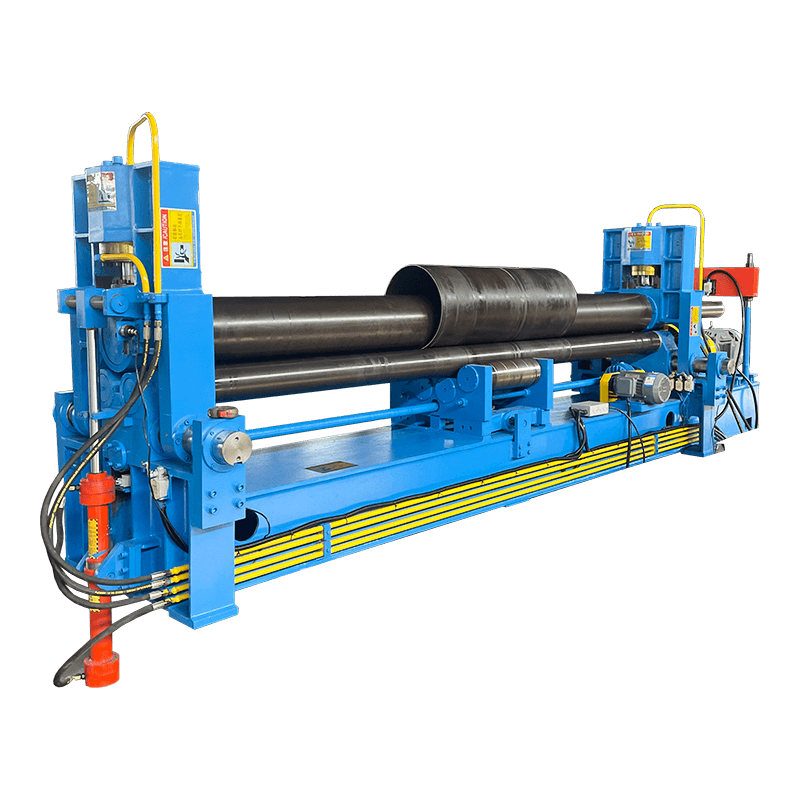
A four-roll plate roller uses a top roll, a bottom roll and two side rolls. The top and bottom rolls clamp the plate; the side rolls move to bend the leading and trailing edges. Because the plate stays clamped, the operator can pre-bend both ends and then roll the body of the cylinder in one continuous sequence. That is the mechanical reason a four-roll layout reduces the drop, turn and re-clamp cycle.
The benefit is not only speed. Better edge pre-bending means less flat length at the seam, so weld preparation is cleaner and trim allowance can be tighter. That matters in tank shells, duct sections and pressure-vessel shells where the longitudinal seam must close evenly. The trade-off is a more complex machine, a higher purchase price and a control system that needs proper training.
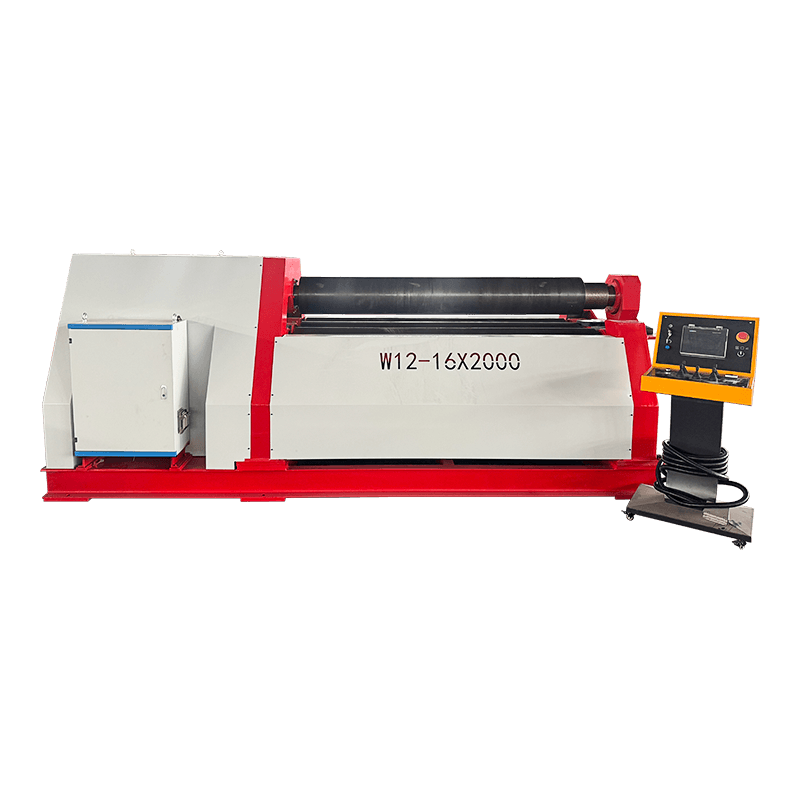 W12 Series Four-Roller Hydraulic Plate Bending MachineFour-roller hydraulic plate bender for one-setup pre-bending and rolling; check yield-strength capacity tables and roll diameter limits.View Product →
Machine catalogs often lead with thickness and width. Those numbers are only meaningful with the material yield strength, roll diameter and minimum rolling diameter. A machine that rolls 12 mm x 2,500 mm mild steel may have a lower capacity in 700 MPa steel, and a large top roll can limit how small a cylinder you can close. Ask for a capacity table at a stated yield strength, not a single headline figure.
| Requirement | Why it changes the decision | What to confirm |
|---|---|---|
| Plate thickness x width | Capacity falls as width, yield strength and required roundness increase. | Capacity at 235 MPa, 355 MPa and higher yield, not only mild steel. |
| Minimum cylinder diameter | Top-roll diameter and side-roll reach limit how tightly a shell can close. | The smallest shell you actually need to produce. |
| Pre-bending capacity | Edge pre-bending can be lower than body-rolling capacity. | Pre-bend thickness, flat-end allowance and test method. |
| Roll drive and control | Hydraulic, mechanical and CNC layouts differ in repeatability and setup time. | Recipe storage, diagnostics and operator training. |
| Handling and floor space | Four-roll machines are heavier and need a suitable foundation. | Foundation load, crane capacity, pit depth and power supply. |
Flat ends are the quiet cost in plate rolling. If the first and last part of a shell remain nearly flat, the fit-up at the longitudinal seam demands extra trimming, grinding or a wider weld gap. A four-roll machine addresses this by using the side rolls to pre-bend both edges while the plate remains clamped. On a three-roll machine, the same result can require removing, turning and re-clamping the plate, or leaving a larger trim allowance.
Use the chart as a buying prompt, not a guarantee. The real gain depends on how often you change part sizes, how many cylinders you roll per shift and whether your welders can close the seam without extra grinding. For repeat tank shells, a four-roll machine often pays back in handling time and scrap reduction; for one-off work, a three-roll universal machine can be the more flexible purchase.
Two four-roll machines with the same thickness rating can behave differently. Look at roll diameter, side-roll travel, whether the bottom roll is fixed or moving and how the control calculates position. A larger roll diameter gives stiffness but can limit small-diameter work. A CNC control with stored recipes reduces setup on repeat shells, but it cannot fix a capacity mismatch or poor foundation.
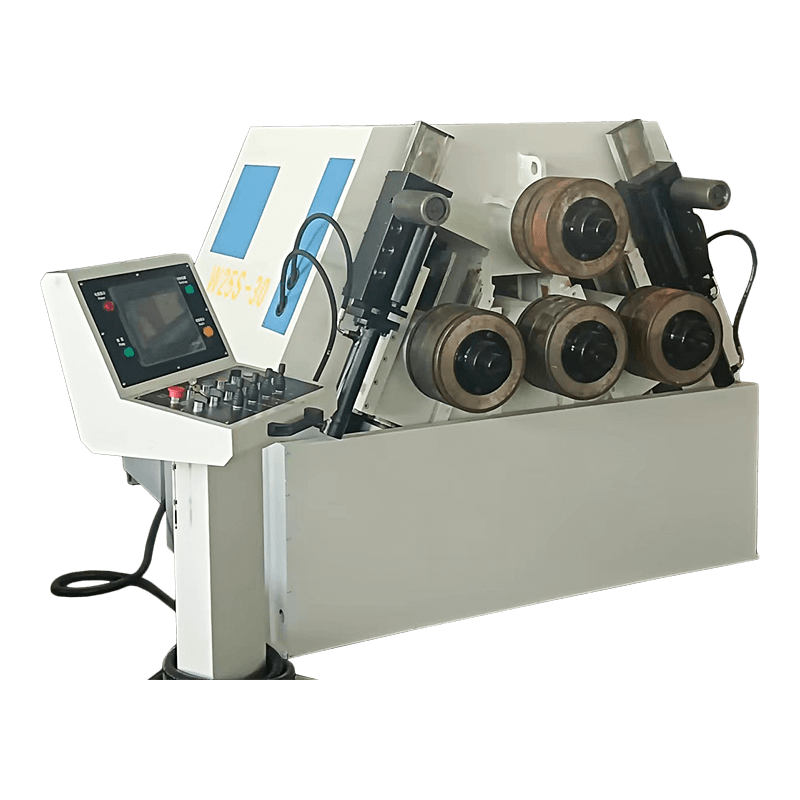
For mixed work, compare a W12 four-roll machine with a W11S three-roll universal machine. The W11S can be a practical lower-cost alternative when the shop can accept more handling. The four-roll W12 is the better fit when pre-bending both ends and keeping the plate clamped are central to the process.
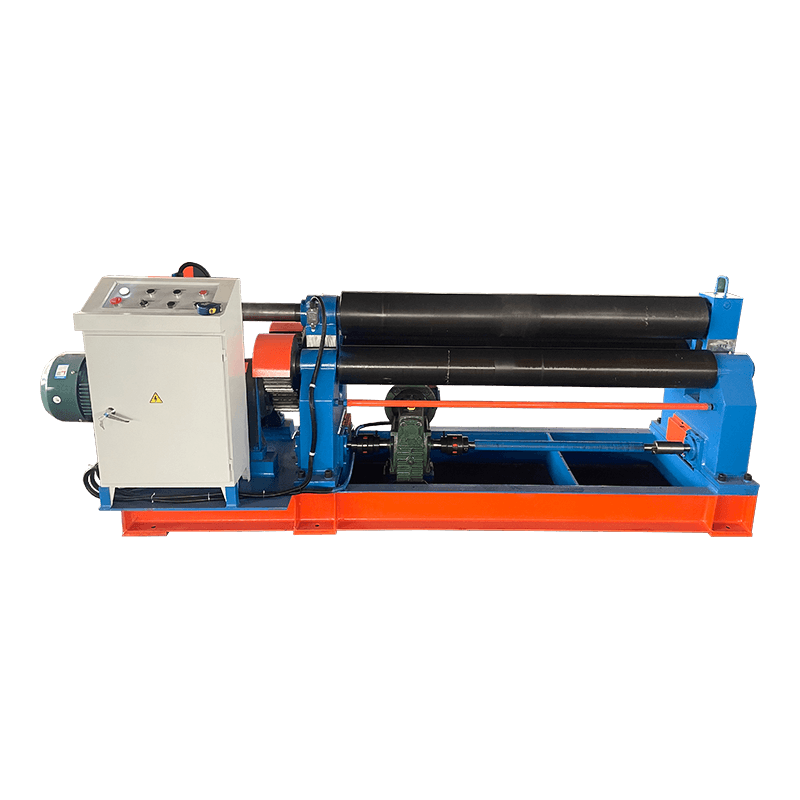
 W11S Series Three-Roller Universal Hydraulic Rolling MachineThree-roller universal hydraulic roller for mixed sheet-metal work; a lower-cost alternative when extra handling is acceptable and CNC pre-bending suits the job.View Product →
Before comparing quotations, write down the parts you will roll most often. Use the 80/20 rule: the machine should be comfortable on the work that fills most of the schedule, not just capable on the heaviest one-off job. Then ask every supplier to quote against the same data.
For a four-roll machine, add one more question: can the supplier demonstrate the pre-bending sequence on a plate close to your actual thickness and width? A video or reference visit is useful, but a witnessed test on a sample is better.
Four-roll machines concentrate load through relatively small roll contact areas. That makes foundation quality, roll alignment and hydraulic cleanliness part of capacity, not just installation details. A machine that is level and correctly shimmed will hold roundness better than one forced onto an uneven floor. Guards, emergency stops and safe handling of large plates should be checked before production begins.
Daily checks are simple: hydraulic oil level, leaks, unusual noise, roll surface condition and control alarms. A planned four-roll plate rolling machine maintenance routine should also include oil filtration, lubrication points and calibration checks. Keep a log of roundness and seam fit so drift is spotted before it becomes scrap.
It rolls metal plate into cylinders, arcs and shells. The four-roll layout clamps the plate between top and bottom rolls while two side rolls pre-bend the edges, which is useful for tank shells, ducts and pressure-vessel work.
Price depends on capacity, roll diameter, control type and tooling. A small hydraulic machine and a large CNC four-roll machine sit in very different price bands. Compare quotations on the same thickness, width, yield strength and pre-bend requirement.
Yes, that is its main process advantage. The plate stays clamped while the side rolls work each edge. Confirm the pre-bend capacity separately, because it can be lower than the machine's body-rolling capacity.
W12 is a four-roll series; W11 is a three-roll series. Four-roll machines generally reduce re-clamping and flat ends, while three-roll machines can be simpler and lower cost for mixed or low-volume work.
There is no universal number. Capacity must be read at a stated plate width and yield strength. A 20 mm rating at 2,000 mm width in mild steel does not automatically mean 20 mm at full width in high-strength steel.
Not always. CNC helps with repeat recipes, positioning and diagnostics, but manual or conventional hydraulic control can be adequate for simple, low-volume work. Match the control to the number of repeat parts and the operator skill level.
Related Products

Contact us
Factory Address
Xichang industrial Park, Chengdong Town, HaianCity, Nantong City, Jiangsu Province, China
Phone
+86-13906278466
products
QR CODE

 English
 русский
 عربى