Jul 23, 2026
Content
For most modern metal fabrication workshops, a CNC plate bending machine delivers higher accuracy, faster changeover between parts, and more consistent output than a purely hydraulic manual bending machine. A traditional hydraulic plate bending machine still has a place in simple, low volume workshops where operators bend the same basic angle repeatedly and programming flexibility is not required. In short, if your production involves varied part geometry, tighter tolerance requirements, or repeat orders across many shifts, a CNC press brake is the stronger long term option. If your operation is small scale, budget conscious in terms of training time, and focused on a narrow range of simple bends, a hydraulic plate bending machine can still perform reliably.
The remainder of this guide breaks down how each machine type works, where the real performance gaps show up in accuracy and output, and how to match the right bending technology to your own production pattern. Along the way we reference typical performance patterns reported across metal fabrication workshops using press brake equipment, along with comparison charts to make the differences easier to see at a glance.
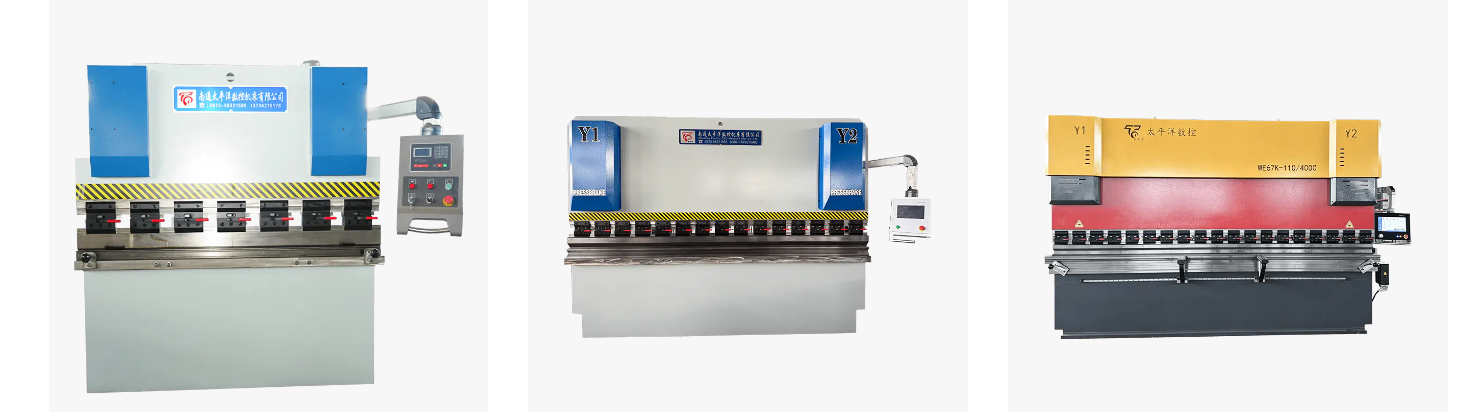
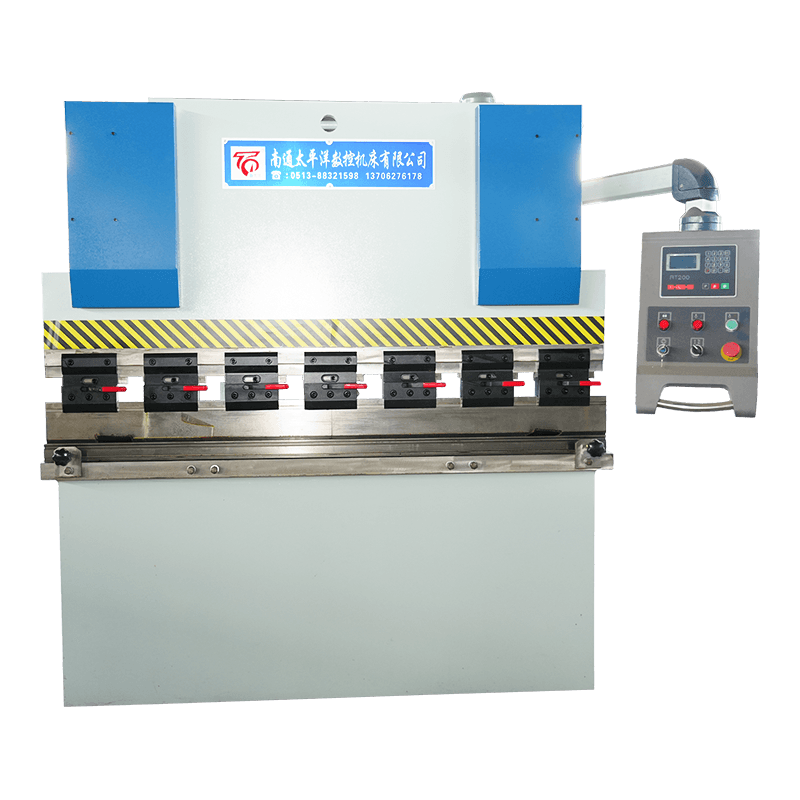
A hydraulic plate bending machine, often referred to simply as a hydraulic press brake, uses hydraulic cylinders to drive a ram downward, forcing a metal plate into a V die or U die to create a bend. The bending angle and depth are controlled by the operator through mechanical stops, back gauges, and manually set stroke limits. This category of machine has been a workshop staple for decades because the mechanical concept is simple, the operating logic is easy to learn, and the machine tolerates a wide range of plate thicknesses without complex setup.
Oil is pressurized by a hydraulic pump and pushed into cylinders positioned above the ram. As pressure builds, the ram descends at a speed and force set by the operator through valve controls. Bending depth is usually limited by a mechanical or digital depth stop, and angle accuracy depends heavily on operator experience, die selection, and how consistently the back gauge is positioned for each plate.
Hydraulic plate bending machines remain common in small fabrication shops, repair workshops, and facilities producing a narrow range of repeat parts such as brackets, angle sections, and enclosure panels. Because setup relies on manual gauges rather than stored programs, this machine type suits operations where the same one or two bend profiles are produced for extended runs without frequent design changes.
One point worth noting is that bending accuracy on a hydraulic machine is closely tied to operator skill. Two operators working the same hydraulic plate bending machine can produce noticeably different angle consistency, particularly on thinner gauge material where springback varies plate to plate. This variability is one of the main reasons workshops eventually look toward CNC controlled alternatives as order volume grows.
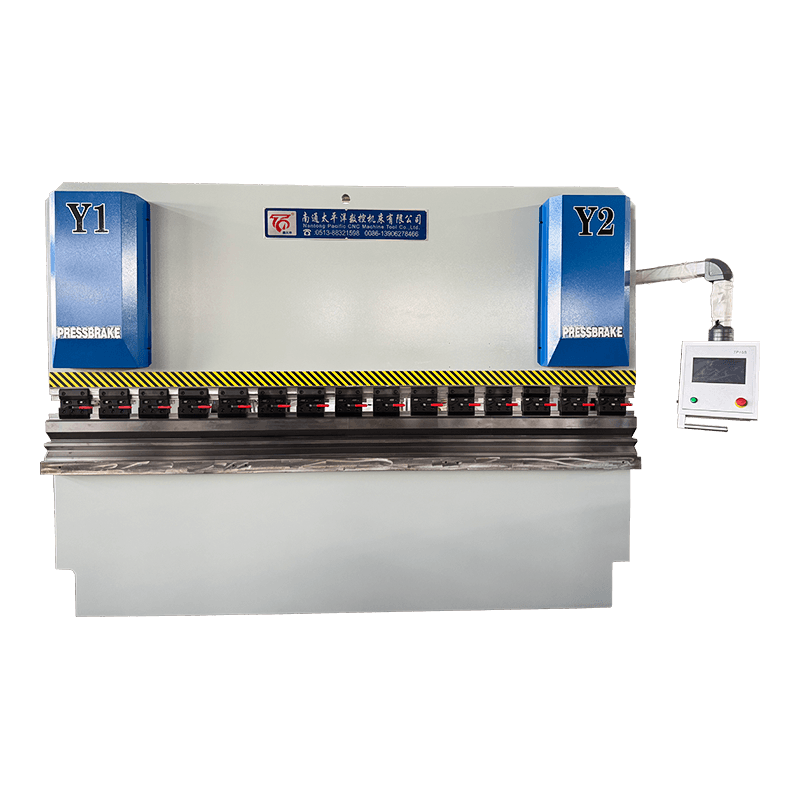
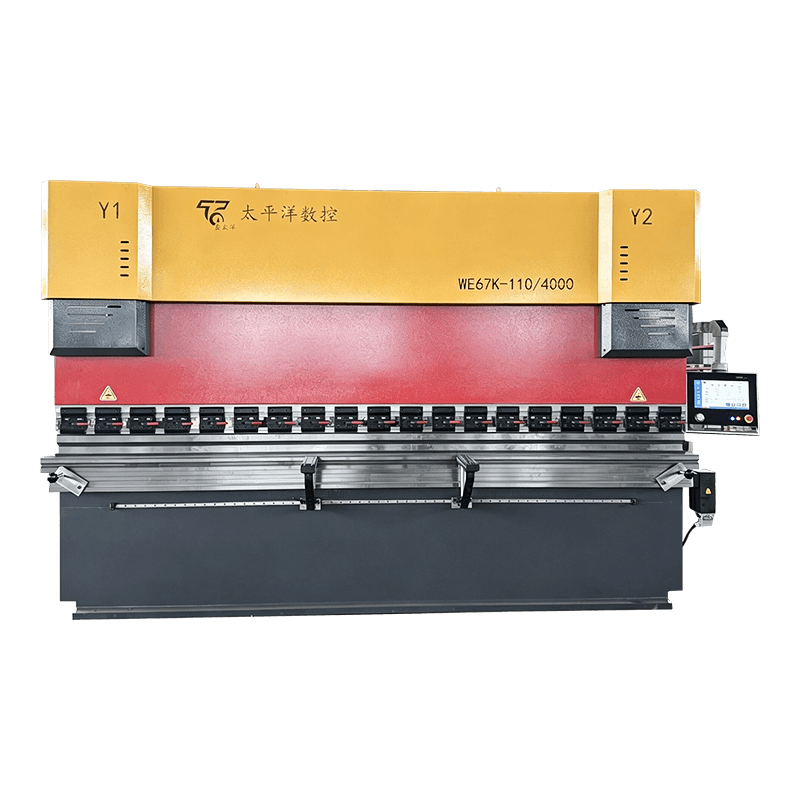
A CNC plate bending machine uses the same hydraulic ram principle as a conventional press brake, but adds a computer numerical control system that governs ram position, bending sequence, back gauge movement, and stroke depth automatically. Once a bending program is stored, the machine repeats the same sequence across hundreds or thousands of parts with very little variation. This is the core reason a CNC press brake has become the standard choice for workshops producing varied part geometry at scale.
A typical CNC plate bending machine includes a servo driven or proportional hydraulic ram, a CNC control panel with a programmable interface, automatic or semi automatic back gauges on the X and R axes, and angle measurement sensors on higher end models. Multi axis configurations allow the back gauge, crowning system, and ram tilt to be coordinated automatically for each bend in a sequence.
Because the bending sequence is stored as a program rather than set manually for every plate, a CNC plate bending machine removes much of the operator dependent variation seen on hydraulic machines. Angle repeatability improves, changeover time between different part numbers drops significantly, and the same program can be recalled for repeat orders months later without re teaching the setup from scratch.
Many CNC plate bending machine models also include graphical programming software that lets an operator draw the finished part profile and have the control calculate bending sequence, tonnage, and back gauge position automatically. This lowers the practical skill barrier compared to older CNC systems, even though the machine itself is more capable than a purely hydraulic unit.
The table below summarizes the practical differences a workshop typically experiences when comparing a hydraulic plate bending machine against a CNC plate bending machine under normal production conditions.
| Feature | Hydraulic Plate Bending Machine | CNC Plate Bending Machine |
|---|---|---|
| Control Method | Manual gauges and stroke stops | Programmable CNC control system |
| Bending Accuracy | Depends on operator adjustment | Consistent across a full production run |
| Setup Time for New Parts | Longer, manual re gauging required | Shorter, stored programs can be recalled |
| Operator Skill Requirement | High, angle quality tied to experience | Moderate, guided by stored programs |
| Ideal Production Pattern | Small batch, repetitive simple bends | Mixed batch sizes, varied part geometry |
| Automation Level | Low to moderate | Moderate to high |
Angular accuracy is one of the clearest differentiators between hydraulic and CNC bending equipment. The chart below outlines typical bending tolerance ranges reported across four common control configurations, expressed in degrees, where a smaller value indicates tighter and more consistent bending accuracy.
Typical bending angle tolerance by control type, lower values indicate tighter and more repeatable accuracy
As shown above, a CNC press brake equipped with servo control commonly holds tolerance ranges several times tighter than a manually operated hydraulic plate bending machine. For parts that stack together, such as enclosure panels or structural brackets that must align after bending, this level of accuracy noticeably reduces rework and fitting adjustments on the shop floor.
Batch size has a direct effect on which machine type performs more efficiently. Small one off jobs favor simplicity, while larger repeat runs favor stored programming and automatic gauging. The column chart below compares average parts processed per eight hour shift across three common batch categories.
Average parts processed per eight hour shift, comparing hydraulic and CNC plate bending machine output across batch categories
The gap widens considerably as batch size increases. On small one off jobs, output between the two machine types is fairly close because manual setup time is a smaller share of the total job. On large repeat batches, a CNC plate bending machine pulls well ahead because the program only needs to be created once, after which every subsequent part follows the same automated bending sequence without additional gauge adjustment.
Across metal fabrication workshops handling stainless steel products, construction panels, and light industry components, there has been a steady shift toward CNC controlled bending equipment as part variety has increased and turnaround expectations have tightened. The line chart below illustrates this general shift over recent years, tracking the estimated share of production hours run on CNC controlled machines versus purely manual hydraulic control.
Illustrative shift in production hours between CNC controlled and manual hydraulic bending from 2019 to 2026
This pattern is consistent with what a CNC plate bending machine manufacturer typically observes from workshop customers upgrading their fleet, replacing aging manual press brakes with CNC controlled units as order books diversify into more part numbers and shorter lead time requests.
No single number fully captures the difference between the two machine types, since each performs differently depending on the dimension being measured. The radar chart below scores hydraulic and CNC plate bending machines across six operational dimensions on a scale from zero to ten.
Relative scoring of hydraulic versus CNC plate bending machines across six operational dimensions
The radar comparison highlights an important nuance: a hydraulic plate bending machine actually scores reasonably well for small batch efficiency, since there is no programming step required before running a single simple part. A CNC plate bending machine pulls ahead sharply in precision, automation, programming flexibility, and large batch efficiency, which is exactly where most growing fabrication businesses feel the strain of manual equipment first.
Both hydraulic and CNC plate bending machines are used across a wide range of manufacturing sectors, though the mix shifts depending on part complexity and required consistency. Common application areas include:
In sectors such as aviation and instrumentation, where dimensional consistency between parts is critical, a CNC plate bending machine is generally preferred because stored programs remove the accumulated variation that can appear across a hydraulic machine run. In sectors such as general construction fabrication or basic bracket production, hydraulic bending remains a practical and widely used method, particularly when a workshop already has trained operators comfortable with manual gauge setting.
Selecting the right bending equipment comes down to matching machine capability to your actual production pattern rather than choosing based on the newest technology alone. The steps below outline a practical decision process.
Both machine types require routine attention to hydraulic oil condition, seals, and structural components, but the maintenance focus differs slightly between the two.
Workshops running either machine type benefit from a scheduled maintenance routine rather than reactive repairs, since consistent upkeep of the hydraulic system directly affects how stable bending accuracy remains over months of continuous operation.
Nantong Pacific CNC Machine Tool Co., Ltd operates as a key enterprise within the national machinery industry, based in the Haian Economic and Technological Development Zone. The facility spans more than 20,000 square meters and brings together an engineering team with practical experience across shearing machines, bending machines, rolling machines, hydraulic presses, and punching machines, giving the company a broad manufacturing base beyond a single product line.
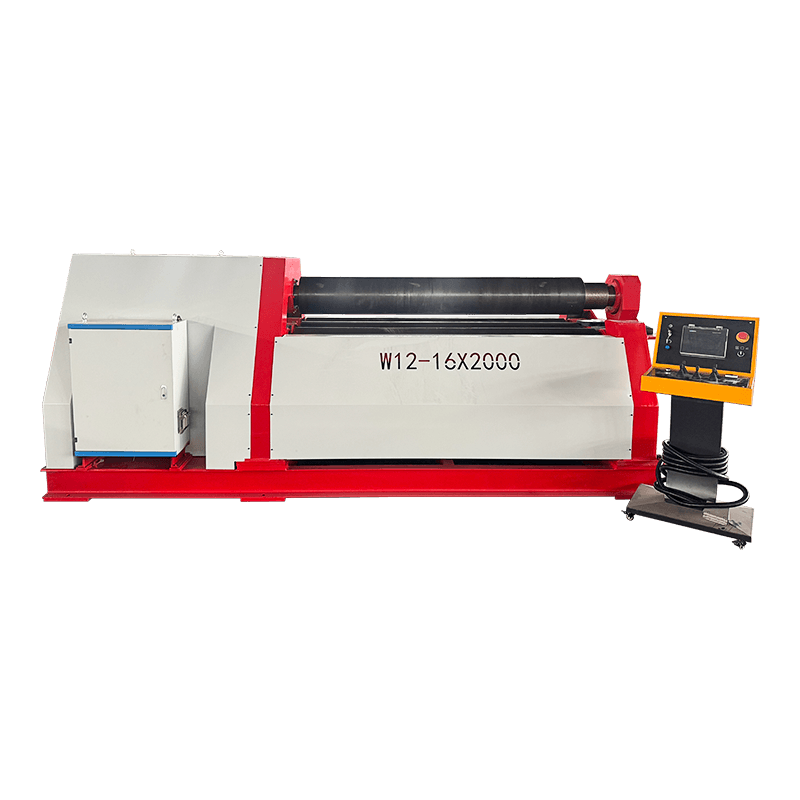
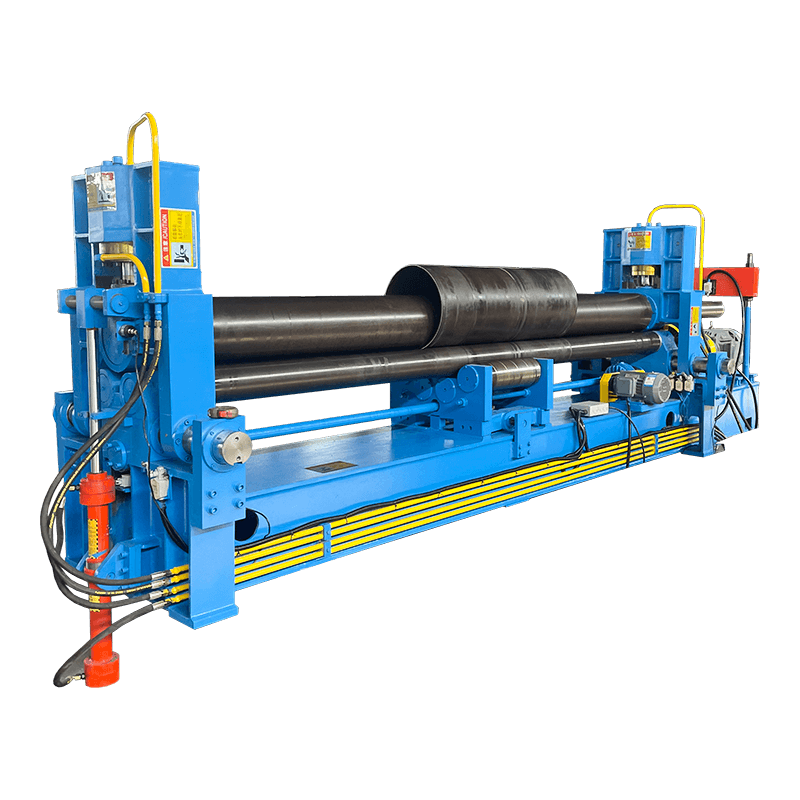
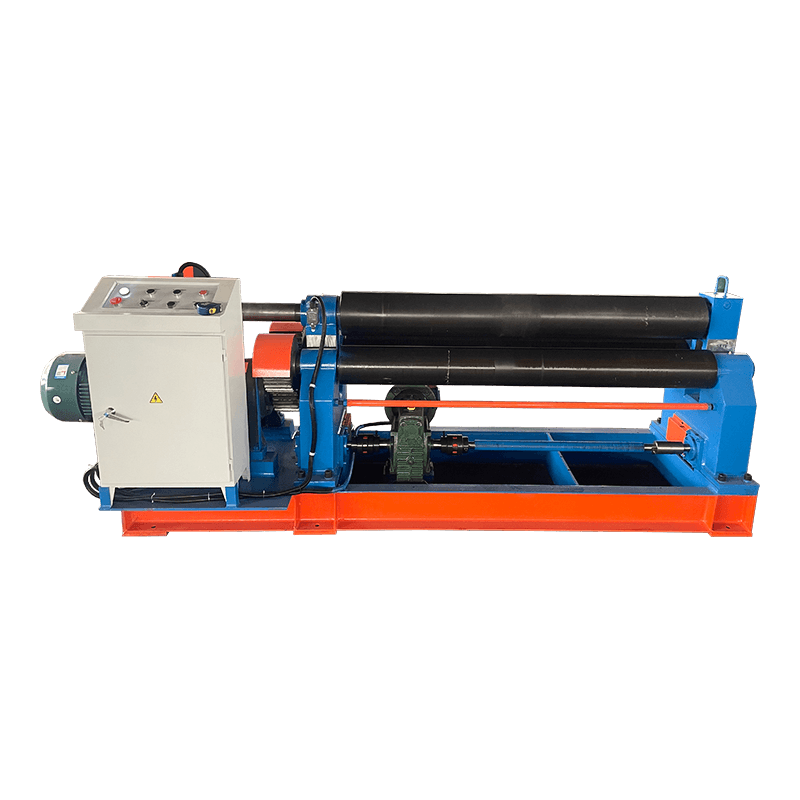
As a CNC plate bending machine manufacturer and CNC press brake supplier, the company designs, develops, and produces both standard series equipment and non standard machines built around specific workshop requirements. The same production base also functions as a CNC plate rolling machine supplier, with the plate rolling machine factory turning out models ranging from compact three roll units to heavier four roll configurations, alongside a dedicated hydraulic plate rolling machine lineup for workshops that process curved and cylindrical plate sections.
Products from this plate rolling machine manufacturer and bending equipment line are distributed across domestic markets and exported to Southeast Asia, Europe, the United States, and the Middle East. Service and support branches are established across Beijing, Tianjin, Shenyang, Shandong, Zhejiang, Guangzhou, Shanghai, Hangzhou, Chengdu, Xi'an, and the wider Jiangsu region, forming a coordinated pre sale, sale, and after sale service network. For distributors and trading partners exploring plate bending machine wholesale channels, this combination of in house design capability, broad product range, and regional service coverage supports both standard equipment orders and project specific machine configurations.
A hydraulic plate bending machine relies on manual gauge settings and operator judgment for each bend, while a CNC plate bending machine stores bending programs and repeats them automatically, giving more consistent results across a full production run.
A CNC press brake uses a programmable control system to manage ram depth, back gauge position, and bending sequence, often supported by angle sensors that help maintain consistent results across many parts.
Some hydraulic press brake frames can be retrofitted with a CNC control system and back gauge automation, though the level of upgrade possible depends on the original machine structure and hydraulic components.
CNC plate bending machines are available across a wide range of tonnage ratings, allowing them to process thin sheet material through heavier structural plate depending on the specific machine configuration selected.
Initial programming requires some familiarity with the control interface, but once a bending program is set up it can be recalled easily, which often makes repeat production simpler than manually resetting a hydraulic machine each time.
Configurations vary from basic two axis systems controlling ram depth and back gauge position, up to multi axis systems that also coordinate crowning, ram tilt, and additional gauge movement.
Common materials include carbon steel, stainless steel, and aluminum plate, with die selection and tonnage adjusted based on material thickness and bending characteristics.
Simple bend profiles can often be programmed within a short setup session using graphical programming software, while more complex multi bend sequences may take longer to configure and test.
Industries with varied part geometry and tighter fit up requirements, such as aviation support structures, instrumentation enclosures, and stainless steel product manufacturing, tend to benefit the most from CNC controlled bending.
Routine maintenance includes hydraulic oil checks, sensor and encoder cleaning, back gauge alignment, and keeping stored bending programs backed up as part of regular workshop upkeep.
Related Products

Contact us
Factory Address
Xichang industrial Park, Chengdong Town, HaianCity, Nantong City, Jiangsu Province, China
Phone
+86-13906278466
products
QR CODE

 English
 русский
 عربى
عربى