Sep 30, 2026
When a fabrication workshop plans to add or upgrade a plate rolling machine, the first question is rarely about the machine itself—it is about the manufacturer. A plate rolling machine is a long-term capital investment: the wrong choice can lead to inconsistent cylinder quality, frequent downtime, and limited after-sales support. The right manufacturer, on the other hand, becomes a partner who understands your material grades, thickness range, and production rhythm.
This article walks through the critical factors to evaluate when sourcing a plate rolling machine manufacturer—from machine architecture and control levels to the factory’s capacity for non‑standard solutions. Along the way, we reference the product lineup and capability of a real-world manufacturer with a 20,000 m² production base and a history of serving global markets.
Content
A reputable plate rolling machine manufacturer should demonstrate competence in three areas: structural design, hydraulic/mechanical integration, and quality assurance. Beyond the quoted price, buyers must verify the manufacturer’s experience, factory floor space, and willingness to customize.
| Evaluation Factor | Why It Matters |
|---|---|
| Product variety (roller count, drive type) | Different jobs require 3‑roll symmetric, 3‑roll hydraulic, or 4‑roll designs. |
| Customization capability | Non‑standard width, thickness, or rolling speed can be essential for specialty parts. |
| Factory & quality control | In‑house machining and testing ensure consistent tolerances and long machine life. |
| After‑sales support & spare parts | Fast response and local/remote service reduce production stoppages. |
One manufacturer that consistently meets these criteria is Nantong Pacific CNC Machine Tool Co., Ltd., a national key enterprise in the forging machinery field. With over 20,000 m² of facilities and a full lineup from three‑roll to four‑roll machines, the company offers both standard and non‑standard designs—a clear advantage for buyers who need more than an off‑the‑shelf model.
Every plate rolling machine manufacturer covers a range of configurations. The three most common categories are symmetrical mechanical three‑roll, universal hydraulic three‑roll, and four‑roll designs. Each has distinct strengths in pre‑bending accuracy, ease of operation, and applicable thickness.
Figure: Isometric view of a typical three‑roll plate rolling machine, showing the top roll, two side rolls, and the drop‑end bearing.
This classic design uses a mechanical drive (geared transmission) to rotate all three rolls. It is cost‑effective and works well for mild steel plates in the thin‑to‑medium thickness range. The symmetrical arrangement means the two side rolls move together to bend the plate; pre‑bending requires the plate to be turned around, adding handling time.
Here, the top roll is driven hydraulically, and the two side rolls can be moved independently (one as a fixed side, the other as a tilting side). Hydraulic power allows higher torque and more precise control. The independent side‑roll movement also enables one‑pass pre‑bending, significantly increasing productivity. 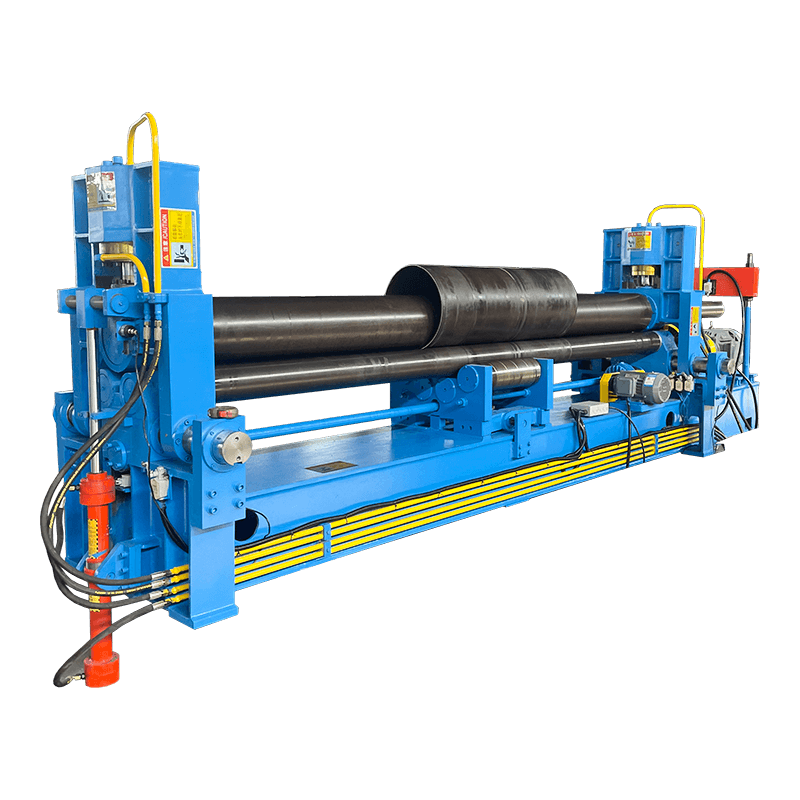 W11S 3-Roller Universal Hydraulic Plate Rolling MachineThis hydraulic three-roller machine excels at one-pass pre-bending with independent side rolls, ideal for workshops handling varied thicknesses and needing fast job changeovers.View Product →This type is the go‑to choice for workshops that handle a variety of thicknesses and need fast job changeovers.
A four‑roll machine adds a dedicated lower roll, which makes pre‑bending possible without repositioning the plate. The top and bottom rolls pinch the material, while the two side rolls adjust to form the radius. This design offers the highest level of automation and roundness accuracy, ideal for thick‑wall cylinders or high‑volume production. 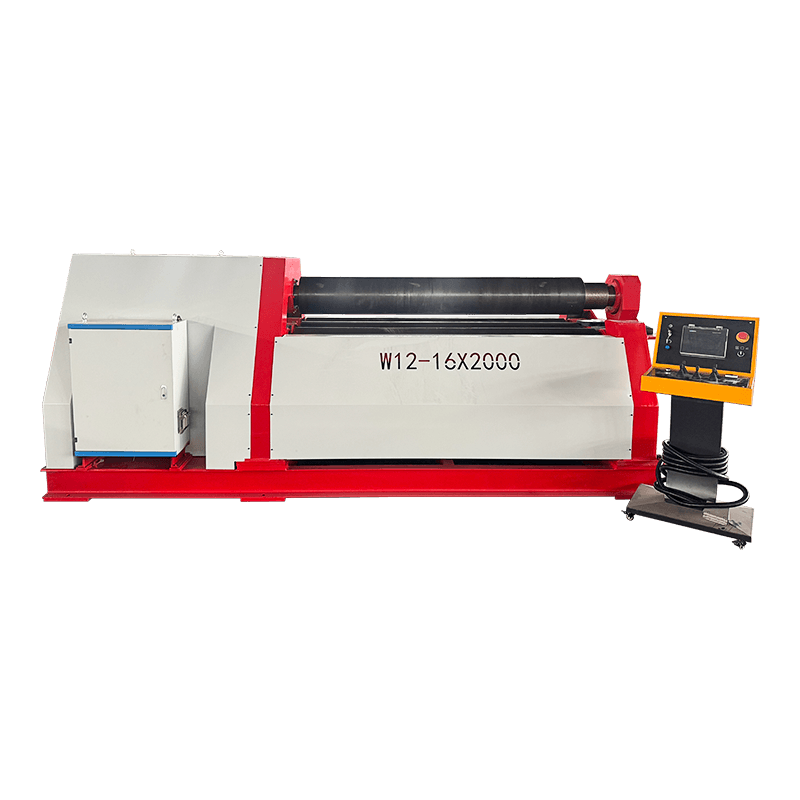 W12 Series 4-Roller Hydraulic Plate Rolling MachineWith a dedicated lower roll for pre-bending without repositioning, this four-roller design delivers top automation and roundness accuracy for thick-wall cylinders or high-volume production.View Product →
To visualise the relative capacity of these three types, consider the following approximate thickness range (as a relative index 1–5, where 1 = thin sheet ≤ 6 mm and 5 = heavy plate ≥ 50 mm):
Bar chart: Relative thickness capacity (1‑5 scale). Type A = mechanical 3‑roll, Type B = hydraulic 3‑roll, Type C = 4‑roll. Based on typical machine specifications from industry practice.
Each type has its place. The plate rolling machine series from a reliable manufacturer typically includes all three variants, allowing the buyer to match the machine exactly to the application. For example, a manufacturer like Nantong Pacific CNC offers the W11 (mechanical 3‑roll), W11S (hydraulic 3‑roll), and W12 (4‑roll) models, covering the full spectrum from light gauge to heavy plate.
Not all fabrication tasks fit standard specifications. A manufacturer’s willingness and ability to design non‑standard machines can be the deciding factor for many buyers. Common customizations include:
Nantong Pacific CNC, for instance, explicitly states its capability to develop non‑standard equipment. Their engineering team works closely with clients to adapt the machine to the required parameters, something that many standardized manufacturers avoid. 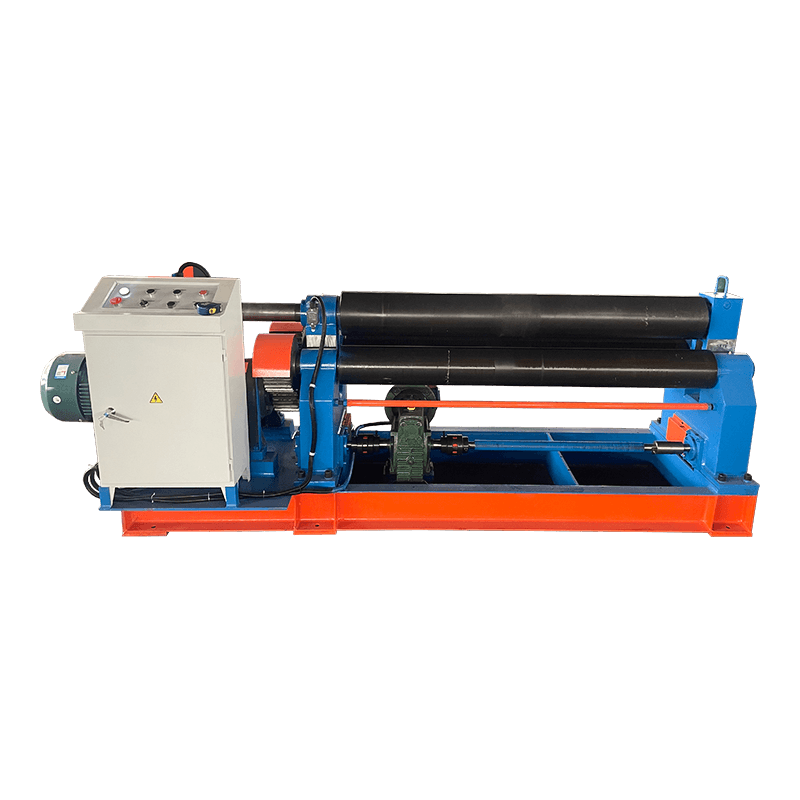 W11 Series 3-Roller Symmetrical Mechanical Rolling MachineA cost-effective mechanical machine with proven symmetrical design and reliable bearing system, backed by a manufacturer who controls in-house machining for long-term durability.View Product →
The factory floor behind a plate rolling machine manufacturer tells a lot about the product’s long‑term reliability. A manufacturer with in‑house machining, welding, and assembly can control each step of the production chain. Look for:
When a manufacturer maintains a “factory tour” page on its website, it signals transparency. You can often see the welding quality, the painting process, and the final assembly—exactly what you want to verify before signing a contract. For common issues like plate shifting or edge mismatch, solutions to common plate rolling problems can also be addressed through design features, such as crowned rolls or hydraulic counter‑balance systems.
Related Products

Contact us
Factory Address
Xichang industrial Park, Chengdong Town, HaianCity, Nantong City, Jiangsu Province, China
Phone
+86-13906278466
products
QR CODE

 English
 русский
 عربى
عربى