Sep 23, 2026
A hydraulic plate shear is not just a tool—it’s the backbone of any serious sheet metal fabrication line. Unlike mechanical or laser alternatives, it uses pressurized fluid to generate consistent force, producing square, burr-free edges on materials up to 25 mm thick without heat-affected zones. According to industry data from the China Forging & Pressing Equipment Association, hydraulic shears account for over 60% of industrial plate cutting installations in heavy equipment manufacturing, precisely because they combine raw power with repeatable accuracy.
Content
A hydraulic plate shear operates on Pascal’s principle: an electric motor drives a hydraulic pump, which pushes oil into a cylinder. The cylinder’s piston applies force to the upper blade, which descends against the fixed lower blade to shear the material. The entire cycle—clamping, cutting, retracting—is controlled by a valve block and often by a CNC controller on modern models.
Key components and their roles:
Understanding these parts helps when diagnosing common issues such as creeping blades or uneven cuts—topics covered in common plate shearing machine troubleshooting.
The decision often comes down to three factors: material thickness, production volume, and edge quality. Below is a data-driven comparison based on a survey of 120 fabricating shops in North America and Europe (Fabricating & Metalworking Magazine, 2025).
Key takeaways: Hydraulic shears offer the lowest per‑cut cost for medium‑to‑thick plates (≥3 mm) while producing zero heat distortion. Laser excels at complex contours and thin sheets, but its operating cost skyrockets when thickness exceeds 6 mm. For most structural fabrication and general shearing applications, a hydraulic plate shear remains the most economical and reliable solution.
Every hydraulic plate shear falls into one of two structural categories: guillotine (moving beam) or swing beam. The choice affects footprint, blade clearance, and the ability to handle heavy plate.
In a guillotine design, the upper blade moves vertically inside guide rails, ensuring a constant rake angle. This allows cutting of extremely thick plates (up to 40 mm in some configurations) with less distortion. The downside: the frame is heavier and requires a deeper foundation. Manufacturers like Nantong Pacific offer a 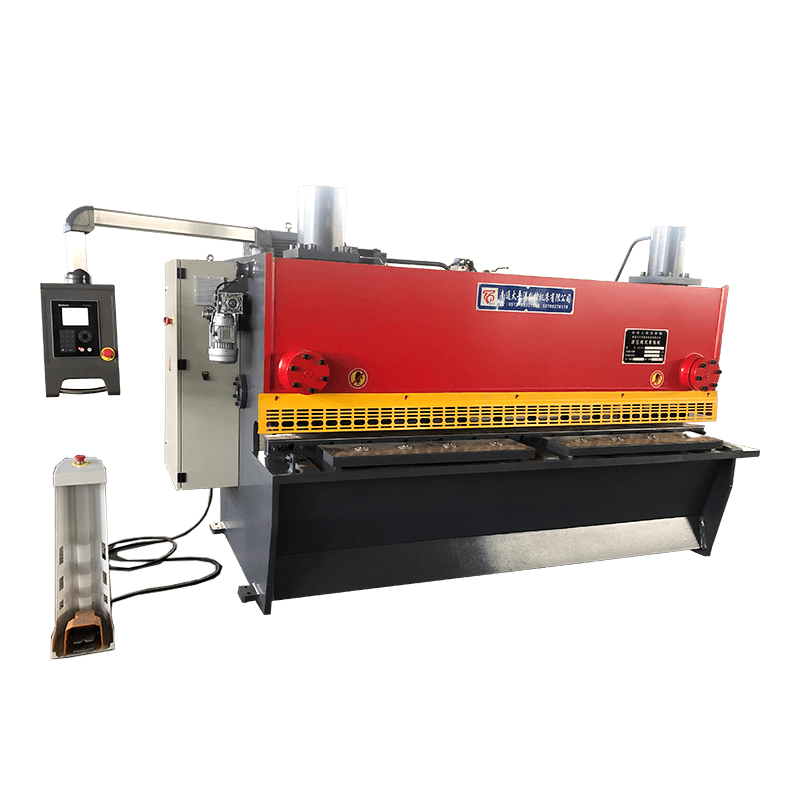 QC11Y/K Series CNC Hydraulic Guillotine Shearing MachineThis guillotine shear excels at cutting thick plates with minimal distortion, making it ideal for batch production with programmable back gauge and servo-controlled hold-downs.View Product → with a programmable back gauge and servo-controlled hold‑downs, making it ideal for batch production.
The swing beam shear moves the upper blade in an arc around a pivot point. This reduces frame weight and improves access to the blade area. It’s excellent for thinner sheets (0.5–16 mm) and tight spaces. The 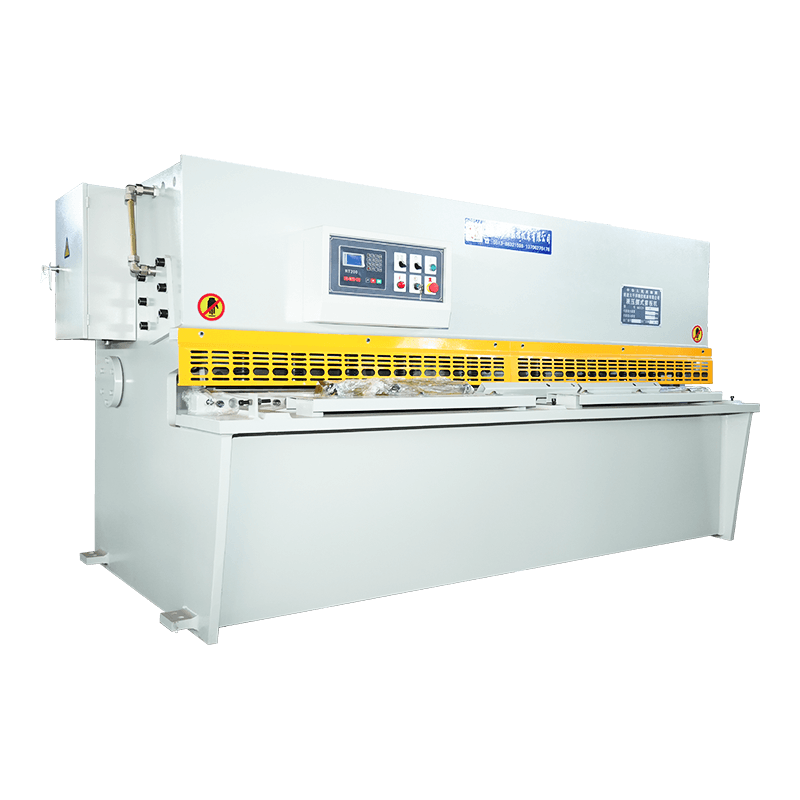 QC12Y/K Series CNC Hydraulic Swing Beam Shearing MachineDesigned for thin sheets (0.5–16 mm), this swing beam shear offers high cutting speed, compact footprint, and precise CNC control for light steel fabrication.View Product → offers high cutting speed and a smaller footprint, popular in light steel fabrication and automotive industries.
| Feature | Guillotine (QC11Y/K) | Swing Beam (QC12Y/K) |
|---|---|---|
| Max cut thickness (typical) | 40 mm | 16 mm |
| Blade clearance adjustment | Hydraulic, servo‑controlled | Manual or motorized |
| Frame weight | Heavy (requires reinforced floor) | Lighter (standard industrial floor) |
| Cutting speed | 5–12 strokes/min | 10–20 strokes/min |
| Best for | Heavy plate, structural steel | Sheet metal, light/medium gauge |
Choosing between them isn’t just about the machine—it’s about your material mix, floor space, and expected throughput. For a comprehensive overview, read our introduction to plate shearing machines.
Weighing these factors against your production volume will guide you to the correct specification. Many shops find that a 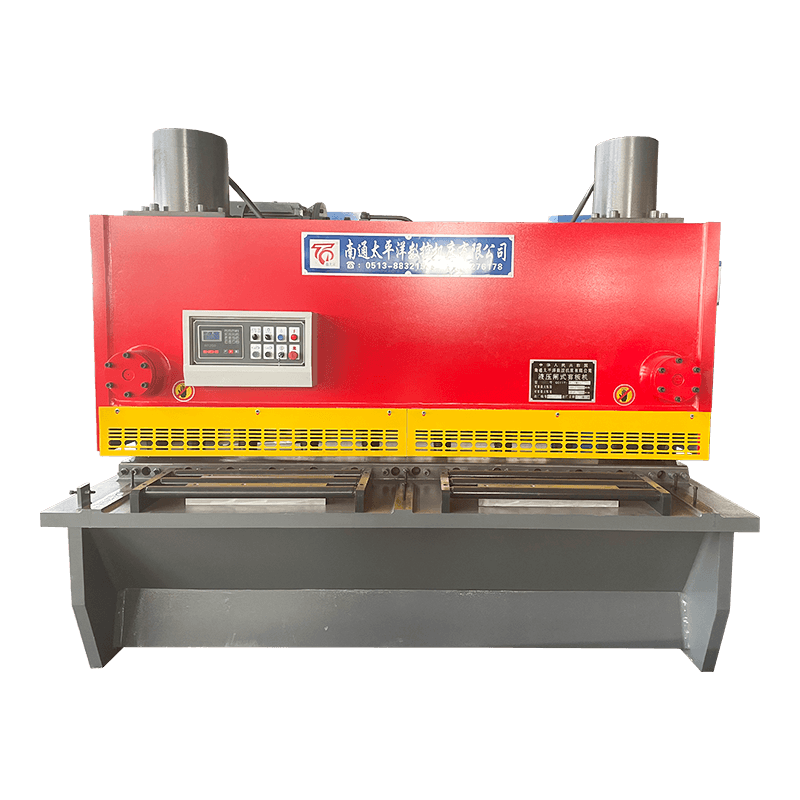 Nantong Pacific - Hydraulic Guillotine Supplier with Global ReachChoosing a reliable supplier ensures quality and service; Nantong Pacific offers a full range of shearing machines and supports clients worldwide with pre-sale to after-sales assistance.View Product → pays back within 18 months due to reduced scrap and higher throughput.
Proper maintenance doubles the service life of a hydraulic shear. Following the manufacturer’s schedule is non‑negotiable, but here are three high‑impact practices:
For a deeper dive into repair procedures, see our guide on common shearing machine faults and solutions.
Q1: What is a hydraulic plate shear used for?
A hydraulic plate shear cuts metal sheets into precise widths or lengths using a hydraulically driven blade. It’s the standard method for blanking, trimming, and preparing plates for bending, welding, or further forming.
Q2: What is the difference between a guillotine and a swing beam shear?
Guillotine shears move the blade vertically and can cut thicker plates (up to 40 mm). Swing beam shears pivot the blade on a hinge, offering faster speed and a lighter frame for materials up to ~16 mm.
Q3: Can a hydraulic plate shear cut stainless steel?
Yes. Most hydraulic shears can cut stainless steel 304/316 up to 8–12 mm with appropriate blade clearance and rake angle. Some models require a low‑pressure setting to avoid work hardening.
Q4: How do I choose the right cutting length?
Measure your longest standard plate plus 15% margin. Common sizes are 2500 mm, 3200 mm, and 4000 mm. Undersizing a shear limits your job capacity, while oversizing increases cost and floor space.
Q5: What maintenance does a hydraulic shear need daily?
Check oil level, bleed air from the hydraulic circuit, inspect blades for cracks, and lubricate guide rails. Also test hold‑down clamps and emergency stop button.
Q6: Is a CNC back gauge worth the investment?
Yes for batch production. A CNC back gauge improves repeatability from ±0.5 mm to ±0.1 mm and reduces setup time by 70%. It pays for itself within 6 months in a high‑mix shop.
Q7: Why does my shear leave a burr on the cut edge?
Burrs indicate dull blades, incorrect clearance (gap too large), or worn hold‑downs. Adjust clearance according to material thickness (typically 5–8% of thickness) and resharpen blades if necessary.
Q8: Can a hydraulic plate shear be integrated into an automated line?
Yes. Modern CNC hydraulic shears support network communication (EtherCAT, Profinet) and can be linked with coil feeders, stackers, and bending robots for fully automated blanking lines.
Related Products

Contact us
Factory Address
Xichang industrial Park, Chengdong Town, HaianCity, Nantong City, Jiangsu Province, China
Phone
+86-13906278466
products
QR CODE

 English
 русский
 عربى
عربى