Sep 16, 2026
When a 6‑mm carbon steel plate needs a precise 90° bend with repeatable accuracy, a hydraulic press brake is the only machine that delivers the tonnage and control required. Unlike manual folding or mechanical presses, hydraulic systems provide full tonnage throughout the stroke, making them ideal for thick plates, long workpieces, and complex die setups. This article explains how hydraulic press brakes work, compares the two dominant synchronisation types, and guides you through the key parameters to consider before purchasing.
Content
All hydraulic press brakes use hydraulic cylinders to move the ram (upper beam) downward. The pump pushes oil into the cylinders, generating force that is transmitted through the ram to the punch, which presses the sheet into a V‑die. The fundamental advantage of hydraulics is force density: a compact cylinder can produce hundreds of tons without the mechanical inertia of a flywheel or clutch.
The stroke speed and position are controlled by servo‑valves or proportional valves. In modern CNC models, the controller commands the valves to achieve a precise bottom‑dead‑center position, compensating for oil temperature changes and frame deflection. According to industry handbooks, a well‑tuned hydraulic press brake can hold bending angles within ±0.5° over thousands of cycles.
Mechanical press brakes rely on a rotating eccentric shaft to move the ram. They offer high speed but limited stroke adjustability and risk overloading the drive train when bending near capacity. Hydraulic press brakes, on the other hand, have a built‑in pressure relief system: if the material is too thick or the die mismatch is extreme, the relief valve opens, preventing damage to the machine and tooling. This safety margin is critical in job‑shop environments where material thickness varies from batch to batch.
All hydraulic press brakes must keep the ram parallel to the table during bending. Two proven mechanisms are used: torsion‑axis (mechanical) synchronisation and electrohydraulic servo synchronisation. Each suits different production scales and accuracy requirements.
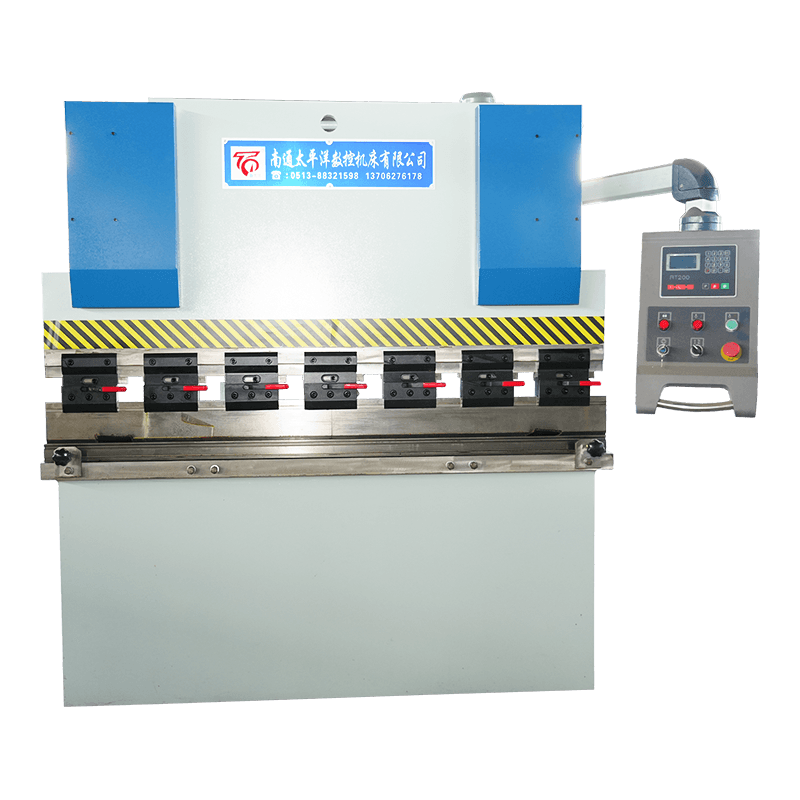
This design uses a torsion bar that connects the left and right hydraulic cylinders. When the cylinders move, the torsion bar forces both sides to travel equally. The system is mechanically robust, requires no electronic feedback, and is easy to maintain. It is the most cost‑effective choice for general‑purpose bending up to 6‑mm plate thickness. For a reliable workhorse in this category, the 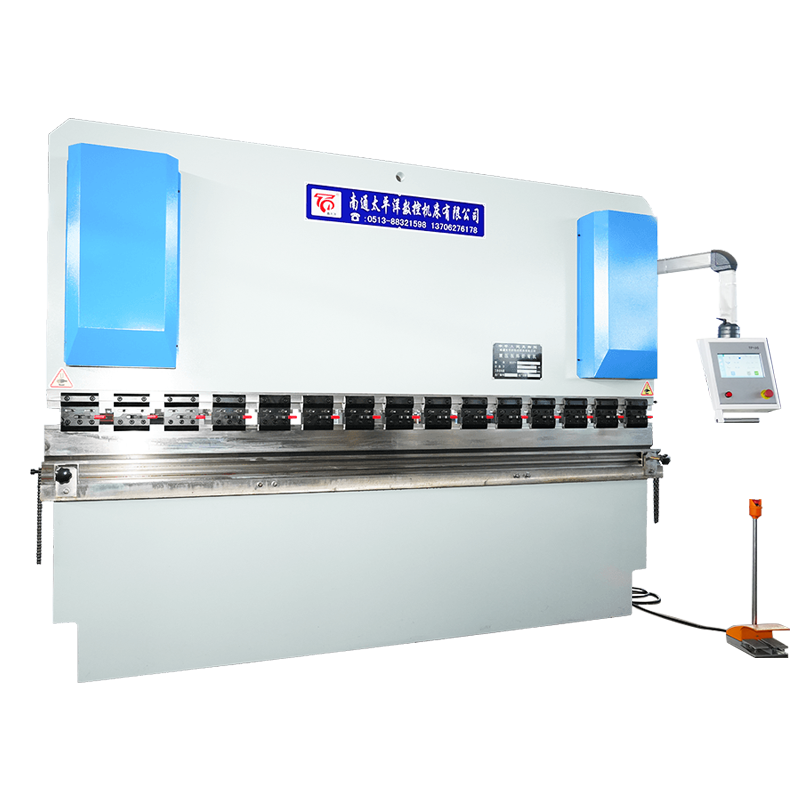 WC67K Torsion-Axis Synchronous CNC Hydraulic Press BrakeThis mechanically synchronized press brake offers reliable parallelism without electronic feedback, making it a cost-effective choice for general bending up to 6 mm thickness, ideal for high-volume production.View Product → offers a proven structure with a steel‑plate welded frame analysed by ANSYS stress software.
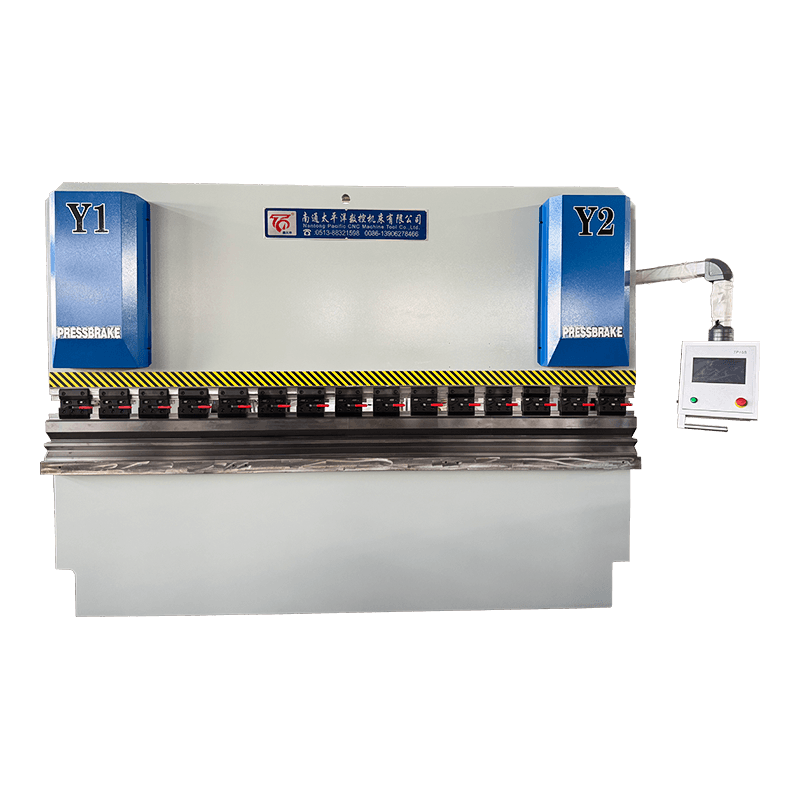
Here, each cylinder is controlled independently by a servo‑valve and a linear encoder. The CNC controller continuously compares the left and right ram positions and adjusts oil flow in real time. This enables very high parallelism—typically within 0.02 mm—and allows crowning compensation to be programmed into the controller. The 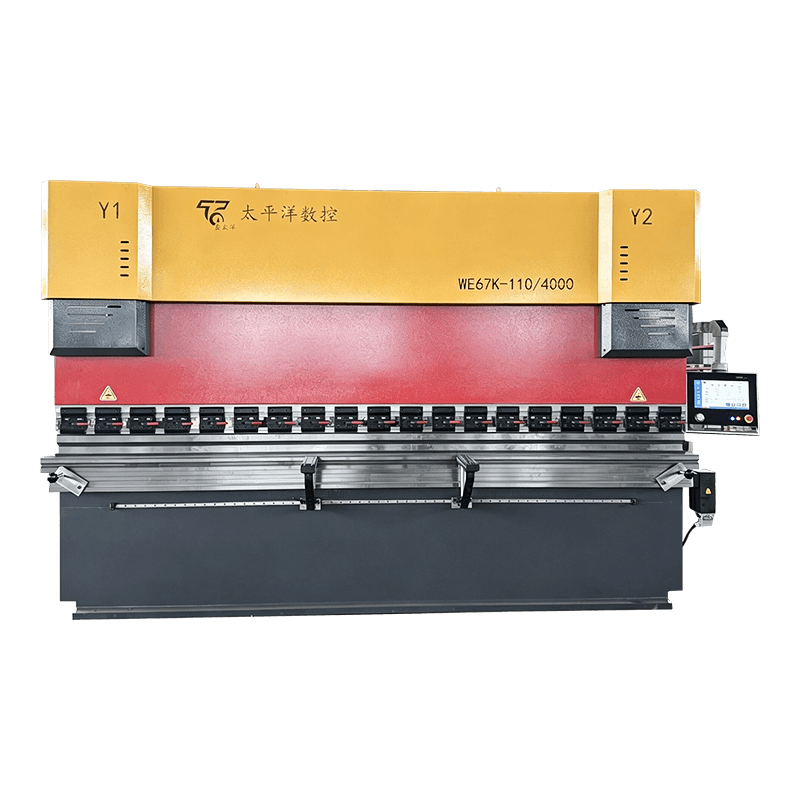 WE67K Electrohydraulic Servo CNC Hydraulic Press BrakeWith independent servo-valve control and linear encoders, this model achieves parallelism within 0.02 mm and supports crowning compensation, suited for aerospace and precision architectural work.View Product → is designed for industries that demand high‑precision bending across long workpieces, such as aerospace and stainless steel architectural panels.
Both series are available in tonnage ranges from 40 to 1000 tons and can be equipped with standard or custom tooling. The choice depends primarily on the required angular tolerance and production volume—electrohydraulic models cost more upfront but reduce scrap and setup time in high‑mix runs.
Selecting the right machine goes beyond tonnage. The following parameters must be matched to your workpiece geometry, material, and desired throughput.
| Parameter | Why it matters | Typical range |
|---|---|---|
| Bending force (tonnage) | Determines the maximum plate thickness you can bend | 40 – 1000 ton |
| Bending length | Must cover the longest workpiece you process | 1.5 – 8 m |
| Stroke | Affects the maximum height of the side flange | 100 – 400 mm |
| Throat depth | Distance from frame to die center | 200 – 500 mm |
| Control system | 2‑axis (Y1+Y2) vs. 4‑axis (Y1+Y2+X+R) | CNC with touchscreen |
| Back gauge | Automated gauge for repeatable flange widths | X‑axis ± 0.1 mm |
In addition to standard parameters, consider the flexibility of the machine tool builder. Manufacturers like Nantong Pacific offer non‑standard designs—for example, extra‑long beds or reinforced frames for bending stainless steel—which can be an advantage when your projects fall outside catalog specs. For many shops, the 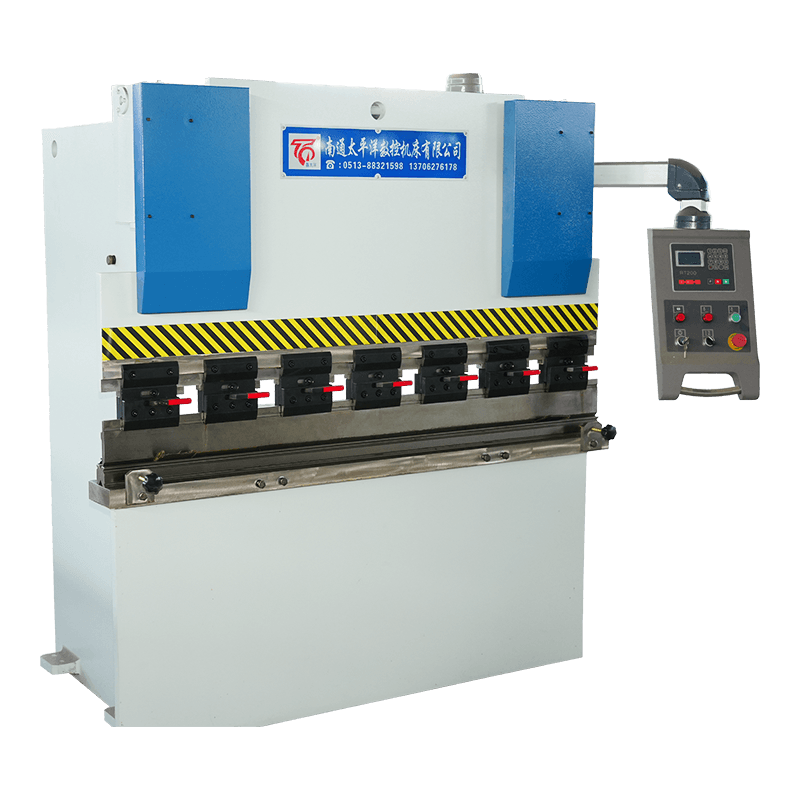 WC67Y Hydraulic Sheet Metal Bending MachineA robust entry-level NC press brake with E21 controller and steel welded frame, designed for small to medium workshops needing reliable, low-maintenance bending without advanced CNC features.View Product → serves as a robust entry‑level solution when CNC features are not yet required.
For a deeper look into daily operation and troubleshooting, refer to common hydraulic bending machine faults and their solutions and proper maintenance practices.
Hydraulic press brakes are durable, but neglecting fluid quality, seal condition, and filter cleanliness leads to pressure drops and positioning drift. A simple weekly checklist—oil level check, leak inspection, and test bend with a known die—can extend machine life by years. The most frequent operator complaints include slow ram speed (often a pump or valve issue), uneven bending (cylinder seal wear), and angle variation (back gauge or crowning adjustment).
Many of these problems are preventable with scheduled hydraulic oil changes (every 2000 hours or annually) and keeping the ram guide ways clean. If you encounter persistent issues, the troubleshooting guide mentioned earlier covers step‑by‑step diagnostics for each symptom.
A: Hydraulic press brakes use oil‑filled cylinders to generate force, ideal for heavy‑duty bending ( > 3 mm plate). Servo‑electric press brakes use ball screws driven by servo motors, offering higher speed and energy efficiency for thin‑gauge work.
A: For a 2‑m bending length with a V‑die opening 8× material thickness, approximately 80 tons are required. Use the formula: force (ton) = (length × material thickness² × 1.5) / die opening.
A: Yes, but stainless steel requires about 50% more tonnage than mild steel of the same thickness due to higher tensile strength. Ensure the machine’s frame and tooling are rated for the extra force.
A: With proper maintenance, a hydraulic press brake can operate reliably for 20–30 years. Key factors: regular oil changes, seal replacement every 5‑10 years, and avoiding continuous overload.
A: A back gauge positions the sheet accurately before each bend. CNC back gauges automate this, reducing setup time and ensuring repeatable flange dimensions within ±0.1 mm.
A: Yes, especially electrohydraulic servo models with fast ram approach speeds (up to 200 mm/s) and automatic tool changers. They are widely used in automotive and appliance manufacturing lines.
Related Products

Contact us
Factory Address
Xichang industrial Park, Chengdong Town, HaianCity, Nantong City, Jiangsu Province, China
Phone
+86-13906278466
products
QR CODE

 English
 русский
 عربى
عربى