Sep 09, 2026
A fabrication shop takes on an order for 120 square brass plates — 150 × 150 mm, two 90° flanges, delivered with a clean, scratch-free surface. On paper the job is simple. In practice, brass is not steel. The parts that come back are rarely rejected for poor cutting; they fail because of springback, work-hardening, and surface marks. The rule that holds up after years of running shears and press brakes is short: choose the temper to match the bend, cut a true square first, and control every bend with known tooling. Get those three right, and square brass plate is one of the most pleasant materials to process.
Square brass plate exists in two worlds. On decorative product pages, it is an antique-finished tray on a desk or a catch-all display piece. In a metal fabrication plant, it is flat-rolled stock cut into precise blanks for nameplates, electrical busbars, architectural trim, instrument panels, and small hardware. Both worlds depend on the same foundation: a flat, genuinely square piece of brass, delivered without burrs, scratches, or uncontrolled angles.
Content
Brass is a copper–zinc alloy. In flat form it is produced as sheet, strip, and plate under the specification ASTM B36/B36M, which covers brass plate, sheet, strip, and rolled bar. A square brass plate is simply that material cut to a square footprint. The most common wrought alloys are C26000 (cartridge brass), C27200 (yellow brass), and C28000 (Muntz metal). The copper content of these alloys drives both appearance and mechanical behavior.
For flat products, sheet usually means thickness up to roughly 6 mm; plate refers to thicker material. Square blanks in production are commonly cut from 0.3 mm sheet up to 50 mm plate, with larger thicknesses machined individually.
| Alloy | Common name | Copper | Zinc | Annealed yield | Typical uses |
|---|---|---|---|---|---|
| C26000 | Cartridge brass | 70% | 30% | ≈ 100 MPa | Nameplates, electrical parts, decorative trays |
| C27200 | Yellow brass | 63% | 37% | ≈ 115 MPa | Architectural trim, fasteners, panels |
| C28000 | Muntz metal | 60% | 40% | ≈ 140 MPa | Architectural metalwork, heat exchangers |
More copper means a warmer color, better corrosion resistance, and higher material cost. More zinc means a harder, stronger, and more economical alloy. For bending, however, the property that matters most is not the alloy — it is the temper.
The biggest variable when forming square brass plate is temper. Brass is sold annealed, half-hard, and hard. Standard reference data for C26000 shows yield strength rising from roughly 100 MPa annealed, to about 275 MPa half-hard, and above 430 MPa in the hard temper. A stronger part is often desirable, but strength comes with a cost: springback increases in the same direction.
The failure mechanism is covered in detail in our guide on why metal cracks during bending and how to prevent it.
A square brass plate starts with a square cut. For production quantities, a hydraulic shearing machine is the most economical method because it produces a straight edge in one stroke without heating the material. Laser and waterjet cutting earn their place on small series and complex profiles; a band saw is practical for thick plate.
| Thickness | Recommended cutting method | Typical squareness |
|---|---|---|
| 0.3–3 mm | Swing-beam or guillotine shear; laser for small series | ± 0.1–0.3 mm on 300 mm |
| 3–12 mm | Hydraulic guillotine shear; laser or waterjet for profiles | ± 0.2–0.5 mm on 300 mm |
| 12–50 mm | Band saw, waterjet, or high-power laser | ± 0.3–1.0 mm on 300 mm |
| Over 50 mm | Band saw, waterjet, or machining | Depends on process |
Three details separate a clean square blank from a scrapped one: blade clearance at about 3–5% of plate thickness, sharp tooling, and a light lubricant. Brass does not cut like steel — a dull blade pushes the edge over and leaves a ragged burr that ruins the part.
CNC back gauges make repetitive square blanks faster because stroke length, blade gap, and gauge position are programmed instead of measured each time. The practical effect on output is covered in our article on how a plate shearing machine improves cutting efficiency.
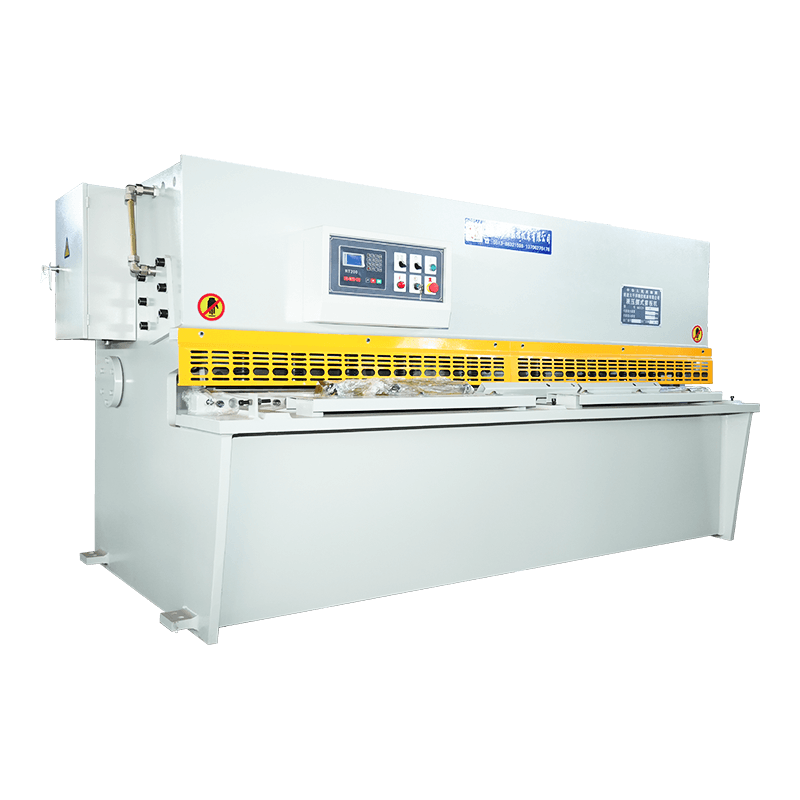 QC12Y/K Series CNC Hydraulic Swing Beam Shearing MachineThis hydraulic shear offers CNC-controlled rear stop positioning within 0.05 mm and a durable 6CrW2Si alloy steel blade, making it ideal for producing precise square brass blanks before bending.View Product →
Bending square brass plate to 90° uses the same process as steel, but three parameters need adjustment: the inside radius, the springback allowance, and tool mark protection.
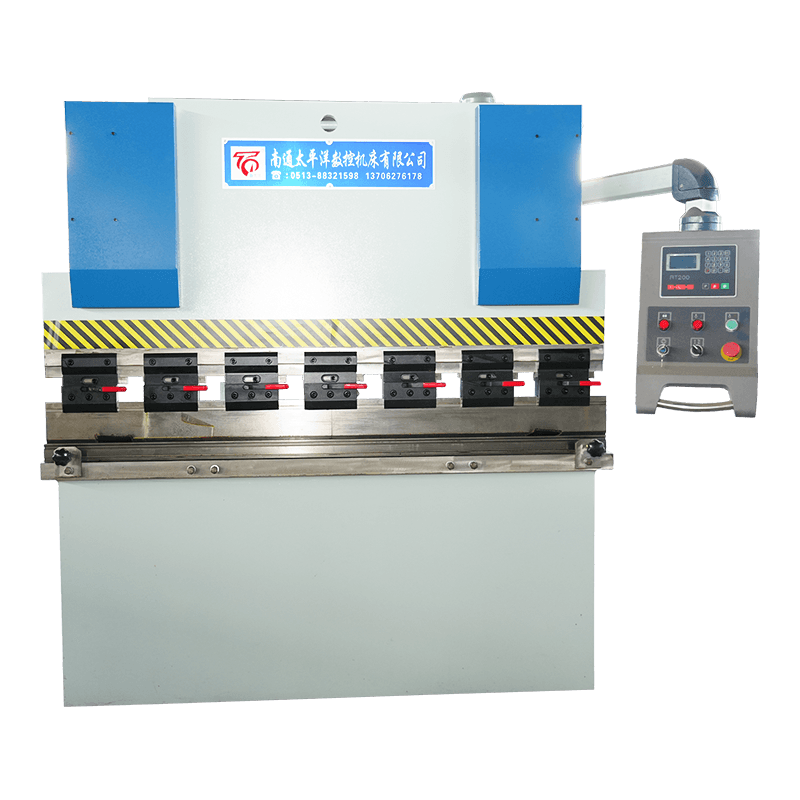
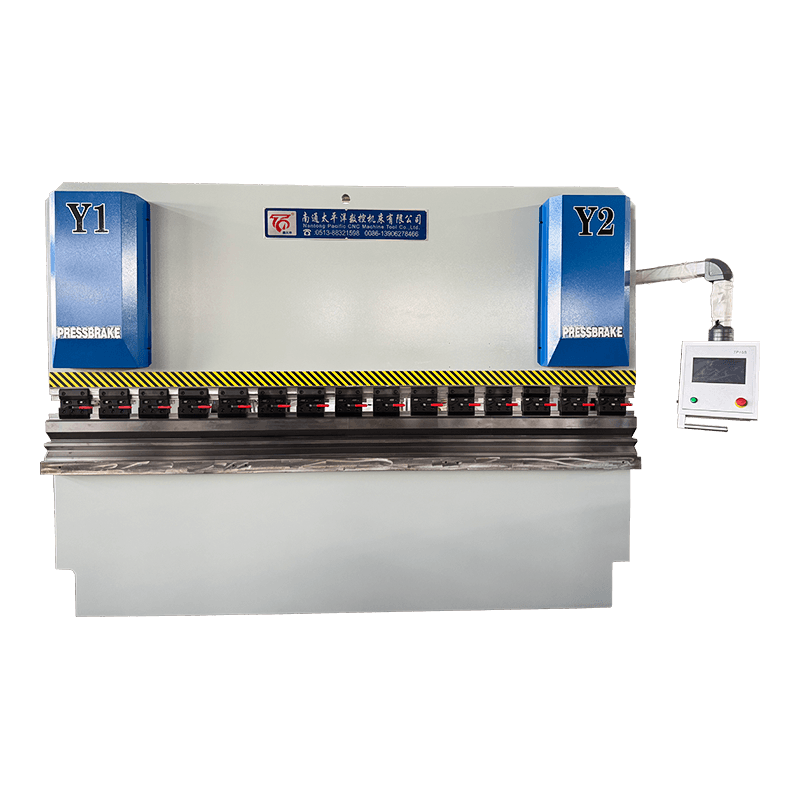
A press brake with real-time angle feedback removes most of the guesswork. It measures the actual bend angle and adjusts the next stroke automatically, which matters when a batch of square brass plates arrives with slightly differing temper. That level of control is exactly what an electrohydraulic servo machine adds over a manual machine.
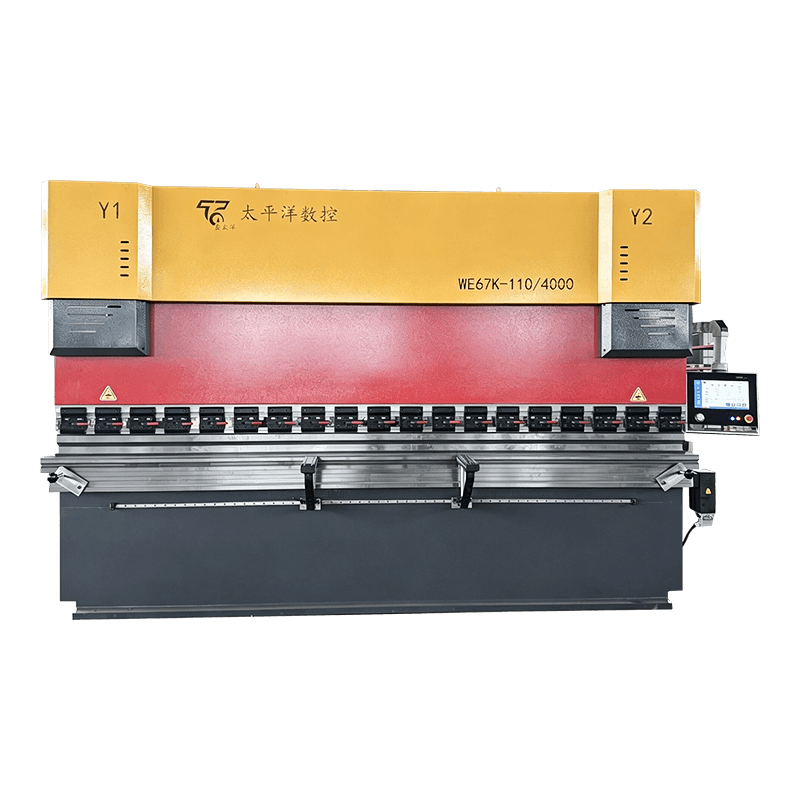 WE67K Series Electro-Hydraulic Servo CNC Press BrakeWith real-time angle feedback and multi-axis back gauge control, this servo press brake ensures consistent bends even when brass plate temper varies, reducing trial-and-error in batch production.View Product →
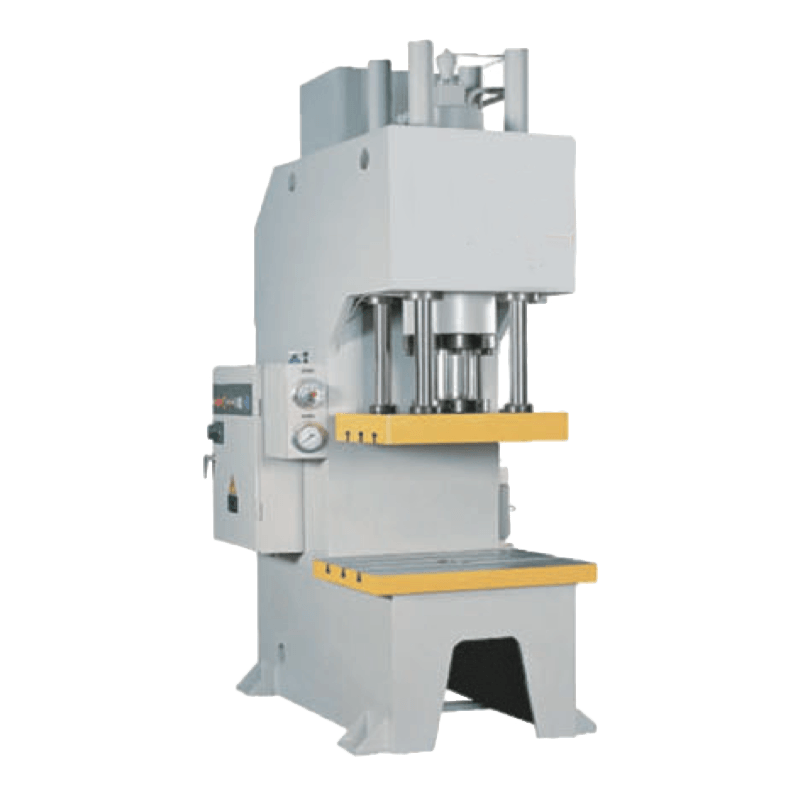
Some square brass plates become trays, badges, or housings with an embossed logo or a drawn rim. For those shapes, a four-column hydraulic press with a steel die is faster and more repeatable than hand forming. The decorative tray that appears on design photo pages is, in production, a short stroke on a press with a polished die set.
Use fine blanking or a small clearance on the die for clean edges, and keep the die surface polished — brass transfers every scratch to the finished part.
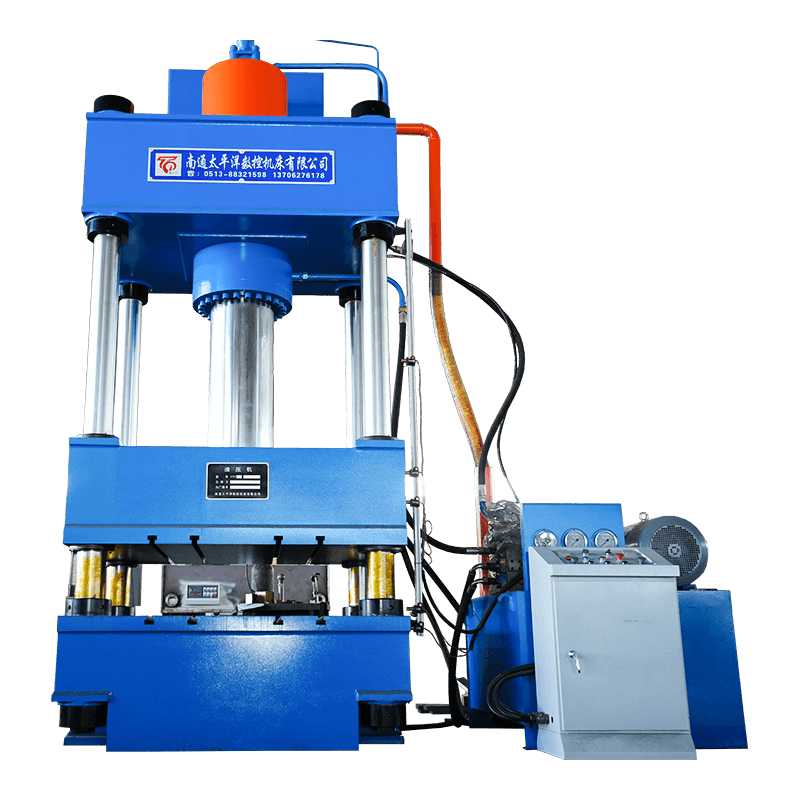 Y32 Series Four-Column Hydraulic Press MachineThis versatile four-column press supports fixed-stroke or fixed-pressure forming with adjustable parameters, providing the repeatability needed for clean embossing or drawing on square brass plates.View Product →
Related Products

Contact us
Factory Address
Xichang industrial Park, Chengdong Town, HaianCity, Nantong City, Jiangsu Province, China
Phone
+86-13906278466
products
QR CODE

 English
 русский
 عربى
عربى