Oct 28, 2026
Three millimetres of stainless steel, 2,500 mm long, folded into a U-channel with two 90-degree bends and one 45-degree bend, and the finished panel has to bolt straight onto a laser-cut frame without a single re-work. That is the job a sheet metal bending machine is actually bought for. Not the thickest plate in the yard, and not the biggest tonnage in the catalogue.
Start with the conclusion. Specify the machine around the heaviest and the longest part you expect to quote over the next two years, then add roughly 20 percent of headroom. Tonnage, bend length, throat depth and control type all follow from that single part. Everything else, from the number of backgauge axes to the brand of the hydraulic pump, is secondary and can be negotiated later.
What follows is how those limits are calculated, which specifications buyers most often misread, and the questions that come up in almost every order enquiry.
Content
A press brake is described by three primary capacities, and usually only one of them is compared properly before an order is placed.
The force a machine must apply at mid-span is set by sheet thickness, material tensile strength, die opening and the length of the bend. Air bending demands the least force. Bottoming or coining, where the punch presses the material fully into the die, can demand several times more. That is why a nominal tonnage figure means very little on its own: 100 tonnes with a 16 mm V-die and 100 tonnes with a 6 mm V-die are two completely different machines in practice.
The nominal length in a model name, such as 2,500 mm, is the maximum workpiece width, but the space between the side housings is shorter. A 2,500 mm machine may offer roughly 2,050 mm between frames, so a part with deep return flanges can be physically impossible to insert even though it is shorter than the nominal length. Throat depth and open height (daylight) matter just as much when the part is a box, a cabinet or a formed channel rather than a flat strip.
Two machines with identical tonnage and identical length can differ by a factor of three in price purely because of how they control ram position. Springback changes with material batch, grain direction and tooling wear, so closed-loop control and crowning matter far more when you run small batches of varied work than when you run one part number all day.
Air-bending force can be estimated with the formula press brake manufacturers have published for decades: force per metre in kilonewtons equals 650 multiplied by the square of the sheet thickness, divided by the V-die opening. For mild steel the die opening is normally taken as eight times the sheet thickness. The table below applies that formula across the thickness range most fabrication shops quote.
| Sheet thickness | V-die opening | Force per metre | Force for a 2.5 m bend |
|---|---|---|---|
| 1.0 mm | 8 mm | 8 t/m | 21 t |
| 2.0 mm | 16 mm | 17 t/m | 42 t |
| 3.0 mm | 25 mm | 25 t/m | 62 t |
| 4.0 mm | 32 mm | 33 t/m | 83 t |
| 6.0 mm | 50 mm | 50 t/m | 124 t |
| 8.0 mm | 64 mm | 66 t/m | 166 t |
| 10.0 mm | 80 mm | 83 t/m | 207 t |
Treat the table as a starting point rather than a final answer. Deep bends, small die openings, high-tensile grades and short flange lengths all push the required tonnage up, while bending only the ends of a long part pushes the load toward the centre of the ram, which is exactly where deflection hurts most.
Tonnage is only half of the specification. The other half decides whether the workpiece can be loaded, bent and removed at all. Work through these before signing:
This is where most of the price difference sits, and where the right answer depends on your job mix rather than on your budget alone.
Conventional hydraulic bending machines use a mechanical depth stop and a manually adjusted backgauge. They are the sensible choice when the work is repetitive, mostly simple 90-degree bends, and the operator can dial in corrections. Setup takes time and depends on the operator's experience, but the mechanical system is simple and cheap to maintain.
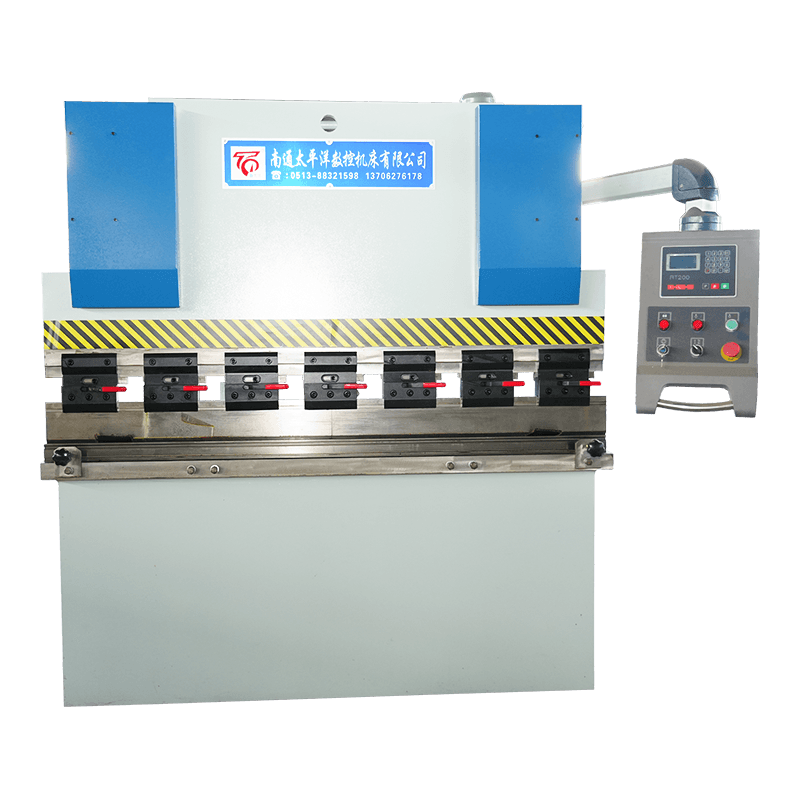
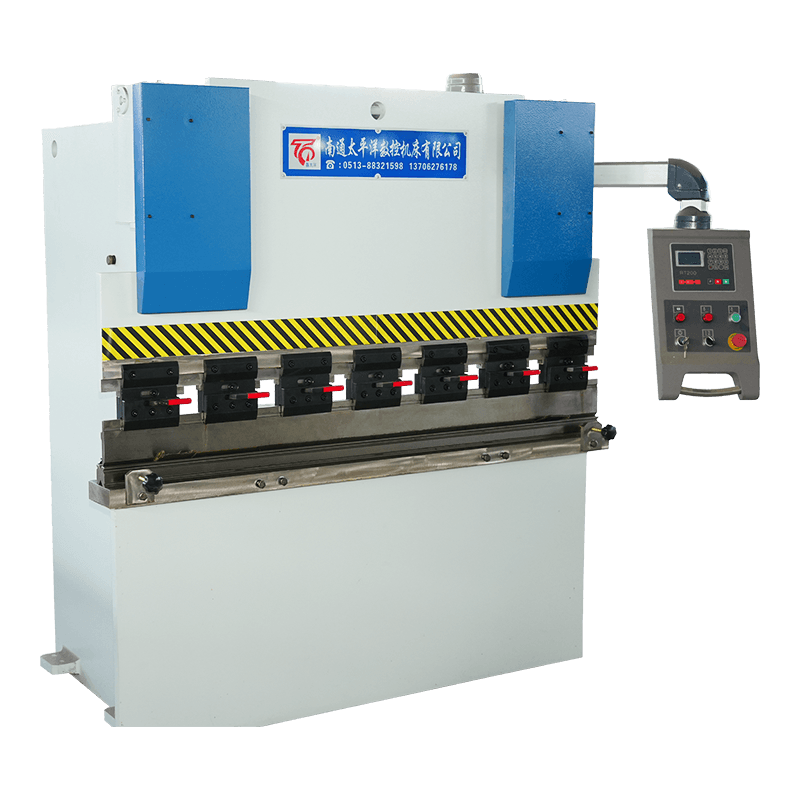 WC67Y-Series Hydraulic Sheet Metal Bending MachineA cost-effective NC press brake with E21 or RT200 control, suited to fabrication, HVAC, and general manufacturing.View Product →
Torsion-shaft synchronous CNC machines link two cylinders with a torsion bar so that both ends of the ram travel together, and add a numerical control for the ram depth and backgauge position. They hold angle better than a purely mechanical stop, store programs for repeat jobs, and handle mixed batches far more comfortably, at a moderate cost premium.
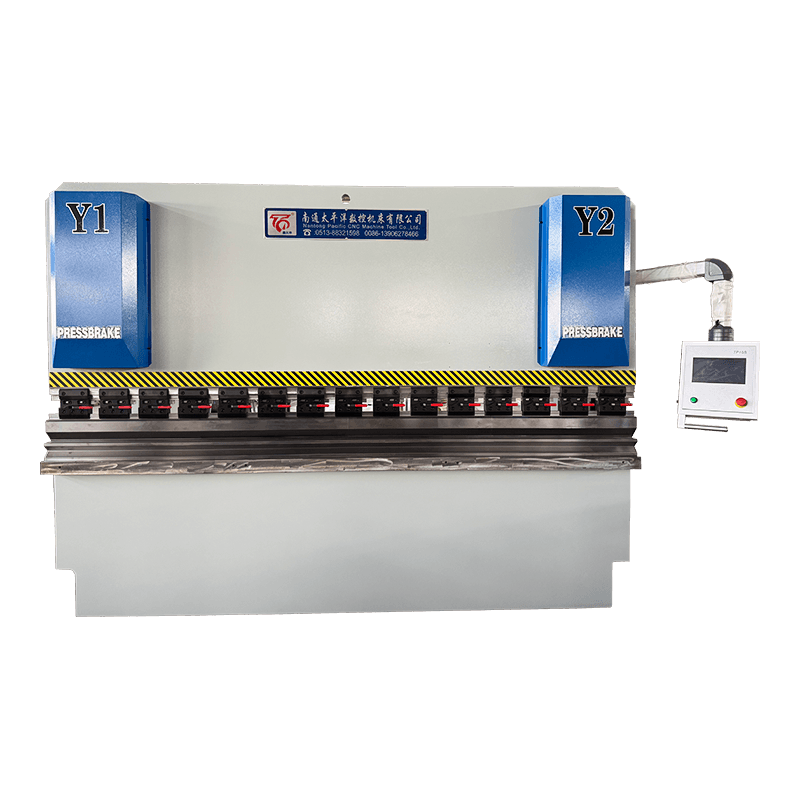
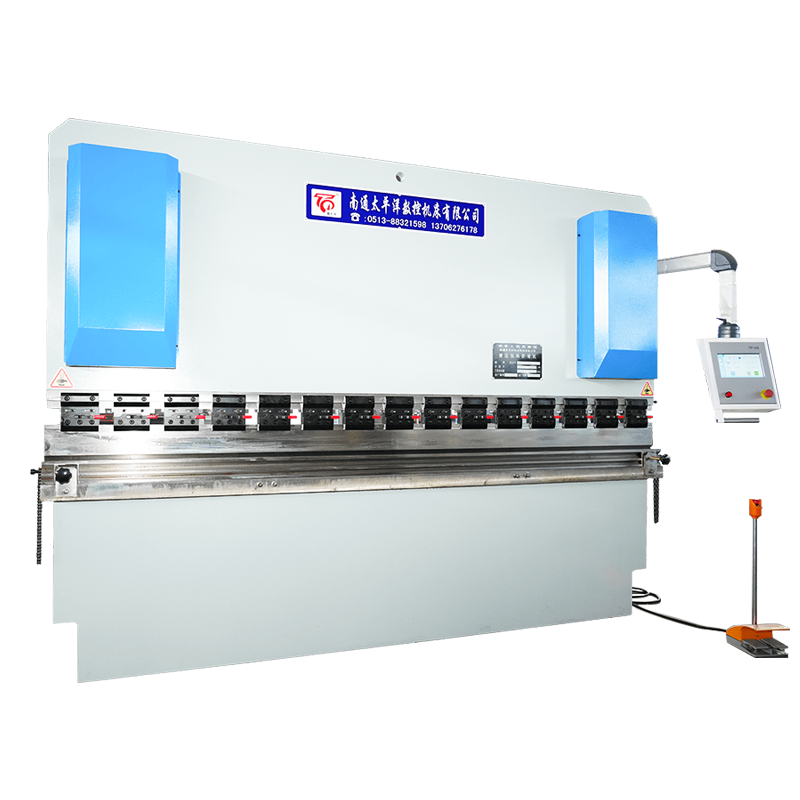 WC67K Series Torsion Axis Synchronous CNC Hydraulic Bending MachineMid-range CNC press brake with TP10S or DA41T control, positioned between torsion-shaft and electro-hydraulic servo options.View Product →
Electro-hydraulic servo CNC machines control each cylinder in a closed loop using proportional valves and linear scales, so the ram position is measured rather than assumed, and the control can correct for springback and deflection on the fly. They are the correct answer when the angle tolerance is tight, when batches are small and mixed, or when one operator has to run several machines.
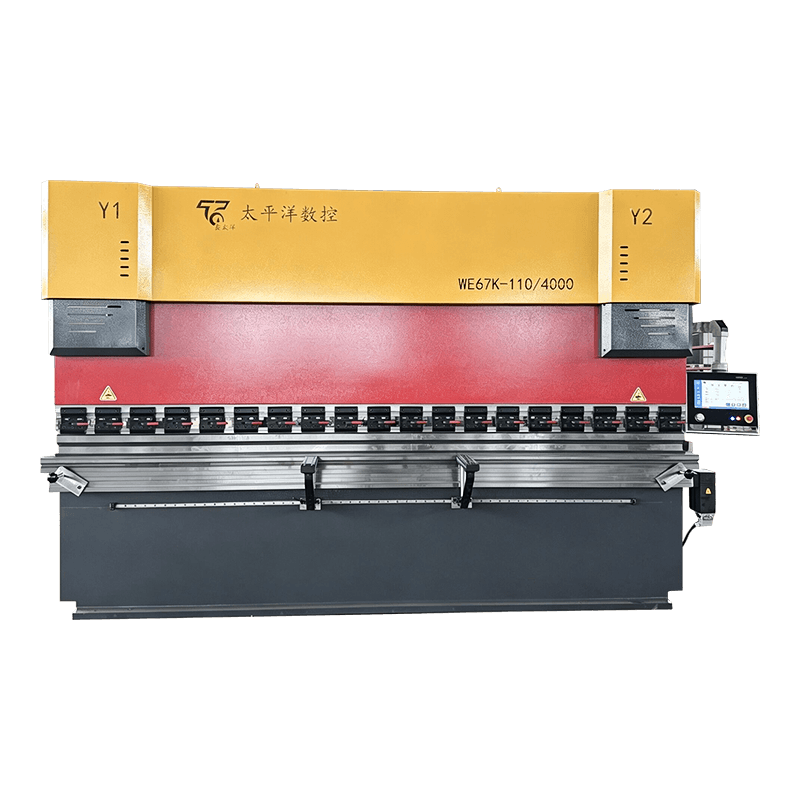 WE67K Series Electro-Hydraulic Servo CNC Hydraulic Bending MachineHigh-end precision press brake with closed-loop control and Delem, ESA, or Cybelec options for complex sheet metal work.View Product →
If you are still weighing up the middle of that range, a practical comparison of drive types and where each one pays off is covered in this guide to choosing the right CNC plate bending machine.
The same thickness and the same die can demand wildly different force depending on how far the punch travels into the material. Air bending, where the sheet touches only the die shoulders, is the baseline. Bottoming and coining multiply that figure, and the multiplier is why a machine that bends 4 mm comfortably in air may struggle with the same sheet under coining tooling.
The practical consequence is simple. If you buy tonnage for air bending and later switch to coining tooling to hit a tight inside radius, you may find yourself outside the machine's rated capacity on a job you thought was well within it.
Understanding the geometry of the bending zone explains most of the specification decisions above. The punch tip presses the sheet into the V-opening of the die; the die shoulders set the inside radius; the die opening determines both the required force and the minimum flange length.
Most disputes after delivery come from an incomplete specification rather than a faulty machine. A useful enquiry states the material grade and thickness range, the maximum bend length, the smallest inside radius, the minimum flange, the angle tolerance in degrees, the tooling standard you want to use, and the safety standard the machine must meet. In Europe, hydraulic press brakes are commonly specified against EN 12622; buyers in other regions should state the equivalent local requirement explicitly.
One question worth asking before you sign. Ask the supplier to confirm the tonnage available at the full nominal length, not just at mid-span, and to state how the machine compensates for ram deflection. A manufacturer with in-house engineering, such as Nantong Pacific CNC Machine Tool, should be able to answer both in writing.
It forms flat sheet into angles, channels, boxes and curved profiles by pressing the material between a punch and a die. Typical uses include enclosures, ducting, brackets, chassis parts, roof and wall panels, and any part where a flat blank has to become a three-dimensional shape.
For air bending, multiply 650 by the square of the thickness, divide by the V-die opening, and multiply by the bend length in metres. Then apply a material factor: roughly 1.5 for stainless steel and 0.5 to 0.6 for aluminium. Add headroom if you ever expect to use coining tooling.
Conventional hydraulic machines suit simple, repetitive 90-degree work where setup time is not critical. CNC machines, particularly electro-hydraulic servo types, pay for themselves when the job mix is varied, the angle tolerance is tight, or the same operator runs more than one machine.
Cracking usually comes from bending across a sheared or laser-cut edge with too small an inside radius for the material, or from a bend line running along the rolling direction. Springback is inherent to air bending and grows with tensile strength, so it needs either over-bending or closed-loop angle correction.
It can, provided the machine has enough tonnage for the thickest job and enough length for the longest one, and provided you accept that thin material may need different tooling. Thin sheet needs a narrow die and often a sharper punch; thick sheet needs a wide die and higher tonnage.
Check ram straightness and frame cracks, hydraulic leaks, cylinder seals, the condition of the torsion bar or servo valves, controller availability and spare parts support. Tooling is often worth more than the machine, so confirm the punch and die are matched and not worn past the point of holding an angle.
Related Products

Contact us
Factory Address
Xichang industrial Park, Chengdong Town, HaianCity, Nantong City, Jiangsu Province, China
Phone
+86-13906278466
products
QR CODE

 English
 русский
 عربى