Aug 13, 2026
Content
A fabrication shop lands an order for 200 switchboard panels cut from 1.5 mm half-hard brass sheet. Every blank has to be square, free of deep burrs, and identical. A jeweller’s saw would take minutes per part, and aviation snips cannot hold that thickness cleanly. The realistic answer in that shop is a hydraulic shearing machine. For a single decorative strip cut at home, the answer is different: a sharp pair of snips.
The best way to cut brass sheet depends on two variables: sheet thickness and production volume. Below about 1 mm, hand tools are quicker to reach and cheaper to run. Above 1 mm — and whenever you need repeated straight cuts — a shearing machine gives the best edge quality per part.
For small jobs and prototypes, hand methods are still the most practical. Match the tool to the sheet thickness and to the finish you need. All hand methods leave a lightly work-hardened edge that should be deburred before assembly or finishing.
Aviation snips (straight-cut, left-cut or right-cut patterns) are the fastest manual option. The compound-lever jaws shear the brass and leave a slight rolled edge, which is acceptable for most decorative and model-making work. Mark the cut line first, clamp the sheet so it cannot lift, and cut ahead of the line in one steady pass.
A jeweller’s saw with a 4/0 to 6/0 blade is the standard tool for 1/8 in (about 3 mm) brass plate when you need a narrow kerf and maximum control. Use slow vertical strokes, keep the blade perpendicular, and lubricate lightly with beeswax to stop binding. The saw leaves the cleanest edge of any hand method. For a one-off thick plate, a band saw with a non-ferrous blade will finish the job, but it leaves a rougher edge than a shear.
For straight lines in material up to about 1.5 mm, score-and-snap is faster than sawing. Score both sides with a carbide scriber against a steel rule, position the line on a hard edge such as a glass plate, and snap the sheet downward. The scored side stays clean; the other side needs light filing.
Indicative workshop limits in millimetres for common brass-sheet cutting methods.
When brass sheet moves from a single prototype to a batch, or from 1 mm to 6 mm and thicker, shearing machines take over. A shear drives a straight upper blade past a fixed lower blade while a hydraulic hold-down clamps the brass. The result is a square, mostly burr-free edge produced in a fraction of a second, with no heat-affected zone, no kerf waste, and identical geometry on every blank.
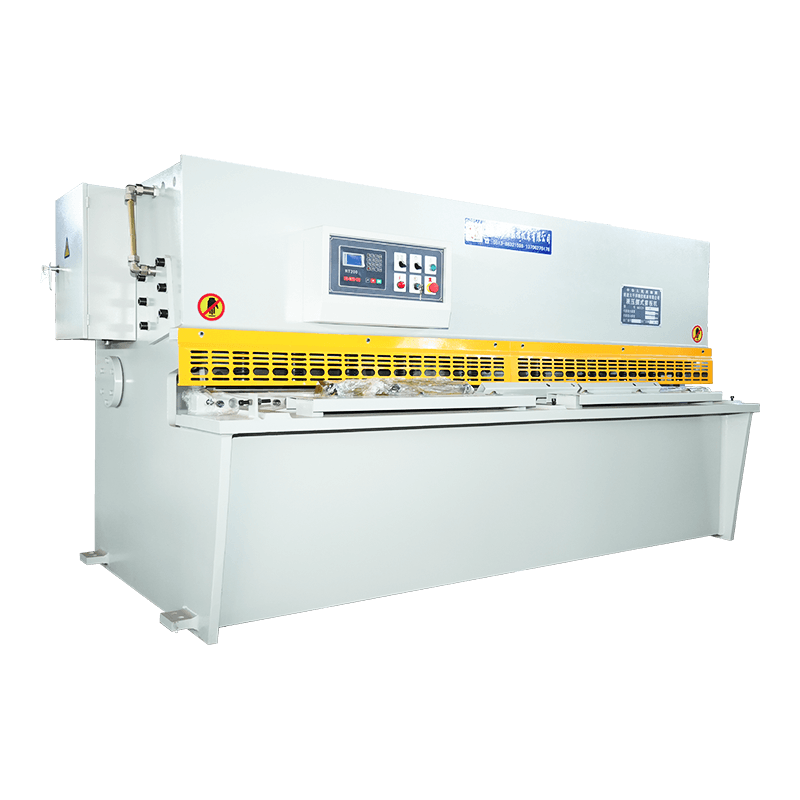 CNC Standard Hydraulic Swing Beam Shearing Machine SuppliersNantong Pacific CNC Machine Tool Co., Ltd is China custom qc12y/k series CNC standard/hydraulic swing beam shearing machine suppliers and...View Product → adds a programmable back gauge that removes manual measuring.
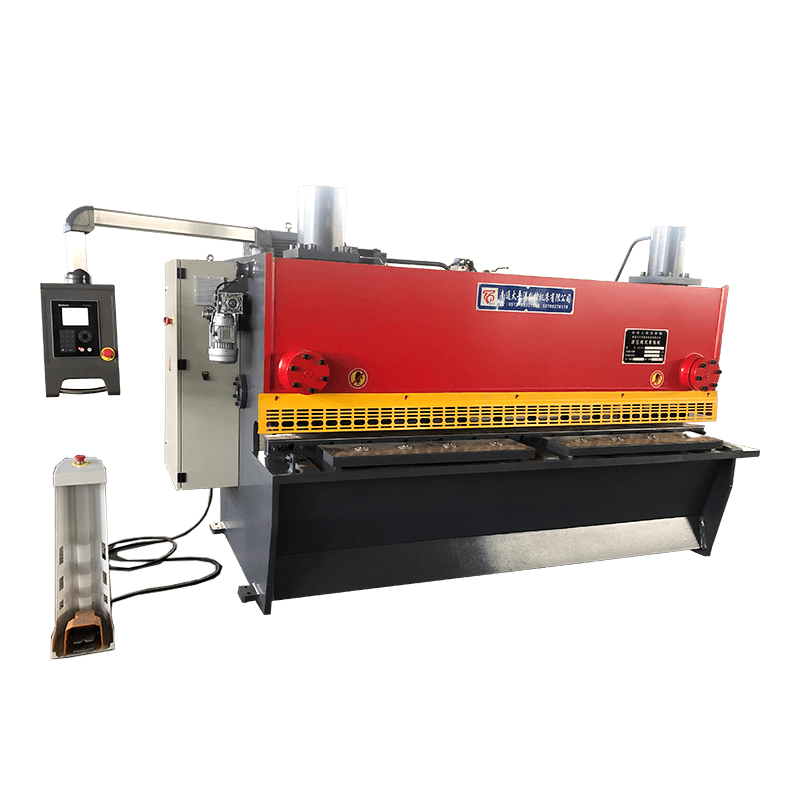 Hydraulic Guillotine Shearing Cutting Machine Suppliers, CompanyNantong Pacific CNC Machine Tool Co., Ltd is China custom hydraulic guillotine shearing cutting machine suppliers and hydraulic guillotin...View Product → keeps the cut line straight and repeatable on sheets from 4 mm up to the machine rating.
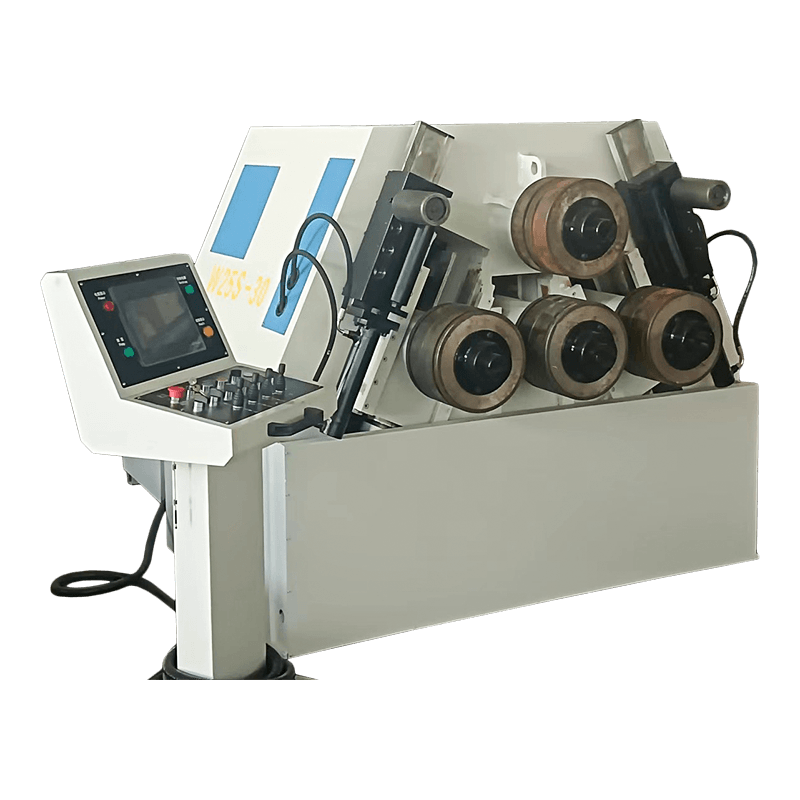
 Mechanical Shears Suppliers, Custom Mechanical Shears CompanyNantong Pacific CNC Machine Tool Co., Ltd is China mechanical shears suppliers and mechanical shears company, We specialize in custom mec...View Product → because there is no hydraulic system to maintain and the cycle time is short.
For brass, set the blade clearance to roughly 5% of the sheet thickness and keep the hold-down pressure high enough to stop the sheet lifting during the stroke. With those two settings, the same machine that cuts mild steel will produce clean brass blanks all shift long.
Cutting zone of a hydraulic guillotine shear: the upper blade descends against a fixed lower blade while the hold-down clamps the brass sheet.
If your shop still trims every blank by hand, the time saving alone usually justifies a machine. A plate shearing machine improves cutting efficiency by removing measuring, re-clamping and edge-trimming steps from the workflow.
The comparison below is a practical working reference for typical workshop conditions; actual results vary with material temper, tool condition and operator skill.
| Method | Practical thickness | Edge quality | Setup | Best for |
|---|---|---|---|---|
| Aviation snips | Up to 0.9 mm | Slight roll, light burr | None | Curves and small parts |
| Jeweller’s saw | Up to 2.0 mm | Clean, narrow kerf | Medium | Detailed profiles |
| Score & snap | Up to 1.5 mm | Clean on one side | Low | One-off straight cuts |
| Rotary tool | Up to 2.5 mm | Medium, needs deburr | Low | Cutouts and slots |
| Swing beam shear | Up to 6 mm | Clean, square, small burr | Machine setup | Batch sheet work |
| Guillotine shear | Up to 8 mm+ | Cleanest straight edge | Machine setup | Heavy and production work |
Indicative throughput for simple straight cuts: hand methods are convenient, but shearing machines multiply output.
This is the main constraint. Below 1 mm, snips and scoring tools keep control. Between 1 and 3 mm, a shear gives cleaner edges than hand tools. Above 3 mm, shearing is the practical production method; a saw becomes slow and blade wear rises.
If the edge will be visible or used as a datum, a shear with correct clearance outperforms hand methods. Snips leave a roll; sawing leaves kerf marks; shearing leaves a straight edge with a small burr that can be brushed off in seconds.
For one or two parts, set-up time decides the winner. For 50 identical blanks, machine cutting wins on both dimension consistency and cost per part. As throughput rises, the back gauge becomes more valuable than operator skill.
Soft and half-hard brass cut more cleanly than spring-hard stock. Work-hardened brass resists scoring and dulls blades faster. If you buy sheet in the soft condition and cut it before forming, you get the best edge for the least tool wear.
Once you are on a shear, blade clearance becomes the main quality lever. The pattern below is typical for brass:
Blade clearance strongly affects edge quality on brass. Most shops run 5–6% of sheet thickness as a starting point.
Not every shear is set up for brass out of the box. When comparing machines, check four points:
Safety and maintenance are part of the purchase, not afterthoughts. Work through an operation guide for plate shearing machines before the first production run, and make a habit of checking common plate shearing machine malfunctions and solutions once a month. Blades, hold-down pads and hydraulic oil are the three items that wear first when cutting brass.
Yes. Hydraulic swing beam and guillotine shears cut brass sheet cleanly within their rated capacity. Set blade clearance to about 5% of sheet thickness to minimise burr.
Aviation snips typically handle soft and half-hard brass up to about 0.9 mm (roughly 20 gauge). Heavier sheet will distort or jam the jaws.
For production, a hydraulic guillotine or swing beam shear is the most consistent. For a one-off piece, a jeweller’s saw or a band saw with a non-ferrous blade works.
Keep blades sharp, set the clearance at 5–6% of sheet thickness, and use a firm hold-down. Light deburring with a file or scraper removes any remaining edge.
Brass is softer than mild steel but work-hardens quickly. Sharp tools, firm clamping and the right blade speed prevent binding and edge tearing.
A CNC shear adds a programmable back gauge and automatic cycles for repeatable blanks; the hydraulic system supplies the cutting force. Most production shears combine both.
Related Products

Contact us
Factory Address
Xichang industrial Park, Chengdong Town, HaianCity, Nantong City, Jiangsu Province, China
Phone
+86-13906278466
products
QR CODE

 English
 русский
 عربى
عربى